How to Choose the Best Shorts Legging Printer?
FLUID HANDLING EXPERTS

Blog, all our news

How to Choose the Best Shorts Legging Printer?

Choosing the right Shorts Legging Printer can shape fabric quality, production speed, and customer satisfaction. The decision deserves more than a quick equipment comparison.

Debbie McKeegan, founder of Texintel and a respected digital textile printing specialist, has said, “Digital textile printing enables brands to produce more creatively, efficiently, and sustainably.” Her observation matters because leggings demand both visual precision and physical performance. A vibrant print is not enough. It must stretch without cracking, survive repeated washing, and remain comfortable against the skin.

The best printer should match your fabric, order volume, and finishing process. For polyester-spandex leggings, sublimation printing often provides strong color penetration and smooth hand feel. Check the printer’s supported fabric width, ink stability, drying system, and color-management controls. A small workshop may value low waste and simple operation. A large manufacturer may need faster roll-to-roll production and automated maintenance.

Ask for printed samples. Test them under tension. Wash them several times. Inspect the waistband, seams, and darker gradients closely. These details reveal problems that showroom images hide. Service availability also matters, especially when a clogged printhead can stop production.

There is no perfect machine. A lower-priced model may save money initially, but maintenance can become expensive. A premium printer may offer better consistency, yet exceed a growing company’s needs. I would also question impressive speed claims without real production data. The strongest choice balances print quality, fabric behavior, operating cost, technical support, and future demand. That balance creates a reliable Shorts Legging Printer investment.
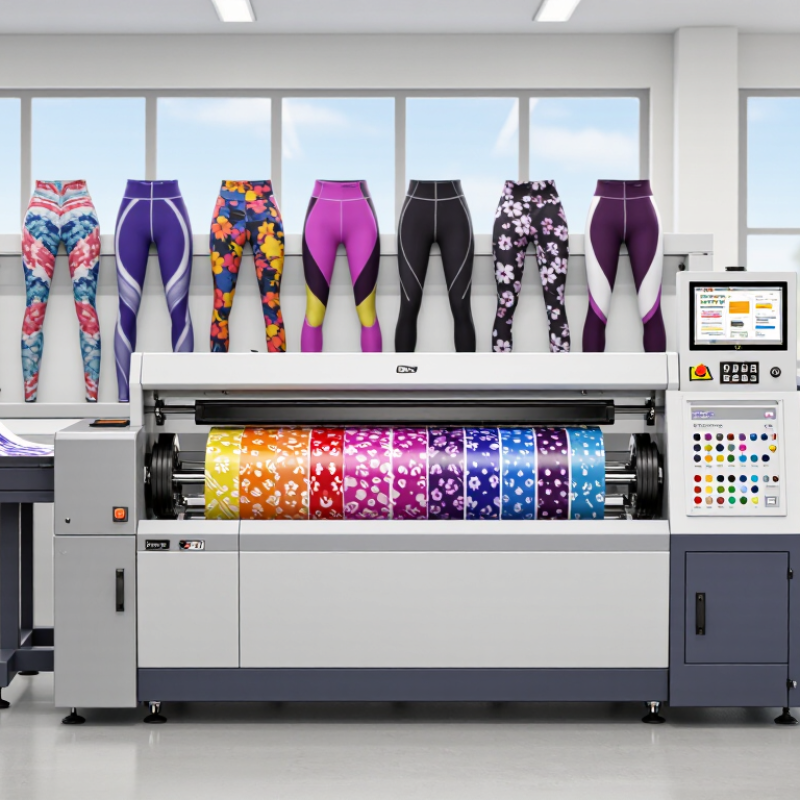
How to Choose the Best Shorts Legging Printer?

Define Your Shorts Legging Printing Requirements

How to Choose the Best Shorts Legging Printer?

Define Your Shorts Legging Printing Requirements

Before contacting a printer, describe your product with measurable details. Specify fabric composition, stretch percentage, garment size range, and planned order quantity. Polyester blends may need different ink control than nylon fabrics. Ask for color accuracy under natural and indoor lighting.

Your artwork also needs clear boundaries. State the print area, edge placement, resolution, and preferred finish. A full-leg design requires different alignment control than a small hip logo. Mention whether you need samples, private labeling, packaging, or repeat production. I once underestimated waistband distortion, and the final pattern shifted during stretching. That mistake changed my fitting checks.

Tips: Prepare a one-page specification sheet. Include fabric swatches, artwork files, target colors, measurements, delivery dates, and acceptable tolerance. Request a physical sample before approving bulk production. Check stretch recovery after printing, not only the garment’s appearance. Samples reveal flaws. Ask how the printer records settings for repeat orders. Reliable documentation reduces color variation between batches.

Compare printers against your actual requirements, not only their advertised equipment. A printer with fast output may not handle delicate compression fabric carefully. Ask about pre-treatment, curing temperature, inspection steps, and replacement policies for defective pieces. Confirm their testing process for wash durability and ink adhesion. Some details can be overlooked. Review your specification sheet with the production team, then revise it when real samples expose weaknesses.

How to Choose the Best Shorts Legging Printer?

Define Your Shorts Legging Printing Requirements

Before comparing printers, define the measurable requirements for your shorts leggings. A practical specification may include approximately 50% fabric stretch compatibility, 30 wash cycles for durability testing, 95% minimum print coverage or opacity, and up to 6 spot colors. Confirm these targets with fabric samples and production tests before making a final printer selection.

Compare Printing Technologies for Shorts Leggings

How to Choose the Best Shorts Legging Printer?

When comparing printing technologies for shorts leggings, start with fabric composition. Dye sublimation works well on polyester because ink becomes part of the fibers. The result feels smooth, stretches easily, and resists cracking during repeated washing. It also supports vivid all-over designs, including side panels and curved waist areas.

Screen printing suits simple logos and solid shapes. However, thick ink can reduce flexibility on tight garments. It may also feel noticeable against the skin. Direct-to-film printing offers strong color and works across more fabric types. Yet, its printed layer can feel heavier and may peel when heat, stretching, or poor curing affect production. Direct-to-garment printing is useful for cotton-rich blends, but it usually performs poorly on highly elastic polyester leggings. In sample testing, tiny registration errors became visible around seams. That detail is easy to miss.

Tips: Test the exact fabric before ordering equipment. Print a stretch panel, then wash it several times. Check color brightness, edge sharpness, hand feel, and recovery after stretching. Ask about curing temperature and ink durability. A printer that looks impressive on paper may still waste material in practice. Leave room for error. You may need a wider platen, better alignment tools, or slower production settings.

Evaluate Fabric Compatibility and Print Durability

How to Choose the Best Shorts Legging Printer?

Choosing a shorts legging printer starts with the fabric, not the machine’s advertised speed. Stretch polyester, nylon blends, and cotton-rich knits absorb ink differently. Ask for the fabric composition and stretch percentage before testing. A useful sample should match the actual garment, including its weight and finish. I prefer testing a small panel cut from production fabric. It reveals problems that showroom swatches hide.

Print a solid color block, a fine line, and a skin-tone gradient. Then stretch each sample repeatedly, both across and along the fabric. Watch for cracking, whitening, edge lifting, or a dull surface. Wash it according to the planned care label, then inspect it after five, ten, and twenty cycles. Heat, sweat, friction, and sunscreen can expose weak adhesion. The test is simple. The interpretation is not.

A durable print should remain flexible and visually even after movement. For sublimation, confirm that the polyester content supports strong color transfer. Low polyester levels may produce muted results. For direct-to-film or screen processes, check curing temperature and pressure against the fabric’s heat tolerance. Ask the printer for recorded wash-test results, ink specifications, and production tolerances. Reliable suppliers will explain failures without hiding behind vague promises. One imperfect sample should not be dismissed. It may show the exact weakness that appears on thousands of pairs.

Assess Printer Features, Production Speed, and Maintenance

Choosing a shorts legging printer requires more than checking its maximum print speed. Grand View Research estimates the digital textile printing market will grow at about 12% annually through 2030. This expansion increases equipment choices, but also increases comparison errors. I once focused too heavily on advertised speed. That was a mistake. A printer producing 80 square meters per hour may slow significantly during dense artwork, color changes, or fabric tension adjustments. Review real production samples, not only specification sheets. Check print width, elastic-fabric handling, ink compatibility, color-management software, and drying control. These features directly affect sharp waistbands, smooth gradients, and repeatable sizing.

Production speed should be measured with setup time included. A slightly slower machine may produce more sellable leggings when it reduces calibration and changeover delays. Smithers’ digital textile printing research identifies productivity and shorter sampling cycles as important drivers of adoption. Ask suppliers for test data using your fabric, design density, and curing process. Maintenance also deserves practical attention. Operators should inspect nozzles daily, monitor humidity, clean printheads correctly, and record ink-filter changes. Small oversights can create faint stripes across an entire roll. They also waste material. The printer should provide easy access to service areas, clear alerts, and replaceable maintenance parts. I would also calculate labor, cleaning fluid, downtime, and rejected garments per month. The cheapest machine can become expensive when maintenance is vague. Still, no checklist predicts every workshop problem. A short trial run reveals more than a polished brochure.

Calculate Costs and Choose the Right Printer Supplier

Choosing a shorts legging printer starts with cost, not appearance. Digital textile printing continues to expand. Grand View Research valued the global market at about USD 2.3 billion in 2022, with strong growth expected through 2030. This growth creates more supplier choices, but not always better value.

Calculate the real cost per pair: machine price, ink, transfer paper, labor, electricity, maintenance, software, packaging, and fabric waste. Add annual service fees and shipping. For example, a printer costing USD 35,000 may seem affordable, but costly ink can raise each pair by USD 0.40. Request test files using your actual polyester fabric. Measure color accuracy, stretch recovery, wash durability, and production speed. A supplier should provide technical specifications and documented test results, not only attractive samples.

Tips: Ask for a written quotation with every recurring cost. Compare output per hour, not only purchase price. Check warranty response times and spare-part availability. Confirm whether the supplier supports standard color-management workflows, such as ICC profiles. The International Color Consortium explains that profiles improve consistency across devices, but they cannot fix poor fabric preparation. My first cost estimate would probably miss rejected garments, which can quietly reduce profit. Leave a waste allowance of 3% to 8%, then review it after a real production trial. Supplier reliability matters more than a low opening offer.

Copyright 2025 Fluidra S.A. | Created by BCM Marketing Agencia Privacy Policy Legal note | Cookie policy |

Technical cookies are strictly necessary for our website to work and you can navigate through it. These types of cookies are those that, for example, allow us to identify you, give you access to certain restricted parts of the page if necessary, or remember different options or services already selected by you, such as your privacy preferences. Therefore, they are activated by default, your authorization not being necessary in this regard. Through the configuration of your browser, you can block or alert the presence of this type of cookies, although such blocking will affect the proper functioning of the different functionalities of our website.


The analysis cookies allow us to study the navigation of the users of our website in general (for example, which sections of the page are the most visited, which services are used most and if they work correctly, etc.). From the statistical information on navigation on our website, we can improve both the operation of the page itself and the different services it offers. Therefore, these cookies do not have an advertising purpose, but only serve to make our website work better, adapting to our users in general. By activating them you will contribute to this continuous improvement. You can enable or disable these cookies by checking the corresponding box, being disabled by default.


Functionality cookies allow us to remember your preferences, to personalize certain characteristics and general options of our website, every time you access it (for example, the language in which the information is presented to you, the sections marked as favorites, your browser type, etc.) Therefore, this type of cookies does not have an advertising purpose, but by activating them you will improve the functionality of the website (for example, adapting to your type of browser) and the customization of it based on your preferences (for example, by presenting the information in the language that you have chosen in previous occasions), which will contribute to the ease, usability and comfort of our page during your navigation. You can enable or disable these cookies by checking the corresponding box, being disabled by default.


Advertising cookies allow us to manage the advertising spaces included in our website based on criteria such as the content shown or the frequency in which the ads are displayed. For example, if you have been shown the same ad several times on our website, and you have not shown a personal interest by clicking on it, it will not appear again. In summary, by activating this type of cookies, the advertising shown on our website will be more useful and diverse, and less repetitive. You can enable or disable these cookies by checking the corresponding box, being disabled by default.


Behavioral advertising cookies allow us to obtain information based on the observation of your browsing habits and behaviors on the web, in order to show you advertising content that best suits your personal tastes and interests. To understand it in a very simple way, we will give you a fictitious example: if your last searches on the web were related to suspense literature, we would show you advertising about suspense books. Therefore, activating this type of cookies, the advertising that we show you on our website will not be generic, but will be oriented to your searches, tastes and interests, therefore adjusting exclusively to you. You can enable or disable these cookies by checking the corresponding box, being disabled by default.
To understand it in a very simple way, we will give you a fictitious example: if your last searches on the web were related to suspense literature, we would show you advertising about suspense books. Therefore, activating this type of cookies, the advertising that we show you on our website will not be generic, but will be oriented to your searches, tastes and interests, therefore adjusting exclusively to you. You can enable or disable these cookies by checking the corresponding box, being disabled by default.

SAVE

We use our own and third-party cookies to ensure the proper functioning of the website and to analyse our services, improve your experience on our website and show you advertisements related to your interests according to profiling based on your browsing habits (e.g. websites visited). You can accept all cookies by clicking "ACCEPT" or set or reject them by clicking here. If you would like to know more about the use of cookies, please see our COOKIE POLICY.


ACCEPT ALL
Reject no essentials