How to Choose the Best Rubber Seals for Your Needs?
FLUID HANDLING EXPERTS

Blog, all our news

How to Choose the Best Rubber Seals for Your Needs?

Choosing the right Rubber Seals is crucial for various applications. Industry expert John Smith, a leading figure in seal technology, states, "Selecting the correct rubber seal can drastically impact performance and durability." Rubber seals are used in everything from automotive parts to industrial machinery.

When considering rubber seals, factors like material, size, and environment matter greatly. Different applications require different seal properties. For instance, high-temperature environments may need specialized rubber compounds. Choosing inadequately can lead to leaks or failures.

Rubber seals may seem simple, but their selection is complex. Common mistakes can arise from overlooking environmental conditions. The right seal can ensure product efficacy and longevity. In contrast, the wrong choice can introduce significant challenges. Therefore, understanding your needs is essential before making a decision.
How to Choose the Best Rubber Seals for Your Needs?

Understanding Different Types of Rubber Seals Available in the Market

Rubber seals are crucial in various applications. Many types exist, each with its unique features. Selecting the right one can be daunting. Understanding the options available can simplify this process.

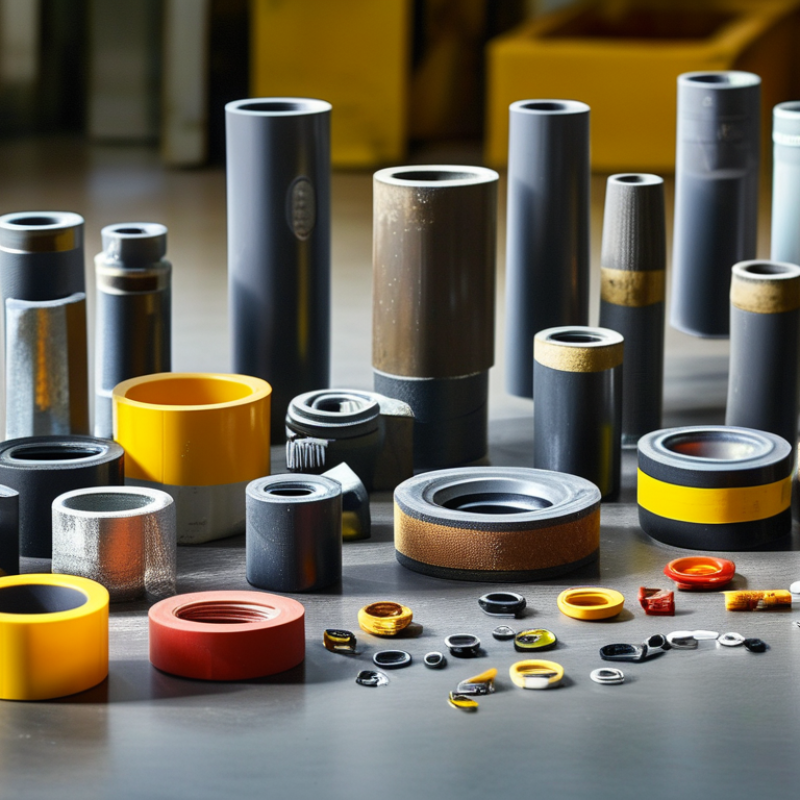
One common type is the O-ring. These seals are circular and made for static or dynamic applications. They create a tight seal, preventing fluid leakage. Another option is the gasket, which is often flat. Gaskets are used in applications with irregular surfaces. They fill gaps, ensuring a secure fit.

Foam rubber seals offer flexibility and are commonly used in doors and windows. They help with insulation and noise reduction. However, their durability can be a concern. They may wear out faster than other types. Compression seals can also be beneficial, especially in high-pressure environments. They require careful installation to function effectively.

Choosing the right seal involves understanding your specific needs. Consider factors like temperature, pressure, and intended use. Each type of rubber seal serves a distinct purpose. Reflect on these aspects for better decision-making.

How to Choose the Best Rubber Seals for Your Needs?

Type of Rubber Seal Material Temperature Range Applications Durability
O-Ring Nitrile (Buna-N) -40°F to 250°F Automotive, Aerospace Good
Gasket Silicone -65°F to 500°F Food Processing, Medical Excellent
Lip Seal EPDM -60°F to 250°F Hydraulic Systems, Pumps Very Good
Mechanical Seal Fluoroelastomer -20°F to 400°F Chemical Processing, Oil & Gas Outstanding
Custom Seal Various Compounds Varies by Compound Specialized Applications Variable

Assessing the Environmental Conditions for Seal Performance

When selecting rubber seals, environmental conditions are critical to their performance. Different environments impose unique challenges. Temperature extremes can affect seal flexibility. High heat can cause seals to harden, while extreme cold can make them brittle. Assessing these conditions helps in choosing the right material.

Humidity is another factor to consider. In humid environments, materials can degrade faster than expected. Moisture can compromise the integrity of rubber seals. These factors should not be overlooked, as they directly impact the lifespan and reliability of the seals.

Lastly, exposure to chemicals must be evaluated. Many rubber compounds are sensitive to various substances. Oils, acids, and solvents can lead to seal failure if not properly matched. Users often underestimate this risk, leading to costly maintenance. Understanding the specific environmental conditions ensures better seal selection and enhances overall system performance.

Identifying Key Application Requirements for Rubber Seals

When selecting rubber seals, it’s essential to focus on the key application requirements. Consider factors such as temperature range, pressure levels, and chemical exposure. According to industry reports, over 70% of seal failures can be attributed to incorrect material choice. Understanding these factors can prevent costly downtime and equipment failures.

Tips: Assess the working environment before choosing a seal. Conducting a thorough analysis will lead to more effective solutions. Material compatibility is crucial; for instance, some rubbers handle high temperatures better than others. The wrong choice may lead to leaks and repairs that could have been avoided.

Additionally, evaluate the motion type and speed involved in your application. This can influence how a seal performs over time. Research indicates that seals for dynamic applications require specific designs. Ignoring these details may result in premature wear. Always prioritize quality over cost when selecting seals for critical applications.

Rubber Seal Types vs. Applications

Evaluating Material Properties for Optimal Seal Selection

Choosing the right rubber seals involves understanding material properties. The seal's performance often hinges on factors like temperature, pressure, and chemical exposure. Different rubber compounds respond differently under stress. For example, some materials are excellent for high temperatures but deteriorate quickly in ozone-rich environments.

Evaluating the durability of rubber seals is crucial. Certain grades excel in resistance to abrasives. Others perform well in wet conditions. Yet, not all seals can handle extreme environments. It’s essential to assess trade-offs. Will you prioritize flexibility or chemical resilience? Each choice has implications for performance and longevity.

Look closely at your specific requirements. This may involve testing samples under real-world conditions. It's also beneficial to consult with experts in material science. Their insights can help avoid costly mistakes. Remember, a seal might look perfect on paper but fail in practical applications. Balancing expectations with reliable information is key to finding the optimal solution.

Making Informed Decisions: Cost vs. Quality in Rubber Seals

When selecting rubber seals, cost and quality are often at odds. Many buyers face pressure to minimize expenses. However, opting for cheaper materials can lead to unexpected failures. These failures ultimately increase long-term costs due to replacements and maintenance. It's crucial to balance initial price with durability and performance.

Understanding specific application needs is vital. For example, seals used in high-temperature environments require materials that can withstand heat without degrading. Choosing the wrong type can result in leaks and damage. On the other hand, high-quality rubber seals often offer better sealing properties. This reliance on quality might reflect upfront costs but can save money overall.

The decision-making process can feel overwhelming. You may find products marketed as premium but question their claims. Researching suppliers helps clarify these doubts. Seek out customer reviews or expert opinions on functionality and lifespan. This approach fosters informed choices and mitigates risks, ultimately paving the way for successful applications.

Article Source:

Copyright 2025 Fluidra S.A. | Created by BCM Marketing Agencia Privacy Policy Legal note | Cookie policy |

Technical cookies are strictly necessary for our website to work and you can navigate through it. These types of cookies are those that, for example, allow us to identify you, give you access to certain restricted parts of the page if necessary, or remember different options or services already selected by you, such as your privacy preferences. Therefore, they are activated by default, your authorization not being necessary in this regard. Through the configuration of your browser, you can block or alert the presence of this type of cookies, although such blocking will affect the proper functioning of the different functionalities of our website.


The analysis cookies allow us to study the navigation of the users of our website in general (for example, which sections of the page are the most visited, which services are used most and if they work correctly, etc.). From the statistical information on navigation on our website, we can improve both the operation of the page itself and the different services it offers. Therefore, these cookies do not have an advertising purpose, but only serve to make our website work better, adapting to our users in general. By activating them you will contribute to this continuous improvement. You can enable or disable these cookies by checking the corresponding box, being disabled by default.


Functionality cookies allow us to remember your preferences, to personalize certain characteristics and general options of our website, every time you access it (for example, the language in which the information is presented to you, the sections marked as favorites, your browser type, etc.) Therefore, this type of cookies does not have an advertising purpose, but by activating them you will improve the functionality of the website (for example, adapting to your type of browser) and the customization of it based on your preferences (for example, by presenting the information in the language that you have chosen in previous occasions), which will contribute to the ease, usability and comfort of our page during your navigation. You can enable or disable these cookies by checking the corresponding box, being disabled by default.


Advertising cookies allow us to manage the advertising spaces included in our website based on criteria such as the content shown or the frequency in which the ads are displayed. For example, if you have been shown the same ad several times on our website, and you have not shown a personal interest by clicking on it, it will not appear again. In summary, by activating this type of cookies, the advertising shown on our website will be more useful and diverse, and less repetitive. You can enable or disable these cookies by checking the corresponding box, being disabled by default.


Behavioral advertising cookies allow us to obtain information based on the observation of your browsing habits and behaviors on the web, in order to show you advertising content that best suits your personal tastes and interests. To understand it in a very simple way, we will give you a fictitious example: if your last searches on the web were related to suspense literature, we would show you advertising about suspense books. Therefore, activating this type of cookies, the advertising that we show you on our website will not be generic, but will be oriented to your searches, tastes and interests, therefore adjusting exclusively to you. You can enable or disable these cookies by checking the corresponding box, being disabled by default.
To understand it in a very simple way, we will give you a fictitious example: if your last searches on the web were related to suspense literature, we would show you advertising about suspense books. Therefore, activating this type of cookies, the advertising that we show you on our website will not be generic, but will be oriented to your searches, tastes and interests, therefore adjusting exclusively to you. You can enable or disable these cookies by checking the corresponding box, being disabled by default.

SAVE

We use our own and third-party cookies to ensure the proper functioning of the website and to analyse our services, improve your experience on our website and show you advertisements related to your interests according to profiling based on your browsing habits (e.g. websites visited). You can accept all cookies by clicking "ACCEPT" or set or reject them by clicking here. If you would like to know more about the use of cookies, please see our COOKIE POLICY.


ACCEPT ALL
Reject no essentials