
Choosing the best Portable Crusher begins with the material, the jobsite, and the people operating the machine. A unit that performs well in a quarry may struggle on a narrow urban project. Concrete, asphalt, limestone, and recycled aggregate each demand different crushing characteristics. Moisture, feed size, abrasiveness, and required output also affect the decision.
Gerald Hanisch, founder of RUBBLE MASTER, has often expressed a practical principle: “The best crusher is the one that fits the application, not the one with the biggest capacity.” That idea keeps equipment selection grounded. A compact Portable Crusher may reduce transport costs and move easily between sites. A heavier model may deliver better production during continuous quarry work. Neither option is automatically superior.
Look closely at the feed hopper, crusher type, screening system, fuel use, maintenance access, and operator controls. Ask how quickly common wear parts can be replaced. A few minutes saved during service can become valuable production time. Check actual performance data, not only brochure figures. Those figures may assume ideal material and skilled operation.
Experience also exposes uncomfortable details. A machine can have impressive capacity yet create costly bottlenecks at the screen or conveyor. A lower purchase price may hide frequent downtime. I would not choose equipment before testing representative material. Even then, results can vary with weather, operator habits, and site layout. The right decision balances output, mobility, safety, lifecycle cost, and local support. It should also leave room for changing project requirements.
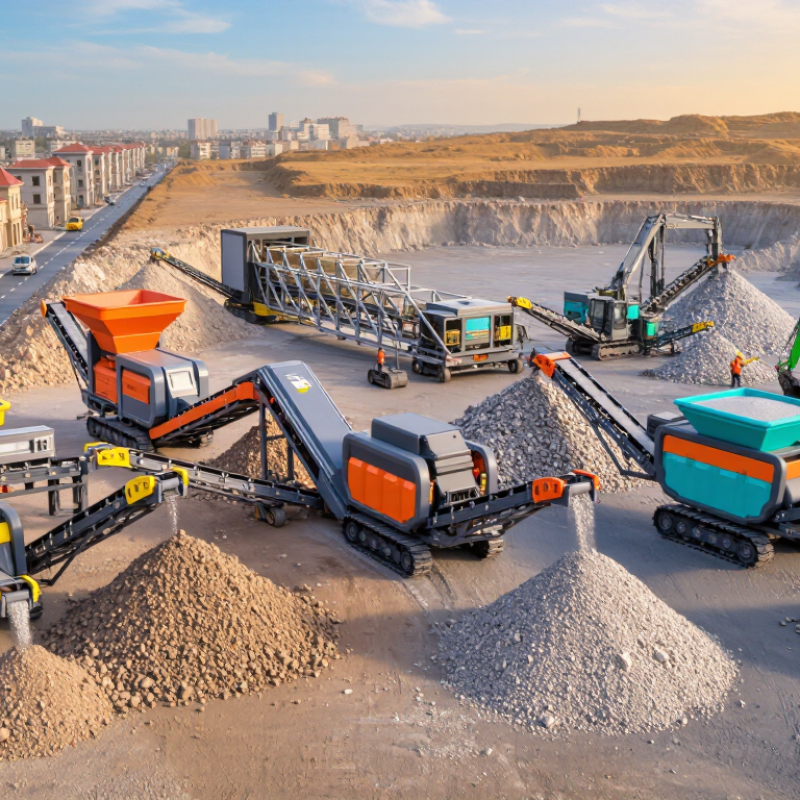
How to Choose the Best Portable Crusher for Your Needs?
Define your crushing needs before comparing portable crusher models. Identify the material, feed size, target output, and daily production volume. A demolition site may need different equipment than a quarry or road project. Measure twice.
Walk around the working area and note access roads, ground conditions, and available space. A compact crusher may fit through a narrow entrance, but limited clearance can restrict feeding and maintenance. Decide how often the machine must move. Frequent relocation increases the value of simple setup and stable transport features.
Material characteristics deserve close attention. Hard stone, recycled concrete, and soft limestone create different crushing demands. Check hardness, abrasiveness, moisture, and the presence of steel or other contaminants. Wet material can clog a feed opening and reduce production. Moisture changes everything. Output shape also matters. Some projects require uniform aggregates, while others accept a wider size range.
Request a test using material similar to your own. Compare actual throughput, product size, fuel use, noise, and dust control under realistic conditions. Do not rely only on a catalog capacity. Real production can fall when operators, weather, or inconsistent feed affect performance. I have seen estimates look impressive until sticky material entered the chamber. That result deserves honest review. Choose controls that workers can understand quickly, and inspect access points for routine cleaning, lubrication, and wear-part replacement. A crusher that meets specifications but delays daily maintenance may become an expensive compromise.

Choosing the right portable crusher starts with the material, not the machine’s advertised capacity. The USGS Mineral Commodity Summaries 2024 reports approximately 1.5 billion metric tons of crushed stone produced in the United States during 2023. That scale shows why application matching matters.
Jaw crushers suit primary crushing on quarry faces and demolition sites. Their deep chamber accepts large, uneven feed.
Cone crushers produce a more uniform, cubical product after coarse reduction. They fit hard rock and secondary crushing circuits, but they need consistent feed.
Impact crushers work well with softer stone, recycled concrete, and limestone. They can create useful shaping, though wear may increase with abrasive rock.
Screening plants are often paired with these units, because final product size depends on separation as much as crushing.
Mobility changes the decision.
Tracked crushers handle short site moves, muddy ground, and urban recycling work. Wheeled units travel efficiently between prepared locations.
MarketsandMarkets’ 2024 analysis identifies construction growth and infrastructure renewal as major portable crushing demand drivers. Still, forecasts are not field measurements. Dust control, noise limits, fuel access, and service response can outweigh theoretical throughput.
Measure the feed first. It saves trouble.
A practical trial should record tons per hour, discharge size, fuel use, and liner wear. A crusher that processes 250 tons hourly on paper may perform far less with wet, sticky feed.
I have seen selection decisions focus too heavily on output ratings. That is an easy mistake. The best comparison uses your rock, your haul distance, and your required product gradation.
How to Choose the Best Portable Crusher for Your Needs?
Capacity should match your real feed, not the brochure’s maximum figure. The U.S. Geological Survey reported about 1.5 billion metric tons of crushed stone production in 2023. That scale highlights a practical issue: steady output matters more than occasional peak performance. Measure feed size, hardness, moisture, and desired product grading before choosing a crusher. A unit rated at 300 tons per hour may deliver less with wet, sticky material. Numbers can mislead.
Mobility affects setup time, transport costs, and site access. Check machine dimensions, axle limits, ground clearance, and turning space. Track-mounted equipment suits uneven work areas, while wheeled units may move faster between prepared locations. Power selection also requires care. Compare engine output with the feeder, conveyor, screen, and dust-control system operating together. The U.S. Energy Information Administration reports that diesel fuel efficiency varies significantly with load and operating conditions. Oversized power can waste fuel. Undersized power can cause stalled production.
Operating conditions often decide performance. Inspect the site for high dust, freezing temperatures, steep grades, and limited maintenance access. The U.S. Environmental Protection Agency’s AP-42 guidance identifies crushing and screening as particulate-emission sources, making enclosure, water management, and housekeeping important design considerations. From field experience, small overlooked details create major delays. A blocked discharge conveyor can stop an entire shift. I once prioritized capacity over service access, and the decision proved costly. Recheck assumptions before purchase. Conditions change.
Choosing the best portable crusher starts with maintenance, not production figures. In field work, easy access to belts, liners, screens, and lubrication points saves valuable hours. Look for wide service doors, clear inspection areas, and common wear components. A maintenance manual should show intervals, torque settings, and safe shutdown steps. If the instructions seem vague, ask for practical training before purchase. Small details matter.
Safety features deserve direct inspection. Emergency stops should be reachable from ground level and tested regularly. Guards must cover moving parts without blocking routine checks. Good lighting, stable platforms, handrails, and lockout provisions reduce risks during night repairs. Dust control also matters near busy work areas. Do not guess.
Total ownership cost extends beyond the purchase price. Estimate fuel use, transport, operator time, replacement wear parts, scheduled servicing, and likely downtime. A cheaper crusher can become expensive when a worn liner takes days to replace. I once focused too heavily on hourly output and underestimated cleaning labor. That assumption was too simple. Request service records, warranty conditions, and realistic production data from comparable materials. Include a contingency for unexpected repairs, because even a well-maintained machine will eventually challenge your budget.
Choosing a portable crusher starts with the material, but supplier support often decides whether the investment succeeds. A machine processing hard, abrasive rock needs different chamber design and wear protection than one handling recycled concrete. Measure feed size, required output, moisture, and daily operating hours before comparing models. Guessing here can become expensive.
Market Context Grand View Research valued the global mobile crushers and screeners market at approximately USD 3.2 billion in 2023, with continued growth forecast through 2030. This expansion increases model choice, but it also makes supplier verification more important. Ask for documented throughput tests, power requirements, liner specifications, and emissions information. Confirm whether those figures reflect your material, not ideal laboratory conditions.
Support must be visible before purchase. Request the service response time, spare-parts availability, commissioning procedure, and operator training plan in writing. Check whether technicians can diagnose hydraulic, electrical, and conveyor faults remotely. The U.S. Mine Safety and Health Administration emphasizes maintenance, guarding, and operator training as core controls for crushing equipment. A responsible supplier should explain how its support process addresses these risks. Ask for references from sites with similar rock and climate conditions. Speak with the operators, not only the sales team. Small gaps matter. I would also allow extra downtime in the budget; even a well-supported machine can face delivery delays or unfamiliar faults. A cheaper quote may be less valuable when one missing wear part stops production.

Cepex is the brand for the fluid handling market belonging to the Fluidra group. One of the leading european manufacturer of valves and fittings in thermoplastic materials.
Dedicated to the swimming pool, irrigation and industrial markets, we distribute our products worldwide with the Fluidra commercial network and presence in 46 countries with 136 sales branches.


