
How to Choose the Best Electric Utility Vehicle for Your Business?
FLUID HANDLING EXPERTS

Blog, all our news

How to Choose the Best Electric Utility Vehicle for Your Business?

Choosing the right Electric Utility Vehicle (EUV) for your business can be challenging. It’s a significant investment that requires careful consideration. Various factors influence this decision, including your operational needs and budget constraints. Understanding these elements is crucial for success.

Electric Utility Vehicles offer numerous advantages, such as reduced operational costs and lower emissions. However, selecting the most suitable model involves assessing the specific requirements of your business. Consider how often you will use the vehicle and the types of tasks it must perform. Evaluate aspects like range, load capacity, and maintenance costs.

Moreover, many options are available on the market. Navigating this landscape can be overwhelming. Some businesses may rush into a decision, which could lead to regrets later. It’s essential to take the time to research and consult with experts. Reflect on the long-term benefits versus your immediate needs. This thoughtful approach can help ensure that your choice aligns perfectly with your business goals.
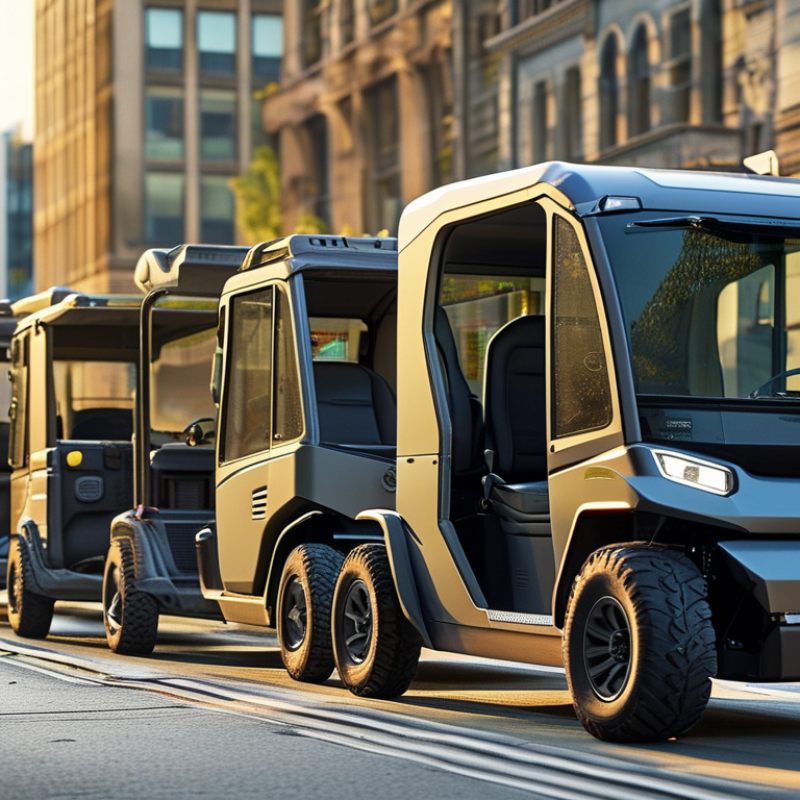
How to Choose the Best Electric Utility Vehicle for Your Business?

Understanding Your Business Needs for Electric Utility Vehicles

When selecting the right electric utility vehicle (EUV) for your business, it’s crucial to assess your specific needs. Consider your company’s daily operations, including distance and load requirements. A recent report by the International Council on Clean Transportation indicates that over 70% of urban businesses use vehicles primarily for short trips. Therefore, electric utility vehicles can be a perfect match for these businesses. They minimize carbon footprint while offering robust performance for short-range deliveries.

Evaluate maintenance costs and vehicle range. Studies show that EUVs can save businesses approximately 30% in maintenance compared to traditional vehicles. Battery life is essential as well. Some newer models provide a range of over 200 miles on a single charge, catering to diverse business demands. However, be mindful of charging infrastructure. Not all locations can support fast-charging stations. A mismatch could lead to operational inefficiencies.

Analyzing your business's unique demands is vital. Insufficient research can result in choosing an unsuitable vehicle, negatively impacting efficiency. Aligning vehicle specifications with practical applications—such as cargo capacity and terrain adaptability—ensures optimal use. Knowing your business needs will help you avoid common pitfalls and select the most reliable electric utility vehicle.

Evaluating Different Types of Electric Utility Vehicles

When evaluating different types of electric utility vehicles for your business, it's essential to consider various factors. Different businesses have unique demands. One business may require a compact vehicle for city deliveries, while another may need a larger utility truck for heavier loads. Understanding your specific needs is critical.

Range is a significant aspect. Electric vehicles have varying battery capacities. Some models can travel longer distances without recharging. You should evaluate how far your operations typically require you to go. Charging options are necessary too. Ensure that charging stations are accessible to avoid downtime.

Payload capacity is another vital consideration. Not all electric utility vehicles can handle the same weight. Misjudging this could lead to inefficiencies or even damages. Additionally, consider vehicle maintenance. Electric vehicles may generally have lower operating costs but can still require occasional servicing. Be mindful of these aspects when choosing the right vehicle.

How to Choose the Best Electric Utility Vehicle for Your Business?

Vehicle Type Cargo Capacity (lbs) Range (miles) Charging Time (hrs) Price ($)
Small Utility Van 1,200 100 6 30,000
Medium Duty Truck 3,500 150 8 55,000
Large Utility Truck 5,500 200 10 85,000
Electric Pickup 1,800 250 5 45,000

Key Features to Consider in Electric Utility Vehicle Selection

When selecting an electric utility vehicle (EUV) for your business, it’s vital to focus on key features. Battery capacity is crucial. A vehicle with a larger battery allows for greater range and reduced downtime. According to industry reports, many EUVs now offer ranges exceeding 200 miles on a single charge, catering to various business needs.

Payload capacity is another significant factor. Electric utility vehicles must carry tools and equipment efficiently. Some models can support over 3,000 pounds, according to recent studies. Consider the size and weight of items regularly transported. Your vehicle should not just accommodate today’s needs but anticipate future requirements as your business grows.

In terms of technology, advanced safety features are becoming standard. Look for options that include automatic braking and collision detection systems. These features enhance safety for operators and pedestrians alike. Also, connectable tech simplifies fleet management. Though costs may vary, it’s essential to weigh upfront investment against long-term savings from reduced fuel and maintenance costs.

Analyzing Cost and Budget Factors for Electric Utility Vehicles

When analyzing costs for electric utility vehicles (EUVs), budget factors are crucial. The initial purchase price varies significantly among models, typically ranging from $30,000 to $60,000. However, this price point may mislead businesses into overlooking long-term savings.

Operating costs for EUVs are considerably lower than traditional vehicles. A 2022 study showed that electric vehicles can save businesses up to 40% in fuel costs due to lower energy prices. Maintenance costs are also reduced. EUVs generally require less upkeep, resulting in fewer service interruptions.

Incentives can further improve the financial equation. Many regions offer tax credits and rebates for electric vehicle purchases. A report from the Alternative Fuels Data Center indicated that such incentives can offset up to 20% of the purchase price. However, not every business may qualify, highlighting the need for careful examination of eligibility.

Understanding all these factors is vital for making a well-informed decision. Assessing not only the immediate costs but also the long-term benefits ensures a balanced approach to investing in electric utility vehicles.

Ensuring Compliance with Regulations and Environmental Standards

Compliance with regulations and environmental standards is crucial when selecting electric utility vehicles (EUVs) for your business. With the increasing push for sustainability, understanding local regulations is vital. According to a report from the International Energy Agency, over 50 countries have introduced or proposed incentives for zero-emission vehicles. This surge reflects a global shift towards cleaner transportation. Businesses must pay attention to their region’s specific requirements to avoid potential fines.

To ensure you select an EUV that complies with regulations, research your area’s emission standards. Consulting local government websites and environmental agencies can provide essential insights. Keep abreast of upcoming regulations, as these can change rapidly. The U.S. Environmental Protection Agency reported that non-compliance costs businesses up to $5 billion annually.

**Tip:** Regularly review vehicle emissions data. Utilize compliance checklists during the decision-making process.

Moreover, consider the vehicle’s environmental impact beyond regulations. Review lifecycle assessments that cover manufacturing, operation, and end-of-life stages. According to the Carbon Trust, electric vehicles have lower overall emissions than traditional vehicles, but the extent varies based on energy sources. Always question if your chosen vehicle aligns with your sustainability goals.

**Tip:** Engage with industry experts for tailored advice. This can help in choosing a vehicle that satisfies both compliance and sustainability targets.

Electric Utility Vehicles: Key Factors for Business Decision

Copyright 2025 Fluidra S.A. | Created by BCM Marketing Agencia Privacy Policy Legal note | Cookie policy |

Technical cookies are strictly necessary for our website to work and you can navigate through it. These types of cookies are those that, for example, allow us to identify you, give you access to certain restricted parts of the page if necessary, or remember different options or services already selected by you, such as your privacy preferences. Therefore, they are activated by default, your authorization not being necessary in this regard. Through the configuration of your browser, you can block or alert the presence of this type of cookies, although such blocking will affect the proper functioning of the different functionalities of our website.


The analysis cookies allow us to study the navigation of the users of our website in general (for example, which sections of the page are the most visited, which services are used most and if they work correctly, etc.). From the statistical information on navigation on our website, we can improve both the operation of the page itself and the different services it offers. Therefore, these cookies do not have an advertising purpose, but only serve to make our website work better, adapting to our users in general. By activating them you will contribute to this continuous improvement. You can enable or disable these cookies by checking the corresponding box, being disabled by default.


Functionality cookies allow us to remember your preferences, to personalize certain characteristics and general options of our website, every time you access it (for example, the language in which the information is presented to you, the sections marked as favorites, your browser type, etc.) Therefore, this type of cookies does not have an advertising purpose, but by activating them you will improve the functionality of the website (for example, adapting to your type of browser) and the customization of it based on your preferences (for example, by presenting the information in the language that you have chosen in previous occasions), which will contribute to the ease, usability and comfort of our page during your navigation. You can enable or disable these cookies by checking the corresponding box, being disabled by default.


Advertising cookies allow us to manage the advertising spaces included in our website based on criteria such as the content shown or the frequency in which the ads are displayed. For example, if you have been shown the same ad several times on our website, and you have not shown a personal interest by clicking on it, it will not appear again. In summary, by activating this type of cookies, the advertising shown on our website will be more useful and diverse, and less repetitive. You can enable or disable these cookies by checking the corresponding box, being disabled by default.


Behavioral advertising cookies allow us to obtain information based on the observation of your browsing habits and behaviors on the web, in order to show you advertising content that best suits your personal tastes and interests. To understand it in a very simple way, we will give you a fictitious example: if your last searches on the web were related to suspense literature, we would show you advertising about suspense books. Therefore, activating this type of cookies, the advertising that we show you on our website will not be generic, but will be oriented to your searches, tastes and interests, therefore adjusting exclusively to you. You can enable or disable these cookies by checking the corresponding box, being disabled by default.
To understand it in a very simple way, we will give you a fictitious example: if your last searches on the web were related to suspense literature, we would show you advertising about suspense books. Therefore, activating this type of cookies, the advertising that we show you on our website will not be generic, but will be oriented to your searches, tastes and interests, therefore adjusting exclusively to you. You can enable or disable these cookies by checking the corresponding box, being disabled by default.

SAVE

We use our own and third-party cookies to ensure the proper functioning of the website and to analyse our services, improve your experience on our website and show you advertisements related to your interests according to profiling based on your browsing habits (e.g. websites visited). You can accept all cookies by clicking "ACCEPT" or set or reject them by clicking here. If you would like to know more about the use of cookies, please see our COOKIE POLICY.


ACCEPT ALL
Reject no essentials


