
How to Choose Flap Turnstile Gates for Global Buyers?
FLUID HANDLING EXPERTS

Blog, all our news

How to Choose Flap Turnstile Gates for Global Buyers?

Choosing Flap Turnstile Gates is no longer a simple matter of comparing stainless-steel finishes and quoted prices. Global buyers now assess security performance, user flow, accessibility, data integration, maintenance, and local compliance together. A gate that looks impressive in a showroom may struggle at a humid railway station or a busy office entrance.

MarketsandMarkets’ Access Control Market report projects strong global growth through 2029, driven by smart buildings, biometric systems, and integrated security platforms. Grand View Research also identifies access control as a major segment within the expanding physical security industry. These figures suggest rising demand, but they do not make every turnstile suitable for every site. That is where practical evaluation matters.

This guide explains how to compare Flap Turnstile Gates across airports, corporate campuses, factories, universities, and public facilities. It considers lane width, throughput, anti-pinch protection, emergency release, sensor accuracy, and controller compatibility. It also examines IP ratings, cycle testing, spare-parts access, and supplier support across borders. Small details matter. A poorly positioned sensor can create repeated false alarms. A narrow lane can frustrate wheelchair users and luggage carriers. A low-cost controller may also become expensive after integration work.

Reliable purchasing decisions require more than brochures. Buyers should request test records, installation references, warranty terms, and clear responsibility for after-sales service. ISO 9001 certification can support confidence in production controls, but it does not replace product-specific testing. Some assumptions may still fail in real conditions. Careful site trials remain essential.
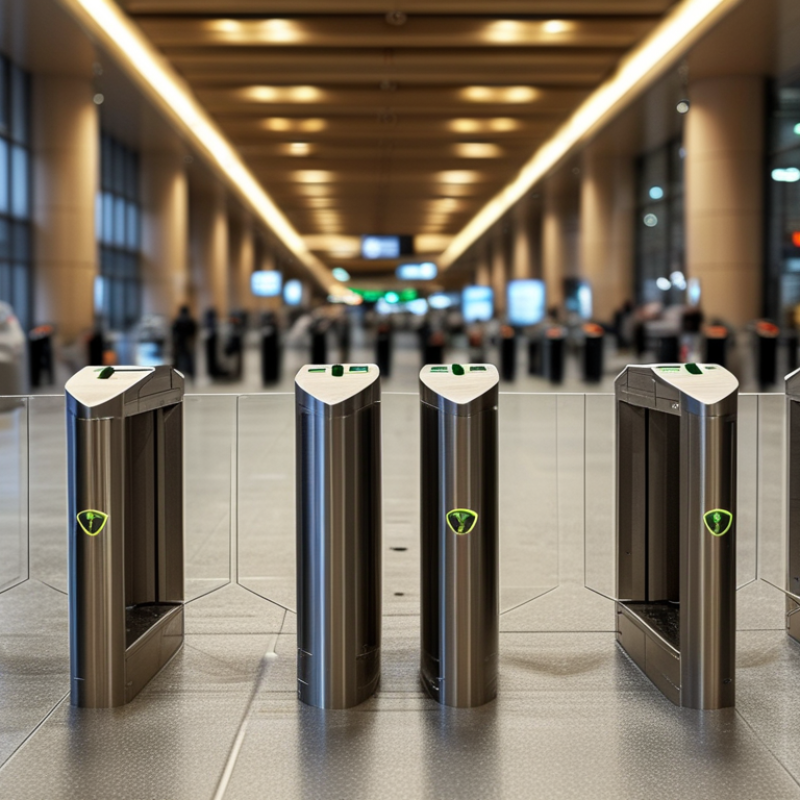
How to Choose Flap Turnstile Gates for Global Buyers?

Understanding Flap Turnstile Gates and Their Core Functions

Flap turnstile gates regulate pedestrian entry through motorized panels that open after authorization. Their core function is simple: allow one person through and then close quickly. Optical sensors detect passage, tailgating, and objects caught near the flaps. In busy offices, this control reduces accidental entry and keeps movement orderly. It is not a complete security system.

Global buyers should examine the gate’s operating environment before comparing appearance or price. A narrow lobby may need a compact lane, while an airport requires higher throughput and clearer guidance. Check lane width for wheelchair users, emergency release behavior, and compatibility with access cards, QR codes, or other approved credentials. Battery backup can keep the lane safe during a power interruption. The enclosure also needs suitable corrosion resistance for humid coastal locations or dusty transport hubs.

Installation experience often reveals overlooked details. Floor quality, cable routes, drainage, and service clearance affect daily reliability. Ask for tested cycle ratings, sensor response data, maintenance instructions, and documented safety performance. Local technical support matters when a flap motor stops during peak hours. No model is perfect. A fast gate may create noise, while a quiet gate may move more slowly. Buyers should test real queues, not just review specifications. A short site trial can expose blind spots before a large order is approved.

Assessing Site Conditions, Traffic Flow, and Security Requirements

How to Choose Flap Turnstile Gates for Global Buyers?

Site conditions should guide the first decision. Measure doorway width, ceiling height, floor level, and available power. Record dust, humidity, salt air, and temperature changes. A coastal entrance needs stronger corrosion protection. A lobby with uneven flooring may require a different mounting solution. Check emergency egress and accessible routes before selecting lane layouts. The International Air Transport Association reported 4.7 billion air passengers in 2024. High-volume sites need equipment tested under continuous, realistic use.

Traffic flow requires more than counting daily visitors. Measure arrivals in five-minute peak intervals. Observe luggage, wheelchairs, staff badges, and visitor escorts. These details change the real lane capacity. A narrow flap lane may slow queues, even when its access reader is fast. Create separate lanes for authorized staff and occasional visitors when space allows. Test the arrangement during shift changes. Small delays become visible quickly.

Security requirements should match the threat and operating model. Choose reader technology, anti-tailgating detection, alarm logic, and remote monitoring together. Confirm safe release during power loss and emergency evacuation. The Grand View Research access control report estimated the global market at USD 9.9 billion in 2023, showing strong investment in controlled entry systems. Growth does not guarantee good selection. A cheaper gate can create higher maintenance costs. I would request site testing, service records, and failure-rate data before ordering. No specification sheet replaces a physical trial.

Comparing Gate Types, Materials, Capacity, and Access Features

How to Choose Flap Turnstile Gates for Global Buyers?

Flap turnstiles suit offices, airports, campuses, and controlled public entrances. Their glass or polycarbonate wings create a clear, welcoming boundary. Tripod gates are usually cheaper, but they offer less accessibility and weather protection. Full-height gates provide stronger perimeter control, yet they may feel excessive inside a reception area. Choose the gate type according to risk, user flow, and available space.

Material selection affects service life. Stainless steel 304 works well indoors and in mild climates. Stainless steel 316 is safer near seawater, heavy humidity, or de-icing salt. Check weld quality, coating thickness, drainage, and moving-part protection. A polished surface looks attractive, but fingerprints quickly reveal poor maintenance planning. Small detail. It matters.

Capacity figures need careful testing. Many suppliers advertise 25–30 passages per minute per lane under ideal conditions. Real queues often move more slowly because users scan cards, carry bags, or hesitate. Grand View Research estimated the global access control market at about USD 9.8 billion in 2022, with strong growth expected through 2030. This supports investment, but market growth does not guarantee a suitable gate. Request measured throughput, emergency release performance, wheelchair clearance, and integration with RFID, mobile credentials, biometrics, fire alarms, and visitor systems. EN 17352 testing can also help compare powered pedestrian entrance-control equipment.

Checking Safety Standards, System Integration, and Environmental Performance

How to Choose Flap Turnstile Gates for Global Buyers?

Safety should be verified before appearance or throughput. EN 17352 addresses powered pedestrian entrance controls, including impact, crushing, and trapping risks. Ask for documented tests, risk assessments, and emergency release results. ISO 13849-1 also helps evaluate safety-related control systems. Do not accept a certificate without checking its scope, test date, and product configuration. Small differences matter.

Integration deserves equal attention. Confirm whether the gate supports access cards, QR codes, biometric readers, fire alarms, and visitor software. Interfaces should use documented protocols and controlled permissions. The 2024 Verizon Data Breach Investigations Report found that the human element appeared in 68% of breaches. Therefore, shared passwords and unmanaged administrator accounts create real exposure. A reliable project includes role-based access, event logs, firmware updates, and offline operation. Integration often fails during handover.

Environmental performance is practical, not decorative. The Global E-waste Monitor 2024 reported 62 million tonnes of electronic waste in 2022, with 82 million tonnes projected by 2030. Select gates with replaceable modules, repairable drives, efficient standby modes, and recyclable materials. Check the IP rating under IEC 60529 for dust and water conditions. Coastal air, freezing temperatures, and muddy entrances can change performance quickly. A weakness remains: laboratory ratings cannot fully reproduce poor installation or neglected maintenance. Review local service skills, spare-part access, and cleaning routines before purchase.

Evaluating Suppliers, Installation Costs, Maintenance, and Long-Term Value

How to Choose Flap Turnstile Gates for Global Buyers?

Supplier evaluation should begin with evidence, not polished brochures. Request factory test records, installation references, response times, spare-parts policies, and cybersecurity documentation. A reliable supplier should explain throughput, emergency release behavior, ingress protection, and operating temperature clearly. Site audits often reveal small weaknesses, such as slow sensor recovery or poor cable routing. Measure the opening first. The global access control market was valued at about USD 10.38 billion in 2022, according to Grand View Research, with strong growth expected through 2030. This expansion increases choice, but not necessarily quality.

Installation costs include more than the gate. Budget for foundations, power supplies, network cabling, access-control integration, delivery, local labor, commissioning, and user training. Ask suppliers to separate every item in the quotation. MarketsandMarkets projected the access control market to rise from USD 10.5 billion in 2023 to USD 14.9 billion by 2028. Growing demand may create pricing pressure, yet rushed installation can cause alignment faults and repeated callouts. A cheaper proposal can become expensive.

Maintenance planning protects long-term value. Check motor duty cycles, sensor replacement time, software support, and the availability of critical spare parts. Preventive inspections should cover hinges, barriers, obstruction detection, fasteners, and emergency interfaces. Keep it practical. Calculate lifecycle cost over five to ten years, not just purchase price. I would still question optimistic maintenance promises. Dust, humidity, heavy pedestrian flow, and inconsistent local service can change the result. A gate that performs well in a showroom may behave differently at a crowded entrance.

How to Choose Flap Turnstile Gates for Global Buyers? - Evaluating Suppliers, Installation Costs, Maintenance, and Long-Term Value

Supplier / Purchasing Route Typical Buyer Profile Typical Unit Price
(USD)
Typical Lead Time International Freight & Insurance
per Lane
Installation Cost
per Lane
Annual Maintenance
per Lane
Expected Service Life Standard Warranty Estimated 10-Year Total Cost
per Lane
Best Long-Term Value When...
Direct factory purchase Large projects with technical staff and consolidated shipping US$1,600–3,200 4–10 weeks US$250–700 US$300–800 US$120–280 8–12 years 12–24 months US$4,200–8,500 The buyer can manage commissioning, spare parts, and remote technical support.
Regional authorized distributor Organizations requiring local stock and first-line service US$2,400–4,800 2–8 weeks US$50–250 US$500–1,200 US$180–400 8–12 years 12–36 months US$5,500–10,800 Downtime is expensive and local response time is more important than the lowest purchase price.
Security-system integrator Sites requiring access-control, visitor-management, or elevator integration US$3,200–6,500 4–12 weeks US$50–300 US$800–1,800 US$250–600 8–15 years 12–36 months US$7,500–14,500 One contractor must take responsibility for design, integration, testing, and handover.
Local access-control contractor Small or medium sites with straightforward card, QR, or biometric access US$2,200–4,500 3–10 weeks Usually included US$600–1,500 US$200–500 6–10 years 12–24 months US$6,000–11,500 The project needs a simple deployment, local labor, and a single point of contact.
Public-sector or critical-facility specialist Transport, healthcare, government, and high-security facilities US$4,500–9,000 8–20 weeks US$100–500 US$1,000–2,500 US$350–900 10–15 years 24–60 months US$10,000–20,000 Compliance documentation, redundancy, controlled access, and lifecycle support are mandatory.
Evaluation assumptions: The figures above are realistic industry benchmark ranges for indoor or sheltered flap turnstile installations with one lane, standard stainless-steel housing, normal passenger traffic, and basic access-control integration. Prices exclude local taxes, customs duties, civil works, electrical upgrades, network infrastructure, and major building modifications. Installation and maintenance costs vary by country, labor rates, site conditions, traffic volume, climate, and required service-level agreement.
Recommended supplier checks: Confirm operating temperature and humidity limits, throughput rating, emergency release behavior, fire-alarm interface, obstacle detection, accessibility clearance, spare-parts availability, firmware and software compatibility, local electrical certification, response time, preventive-maintenance schedule, and the availability of replacement control boards, sensors, motors, and flap panels.

Article Source:

Copyright 2025 Fluidra S.A. | Created by BCM Marketing Agencia Privacy Policy Legal note | Cookie policy |

Technical cookies are strictly necessary for our website to work and you can navigate through it. These types of cookies are those that, for example, allow us to identify you, give you access to certain restricted parts of the page if necessary, or remember different options or services already selected by you, such as your privacy preferences. Therefore, they are activated by default, your authorization not being necessary in this regard. Through the configuration of your browser, you can block or alert the presence of this type of cookies, although such blocking will affect the proper functioning of the different functionalities of our website.


The analysis cookies allow us to study the navigation of the users of our website in general (for example, which sections of the page are the most visited, which services are used most and if they work correctly, etc.). From the statistical information on navigation on our website, we can improve both the operation of the page itself and the different services it offers. Therefore, these cookies do not have an advertising purpose, but only serve to make our website work better, adapting to our users in general. By activating them you will contribute to this continuous improvement. You can enable or disable these cookies by checking the corresponding box, being disabled by default.


Functionality cookies allow us to remember your preferences, to personalize certain characteristics and general options of our website, every time you access it (for example, the language in which the information is presented to you, the sections marked as favorites, your browser type, etc.) Therefore, this type of cookies does not have an advertising purpose, but by activating them you will improve the functionality of the website (for example, adapting to your type of browser) and the customization of it based on your preferences (for example, by presenting the information in the language that you have chosen in previous occasions), which will contribute to the ease, usability and comfort of our page during your navigation. You can enable or disable these cookies by checking the corresponding box, being disabled by default.


Advertising cookies allow us to manage the advertising spaces included in our website based on criteria such as the content shown or the frequency in which the ads are displayed. For example, if you have been shown the same ad several times on our website, and you have not shown a personal interest by clicking on it, it will not appear again. In summary, by activating this type of cookies, the advertising shown on our website will be more useful and diverse, and less repetitive. You can enable or disable these cookies by checking the corresponding box, being disabled by default.


Behavioral advertising cookies allow us to obtain information based on the observation of your browsing habits and behaviors on the web, in order to show you advertising content that best suits your personal tastes and interests. To understand it in a very simple way, we will give you a fictitious example: if your last searches on the web were related to suspense literature, we would show you advertising about suspense books. Therefore, activating this type of cookies, the advertising that we show you on our website will not be generic, but will be oriented to your searches, tastes and interests, therefore adjusting exclusively to you. You can enable or disable these cookies by checking the corresponding box, being disabled by default.
To understand it in a very simple way, we will give you a fictitious example: if your last searches on the web were related to suspense literature, we would show you advertising about suspense books. Therefore, activating this type of cookies, the advertising that we show you on our website will not be generic, but will be oriented to your searches, tastes and interests, therefore adjusting exclusively to you. You can enable or disable these cookies by checking the corresponding box, being disabled by default.

SAVE

We use our own and third-party cookies to ensure the proper functioning of the website and to analyse our services, improve your experience on our website and show you advertisements related to your interests according to profiling based on your browsing habits (e.g. websites visited). You can accept all cookies by clicking "ACCEPT" or set or reject them by clicking here. If you would like to know more about the use of cookies, please see our COOKIE POLICY.


ACCEPT ALL
Reject no essentials


