How to Choose Faux Stone Panels for Global Projects?
FLUID HANDLING EXPERTS

Blog, all our news

How to Choose Faux Stone Panels for Global Projects?

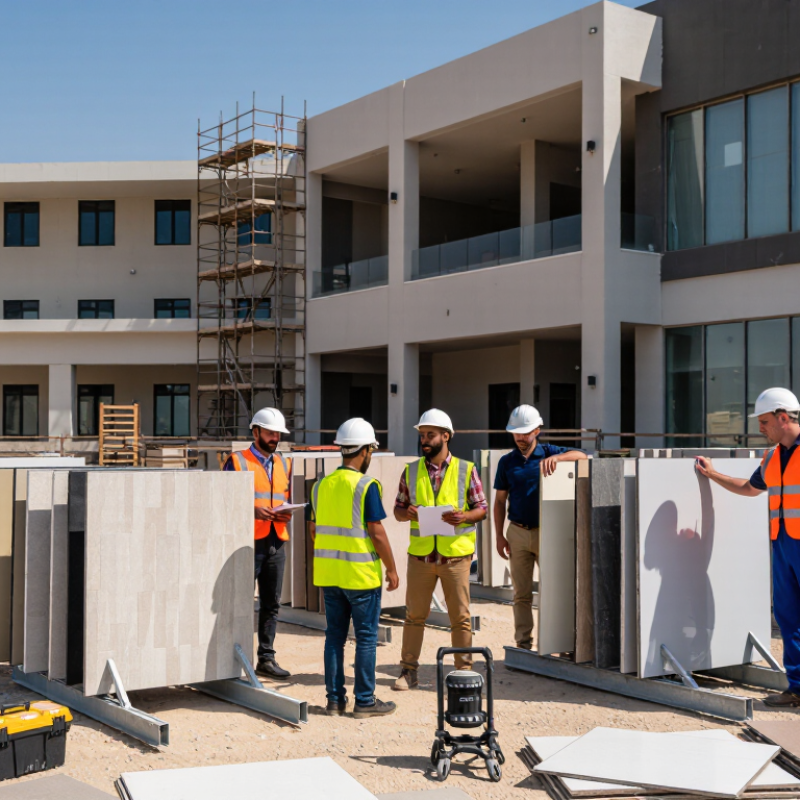
Choosing Faux Stone Panels for global projects requires more than comparing colors, textures, and prices. A panel that looks convincing in a showroom may perform poorly under intense sunlight, coastal moisture, freezing temperatures, or frequent cleaning. Project teams must examine the substrate, climate, installation method, transport conditions, and local building requirements before approving a product.

Material evidence matters. Ask manufacturers for technical data, fire-performance documentation, water-resistance information, UV testing, and installation instructions. Confirm whether these documents apply to the exact panel model, not a similar product. Experienced contractors can also reveal practical details, such as broken edges after shipping, difficult corner joints, or adhesive failure on dusty surfaces. These small issues often affect schedules more than expected.

Global sourcing adds another layer of responsibility. Reliable suppliers should explain production consistency, packaging protection, batch control, replacement procedures, and warranty limits. Local regulations and approved installation systems must guide the final decision. A low-cost panel may become expensive after customs delays, extra framing, or site repairs.

There is no universal best choice.

Even careful recommendations can miss regional realities. A successful hotel project in a dry climate may not predict performance near a humid coastline. The safest approach combines verified test results, local professional advice, sample installation, and honest risk review. This guide explores how to compare Faux Stone Panels with practical judgment, technical discipline, and attention to the people who will install, maintain, and experience the finished building.

How to Choose Faux Stone Panels for Global Projects?

Define Project Requirements and Faux Stone Panel Applications

Choosing faux stone panels for global projects begins with a clear application brief. Define the building type, climate, substrate, budget, and installation method. Exterior façades face ultraviolet exposure, wind, rain, and freeze-thaw cycles. Interior walls need different priorities, such as cleanability, acoustics, and impact resistance. Panels are decorative systems, not structural elements. Confirm this distinction before preparing drawings.

The 2024 Global Status Report for Buildings and Construction states that buildings consume 32% of global energy and produce 34% of energy-related emissions. Lightweight panel systems may reduce handling and transport demands, but performance still depends on the backing, fixings, and installation quality. McKinsey’s modular construction research reports potential schedule reductions of 20–50%. That benefit can disappear when panel sizes, fire documentation, or replacement parts vary across markets. A showroom sample can mislead. Test the complete wall assembly instead.

Tips: Request fire, moisture, impact, UV, and freeze-thaw evidence for the target region. Check local code requirements before selecting colors or textures. Use mock-ups with real joints, corners, trims, and sealants. Confirm container dimensions and replacement availability. Leave access for future repairs. I would also question highly realistic textures; they can look convincing nearby but artificial from a distance. That is not always a failure, but it needs honest review.

Compare Panel Materials, Textures, Colors, and Manufacturing Quality

Choosing faux stone panels for global projects requires more than matching a showroom image. Material selection affects weight, durability, installation speed, and transport costs. Polyurethane panels are lightweight and easy to cut, while fiber-reinforced options may offer greater rigidity and impact resistance. Cement-based panels can feel highly authentic, but they usually require stronger support and careful handling.

Texture should suit the building’s scale and viewing distance. Deep joints create strong shadows on large exterior walls, while fine textures appear more natural indoors. Color also changes under sunlight, rain, and artificial lighting. Warm gray may look beige near wood, but cold gray can appear blue beside glass. I have learned that digital color charts often mislead. Physical samples are essential. Ask for samples with different lighting conditions.

Manufacturing quality deserves close inspection. Check panel thickness, edge consistency, surface adhesion, color stability, and packaging protection. Uneven edges can create visible lines during installation. Weak protective wrapping may cause damage before the panels arrive. Request production records, quality inspection details, and installation guidance. Confirm moisture, fire, and impact requirements with qualified local professionals.

Tips: Compare at least three materials. Test samples outdoors. Measure repeated textures carefully. Review one finished installation before ordering in volume. A small sample cannot reveal every problem, so leave room for practical adjustment.

Evaluate Climate Resistance, Fire Safety, and Building Code Compliance

When selecting faux stone panels for global projects, climate resistance deserves practical testing. A sample may look convincing indoors, yet fail under coastal salt, intense ultraviolet light, or repeated freezing. I have seen joint edges swell after poor drainage trapped water behind panels. Ask for data on water absorption, freeze-thaw cycles, UV exposure, thermal movement, and impact resistance. Check whether the system includes compatible membranes, fasteners, sealants, and drainage details.

Fire safety must be assessed as a complete wall assembly, not from the panel alone. Request independent test reports showing flame spread, smoke development, and fire propagation results. Requirements can differ between exterior façades, balconies, interior corridors, and high-rise buildings. A panel rated for one application may be unsuitable elsewhere. Confirm substrate type, cavity depth, insulation, and installation method against the tested configuration. Small changes matter.

Building code compliance also requires local review. Verify product documentation with architects, fire engineers, and code officials in the destination market. Documents should identify testing standards, production controls, and installation limits. Translation quality matters too. A vague certificate creates risk. I prefer a site mock-up before procurement, including corners, window openings, and penetrations. It often exposes weak fixings or awkward joints. No system is perfect. The decision may still involve trade-offs between appearance, weight, cost, and long-term maintenance. Record those compromises clearly.

How to Choose Faux Stone Panels for Global Projects? – Evaluate Climate Resistance, Fire Safety, and Building Code Compliance

Evaluation Dimension Typical Project Risk Relevant Test Method or Reference Recommended Performance Target Evidence to Request Global Compliance Consideration
UV and Color Stability Color fading, chalking, surface embrittlement, and loss of coating adhesion in high-solar regions. ASTM G154, ASTM G155, ISO 4892-2, and color-change evaluation using ASTM D2244. Use accelerated-weathering data appropriate to the resin and finish; require documented color-change limits agreed in the specification. Independent weathering report, exposure duration, lamp type, irradiance, temperature cycle, and ΔE results. Solar exposure varies significantly by latitude, altitude, and orientation; do not treat an indoor-use rating as an exterior rating.
Freeze–Thaw Resistance Cracking, delamination, spalling, and water expansion in cold or seasonally freezing climates. ASTM C67 for masonry-related absorption and freeze–thaw evaluation where applicable; project-specific manufacturer or laboratory cycling protocols may also be required. Select a system tested for the expected number of freeze–thaw cycles and moisture condition; no visible cracking or delamination should be accepted after testing. Test specimen construction, number of cycles, saturation condition, mass loss, cracking record, and post-test photographs. The panel, adhesive, fasteners, joints, and substrate must be evaluated as one assembly in cold climates.
Water Absorption and Moisture Management Water ingress, mold growth, corrosion of fixings, and trapped moisture behind the cladding. ASTM C67, ASTM D570 for plastic materials where relevant, ASTM E331 for water penetration, and project-specific hygrothermal analysis. Specify a drained and ventilated rainscreen where required; provide defined water-shedding joints, flashings, weeps, and compatible membranes. Water-absorption results, assembly water-penetration report, installation details, drainage-path drawings, and sealant compatibility data. High rainfall, coastal exposure, and humid climates require particular attention to joints, penetrations, and back ventilation.
Thermal Movement Buckling, joint opening, cracking, or fastener stress caused by daily and seasonal temperature changes. ASTM D696 or ASTM E831 for coefficient of linear thermal expansion, depending on material type. Design joint spacing, fixing slots, and movement allowances from tested expansion data rather than using a universal gap. Coefficient of thermal expansion, service-temperature range, panel dimensions, and approved movement-joint details. Dark colors and high-rise façades can experience greater surface temperatures and require project-specific movement design.
Wind Load and Impact Resistance Panel detachment, cracking, or damage from wind pressure, debris, hail, and maintenance activity. ASTM E330 for structural performance, ASTM E331 for water penetration, ASTM E1996 for impact-related fenestration applications where applicable, and local façade standards. Verify the complete attachment system for calculated positive and negative wind pressures, including corner and edge zones. System test report, engineering calculations, fastener pull-out data, substrate requirements, and approved fixing layout. Wind design depends on building height, terrain, openings, local wind speed, and national structural provisions.
Reaction to Fire Flame spread, smoke production, and contribution to fire growth on interior or exterior surfaces. ASTM E84, CAN/ULC-S102, EN 13501-1, ISO 5660, or another method specifically required by the project authority. Specify the required classification or flame-spread/smoke-developed limits for the intended location, rather than relying on a generic “fire resistant” statement. Current third-party classification report identifying panel composition, thickness, finish, substrate, and mounting orientation. Fire classification is not transferable when the panel, adhesive, air gap, insulation, or substrate changes.
External Wall Fire Performance Vertical fire spread through combustible cladding, cavities, insulation, or concealed spaces. NFPA 285, CAN/ULC-S134, BS 8414, EN 1364-6, or the applicable full-scale façade test required by the jurisdiction. Use a tested wall assembly matching the actual panel, cavity, insulation, membranes, barriers, joints, and window interfaces. Full-scale assembly report, field-of-application limits, fire-stopping details, cavity-barrier schedule, and installation restrictions. High-rise and combustible-wall projects often require assembly-level testing or an approved engineering assessment.
Smoke and Toxicity Considerations Smoke obscuration and hazardous combustion products during a building fire. Use the smoke-development provisions within the applicable fire test and local building regulations; additional smoke-toxicity assessment may be required for specific occupancies. Confirm that the material and any coating, adhesive, or backing meet the project’s smoke and occupancy requirements. Safety data sheet, fire-test smoke results, material composition declaration, and coating/adhesive information. Requirements can be stricter in transportation facilities, healthcare buildings, high-occupancy spaces, and enclosed egress routes.
Building Code and Product Approval Delays, rejected submittals, redesign, or non-approval by the building authority. Applicable national and local building codes, façade provisions, energy codes, accessibility rules, and approved product-evaluation procedures. Prepare a compliance matrix covering structure, fire, moisture, thermal performance, durability, and installation requirements before procurement. Technical data sheet, declaration of performance or conformity where applicable, evaluation report, test certificates, drawings, and installation manual. A test report alone does not constitute approval; acceptance depends on the local authority, building type, height, and installation conditions.
Thermal and Energy Performance Condensation, excessive heat transfer, and failure to meet the building energy model. ISO 6946, ASTM C518, ASTM C177, EN 12667, and the applicable national energy code. Evaluate the complete wall build-up, including insulation, thermal bridges, air barrier, vapor control, and panel cavity—not the decorative panel alone. Declared thermal conductivity or resistance, assembly U-value calculation, condensation analysis, and thermal-bridge details. Climate zone, indoor humidity, wall orientation, and local energy requirements determine the appropriate assembly.
Chemical and Coastal Exposure Salt spray, industrial pollutants, cleaning chemicals, and accelerated corrosion or finish deterioration. ASTM B117 or ISO 9227 for salt-spray screening, plus material-specific chemical-resistance testing. Use corrosion-resistant fasteners and verify compatibility of panels, coatings, sealants, membranes, and cleaning agents. Salt-spray or cyclic-corrosion results, fastener grade, coating specification, chemical-resistance data, and maintenance instructions. Salt-spray duration is a comparative laboratory indicator and should not be treated as a direct prediction of service life.
Installation and Maintenance Control Performance loss caused by incorrect adhesive use, insufficient fasteners, poor joint detailing, or unapproved field modifications. Manufacturer installation instructions, project specifications, local workmanship standards, and site quality-control procedures. Require approved mock-ups, installer training, substrate inspection, documented fastener spacing, and controlled repair procedures. Installation manual, inspection checklist, mock-up approval, maintenance schedule, repair method, and spare-panel plan. The approved installation method must remain consistent with the tested and submitted wall assembly.

Note: Test standards and acceptance thresholds must be confirmed with the project’s architect, fire engineer, structural engineer, building authority, and applicable national or local code.

Assess Installation Methods, Structural Needs, and Local Labor Conditions

Choosing faux stone panels for a global project requires more than comparing colors and textures. Installation methods must match the building’s structure, climate, and available labor. A lightweight panel may suit a renovation, while a mechanically fixed system offers better security on tall façades. Do not assume adhesive alone will perform well in humid or dusty regions. On one site, uneven masonry forced the crew to add a framed support layer, increasing both time and material use. That mistake was avoidable.

Structural checks should cover wall strength, panel weight, wind pressure, moisture movement, and fire performance. Local engineers can verify anchor spacing and substrate conditions before ordering large quantities. Small test areas are valuable. They reveal bonding problems, visible joints, and color changes under strong sunlight. They also expose weaknesses in the installation plan.

Labor conditions often decide whether a system succeeds. In regions with limited façade experience, panels with clear cutting guides and simple mechanical connections may reduce errors. Skilled workers still need training on corners, openings, drainage gaps, and sealant application. A short demonstration near the work area usually works better than a remote manual. Tools matter too; unreliable saws can create chipped edges and wasted panels. Language differences, heat, and irregular work schedules can affect quality. I have seen detailed specifications fail when they ignored these practical conditions. A flexible method, checked by local supervisors, is usually safer than a theoretically perfect one.

How to Choose Faux Stone Panels for Global Projects

Compare installation methods by the main factors that influence international facade projects: installation speed, structural demand, equipment requirements, and dependence on skilled local labor. Final selection should be verified against local building codes, wind loads, seismic conditions, substrate quality, and available installation expertise.

Review Costs, Suppliers, Maintenance, and Long-Term Performance

Choosing faux stone panels for global projects begins with the whole cost, not the unit price. A low quote may hide crating, import duties, specialized fixings, and regional installation labor. I compare delivered costs per square meter across at least three qualified suppliers. Ask for samples, technical data, fire ratings, water absorption, UV resistance, and verified test reports. Documents matter. Suppliers should explain production controls, replacement policies, lead times, and export packaging. I also check whether local installers have handled similar systems.

Maintenance changes by climate. Coastal sites need closer inspections because salt and wind expose weak joints. Hot, sunny regions demand tested color stability and movement allowances. In cold zones, freeze-thaw performance matters more than showroom appearance.

Cleaning instructions should be simple and realistic. If panels require special chemicals, labor costs can quietly grow. Request a maintenance schedule with inspection intervals, repair methods, and expected service life. Warranty language deserves careful reading because exclusions may cover likely damage.

For long-term performance, review substructure compatibility, drainage, ventilation, and installer training. A beautiful panel fails when water remains behind it. I prefer suppliers who provide references, traceable batch information, and responsive technical support. Independent inspection can verify color, dimensions, and fastening before handover. My project reviews are not always perfect. Early budgets often understate access equipment and future repairs. A small pilot installation can reveal awkward cuts, visible seams, and cleaning problems before the full shipment leaves the factory.

Copyright 2025 Fluidra S.A. | Created by BCM Marketing Agencia Privacy Policy Legal note | Cookie policy |

Technical cookies are strictly necessary for our website to work and you can navigate through it. These types of cookies are those that, for example, allow us to identify you, give you access to certain restricted parts of the page if necessary, or remember different options or services already selected by you, such as your privacy preferences. Therefore, they are activated by default, your authorization not being necessary in this regard. Through the configuration of your browser, you can block or alert the presence of this type of cookies, although such blocking will affect the proper functioning of the different functionalities of our website.


The analysis cookies allow us to study the navigation of the users of our website in general (for example, which sections of the page are the most visited, which services are used most and if they work correctly, etc.). From the statistical information on navigation on our website, we can improve both the operation of the page itself and the different services it offers. Therefore, these cookies do not have an advertising purpose, but only serve to make our website work better, adapting to our users in general. By activating them you will contribute to this continuous improvement. You can enable or disable these cookies by checking the corresponding box, being disabled by default.


Functionality cookies allow us to remember your preferences, to personalize certain characteristics and general options of our website, every time you access it (for example, the language in which the information is presented to you, the sections marked as favorites, your browser type, etc.) Therefore, this type of cookies does not have an advertising purpose, but by activating them you will improve the functionality of the website (for example, adapting to your type of browser) and the customization of it based on your preferences (for example, by presenting the information in the language that you have chosen in previous occasions), which will contribute to the ease, usability and comfort of our page during your navigation. You can enable or disable these cookies by checking the corresponding box, being disabled by default.


Advertising cookies allow us to manage the advertising spaces included in our website based on criteria such as the content shown or the frequency in which the ads are displayed. For example, if you have been shown the same ad several times on our website, and you have not shown a personal interest by clicking on it, it will not appear again. In summary, by activating this type of cookies, the advertising shown on our website will be more useful and diverse, and less repetitive. You can enable or disable these cookies by checking the corresponding box, being disabled by default.


Behavioral advertising cookies allow us to obtain information based on the observation of your browsing habits and behaviors on the web, in order to show you advertising content that best suits your personal tastes and interests. To understand it in a very simple way, we will give you a fictitious example: if your last searches on the web were related to suspense literature, we would show you advertising about suspense books. Therefore, activating this type of cookies, the advertising that we show you on our website will not be generic, but will be oriented to your searches, tastes and interests, therefore adjusting exclusively to you. You can enable or disable these cookies by checking the corresponding box, being disabled by default.
To understand it in a very simple way, we will give you a fictitious example: if your last searches on the web were related to suspense literature, we would show you advertising about suspense books. Therefore, activating this type of cookies, the advertising that we show you on our website will not be generic, but will be oriented to your searches, tastes and interests, therefore adjusting exclusively to you. You can enable or disable these cookies by checking the corresponding box, being disabled by default.

SAVE

We use our own and third-party cookies to ensure the proper functioning of the website and to analyse our services, improve your experience on our website and show you advertisements related to your interests according to profiling based on your browsing habits (e.g. websites visited). You can accept all cookies by clicking "ACCEPT" or set or reject them by clicking here. If you would like to know more about the use of cookies, please see our COOKIE POLICY.


ACCEPT ALL
Reject no essentials