
How to Choose Die Cutter Manufacturers in 2026?
FLUID HANDLING EXPERTS

Blog, all our news

How to Choose Die Cutter Manufacturers in 2026?

Choosing die cutter manufacturers in 2026 requires more than comparing machine prices. Packaging demand is expanding, while converters face shorter runs, tighter tolerances, and stricter sustainability expectations. Smithers’ report, The Future of Global Packaging to 2028, forecasts the global packaging market will exceed $1.2 trillion by 2028. Its findings suggest continuing investment in automation, efficiency, and recyclable materials. These trends directly affect die-cutting equipment selection.

PMMI’s 2024 State of the Industry report also recorded strong U.S. packaging machinery sales, valued at approximately $11.3 billion in 2023. The figure covers broader machinery, not die cutters alone. Still, it shows a clear direction. Buyers want connected equipment, faster changeovers, and dependable technical support. BOBST CEO Jean-Pascal Bobst has described this shift simply: “The future of packaging is connected, digital and sustainable.”

That future is not equally accessible from every supplier. A low quotation can look attractive. It may conceal weak after-sales service, limited spare parts, or costly downtime. A practical review should examine cutting accuracy, substrate range, automation options, safety documentation, energy use, and operator training. Ask for production samples. Inspect the waste-removal system. Speak with existing customers.

No checklist replaces factory experience. Some published market figures also combine several machinery categories, which can mislead buyers. Therefore, this guide compares die cutter manufacturers through verifiable performance, lifecycle cost, engineering capability, and service reliability. The right partner should support your next production challenge, not merely sell today’s machine.
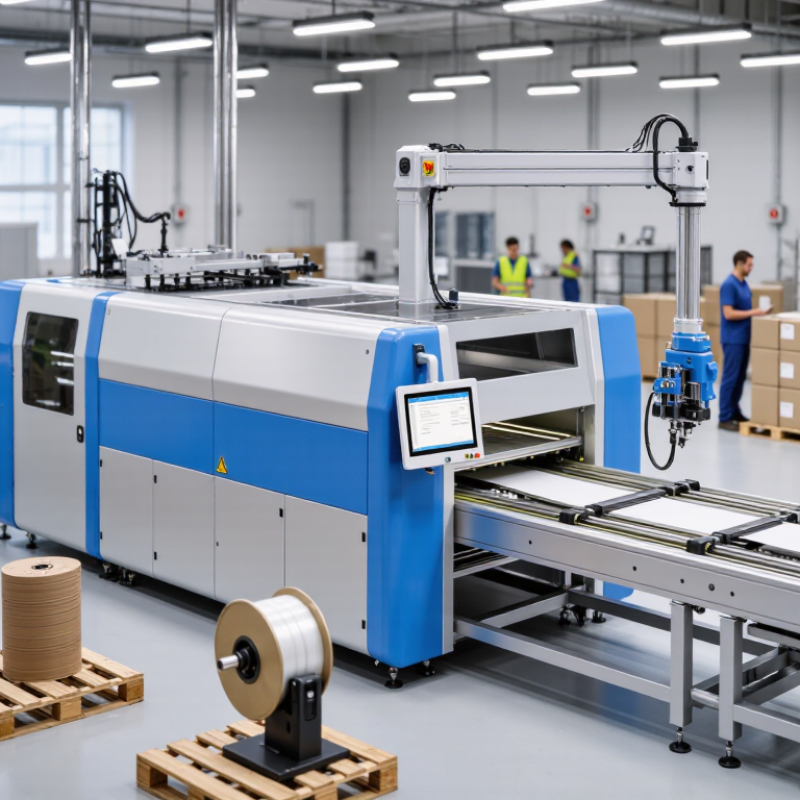
How to Choose Die Cutter Manufacturers in 2026?

Define Your Die-Cutting Requirements and Production Goals

How to Choose Die Cutter Manufacturers in 2026?

Define Your Die-Cutting Requirements and Production Goals

Begin with the material, not the machine. Record board grade, film thickness, sheet size, tolerances, crease depth, and surface finish. Include the smallest and largest planned formats. A die cutter that handles today’s carton may struggle with tomorrow’s recyclable structure. Smithers’ 2024 packaging outlook projects the global packaging market will grow from about $1.17 trillion in 2023 to $1.33 trillion by 2028. That growth increases pressure for flexible, repeatable production.

Set measurable goals before contacting manufacturers. Specify hourly output, acceptable waste, changeover time, inspection needs, and operator skill levels. Ask for test runs using your actual substrate. Review registration accuracy, edge quality, tooling life, and noise during operation. I have seen impressive speed figures hide frequent setup delays. That is a costly detail. A practical manufacturer should explain assumptions behind every performance claim. Request sample reports, maintenance records, and references from similar applications. UL or ISO certification alone does not prove die-cutting quality.

Tips: Prepare a one-page requirement sheet. Add monthly volume and peak-season demand. Compare total cost, not only purchase price. Check local service response times. Leave room for manual inspection, because real production is rarely perfect. Reconsider targets after pilot testing. Small design changes can reduce waste more than a faster machine.

How to Choose Die Cutter Manufacturers in 2026?

Define Your Die-Cutting Requirements and Production Goals

Use your expected annual volume to compare die cutter manufacturers consistently. Prototype and pilot projects usually prioritize flexibility and quick tooling changes, while medium- and high-volume production requires stable cycle times, automated material handling, repeatable registration accuracy, and dependable tooling life. The figures shown are practical planning examples and should be adjusted to your actual part size, material thickness, tolerances, and delivery schedule.

Compare Die Cutter Types, Materials, and Technical Capabilities

Choosing die cutter manufacturers in 2026 requires more than comparing quoted prices. Smithers’ packaging outlook projects global packaging demand will surpass 1.2 trillion dollars by 2028. That growth increases pressure on converters to improve speed, accuracy, and material flexibility. A flatbed die cutter suits short runs, thick paperboard, and complex shapes. Rotary systems support continuous production and higher volumes. Laser cutting reduces tooling needs, but energy use and edge quality require careful testing.

Material compatibility should guide the shortlist. Paperboard needs clean creasing and stable stripping. Corrugated board demands stronger feeding systems and wider clearance. Films, foam, and adhesive laminates require controlled tension and precise registration. The Freedonia Group reports that flexible packaging demand continues to expand, making web handling and waste removal important evaluation points. Ask each manufacturer for samples using your actual materials. Test narrow lines, small corners, stacked layers, and recycled substrates.

Technical capability matters more than impressive speed figures. Check cutting tolerance, servo control, inspection systems, tool-change time, and documented uptime. A fast machine is not always better. It may create more waste during difficult runs. Request maintenance records, operator training, spare-part lead times, and service coverage. I would also examine failure data, not only successful demonstrations. No manufacturer should avoid difficult questions. Real performance appears after repeated shifts, not during a polished factory trial.

Evaluate Manufacturer Quality, Certifications, and Customization Support

When choosing die cutter manufacturers in 2026, inspect production evidence, not polished promises. Ask for tolerance records, material specifications, and recent inspection reports. A reliable supplier can explain how frames, blades, controls, and safety guards are tested. Request a live demonstration using material close to yours. Watch the cut edge, waste removal, noise, and changeover time. Small details matter.

Check whether certifications apply to the actual factory and machine model. Confirm issuing bodies, validity dates, test scope, and documented corrective actions. A certificate alone does not prove stable output. Review calibration logs, maintenance schedules, and batch traceability. Speak with technical customers about uptime and response times. Keep confidential information protected. This is where claims become measurable.

Customization support should begin before the purchase order. An experienced engineering team should review drawings, identify risks, and suggest practical die layouts. Ask whether they provide sample trials, CAD revisions, tooling advice, operator training, and spare-part planning. Response speed matters when a prototype fails. Do not assume a perfect sample guarantees production consistency. A sample may use carefully selected material and extra inspection. One recurring lesson in supplier reviews is that communication records reveal more than brochures. Evaluation is never completely perfect, so document open questions and test assumptions before approving the final design.

Review Pricing, Lead Times, Service, and Total Ownership Costs

When choosing die cutter manufacturers in 2026, compare the complete quotation, not only the machine price. Ask for tooling, installation, training, software, freight, and maintenance costs separately. A low quotation may exclude critical items. That is where budgets become unreliable.

Lead time deserves evidence. Request a written production schedule, factory acceptance date, shipping window, and spare-parts availability. The 2024 MHI Annual Industry Report found that supply-chain resilience remains a major investment priority for manufacturers. A delayed cutter can also delay packaging orders, overtime planning, and customer deliveries. Ask how suppliers handled previous delays. Their answer may reveal more than a polished brochure.

Service quality directly affects total ownership cost. Deloitte’s 2024 Smart Manufacturing Survey reported that manufacturers continue increasing digital and operational technology investment. Choose a manufacturer offering remote diagnostics, response-time commitments, preventive maintenance, and documented technician coverage. Review five-year costs, including electricity, dies, consumables, downtime, operator training, and software updates. The U.S. Department of Energy notes that industrial energy management can produce meaningful savings, but actual results depend on equipment use and maintenance. Be careful with promised payback periods. They can look precise while hiding production assumptions. Ask for references from facilities with similar materials, batch sizes, and working hours. A perfect forecast is unlikely. A transparent one is more useful.

Verify Reliability Through Samples, Audits, and Customer References

How to Choose Die Cutter Manufacturers in 2026?

A reliable die cutter manufacturer should prove performance before receiving a large order. Request samples using your actual material, thickness, and artwork. Inspect cut edges under bright light. Look for burrs, crushed fibers, uneven corners, or incomplete cuts. Test folding lines by hand, then run the sample through your packing process. Small defects often become expensive production delays.

Ask for a factory audit, either in person or through an independent specialist. Review equipment maintenance records, operator training, quality checkpoints, and calibration schedules. A clean facility is useful, but documented control matters more. Check how the manufacturer handles rejected parts and design changes. Ask to see recent inspection reports. Avoid vague answers. However, an audit is only a snapshot, not permanent proof.

Customer references can reveal what documents cannot. Request two or three recent customers with similar volumes and materials. Ask about delivery consistency, communication, sample accuracy, and corrective action. Confirm whether problems were solved quickly or simply explained away. A manufacturer may provide excellent samples but struggle during peak production. That risk deserves attention. No checklist is perfect. Recheck key claims against shipping records, production photos, and direct conversations. Reliable suppliers accept detailed questions and provide evidence without pressure.

Copyright 2025 Fluidra S.A. | Created by BCM Marketing Agencia Privacy Policy Legal note | Cookie policy |

Technical cookies are strictly necessary for our website to work and you can navigate through it. These types of cookies are those that, for example, allow us to identify you, give you access to certain restricted parts of the page if necessary, or remember different options or services already selected by you, such as your privacy preferences. Therefore, they are activated by default, your authorization not being necessary in this regard. Through the configuration of your browser, you can block or alert the presence of this type of cookies, although such blocking will affect the proper functioning of the different functionalities of our website.


The analysis cookies allow us to study the navigation of the users of our website in general (for example, which sections of the page are the most visited, which services are used most and if they work correctly, etc.). From the statistical information on navigation on our website, we can improve both the operation of the page itself and the different services it offers. Therefore, these cookies do not have an advertising purpose, but only serve to make our website work better, adapting to our users in general. By activating them you will contribute to this continuous improvement. You can enable or disable these cookies by checking the corresponding box, being disabled by default.


Functionality cookies allow us to remember your preferences, to personalize certain characteristics and general options of our website, every time you access it (for example, the language in which the information is presented to you, the sections marked as favorites, your browser type, etc.) Therefore, this type of cookies does not have an advertising purpose, but by activating them you will improve the functionality of the website (for example, adapting to your type of browser) and the customization of it based on your preferences (for example, by presenting the information in the language that you have chosen in previous occasions), which will contribute to the ease, usability and comfort of our page during your navigation. You can enable or disable these cookies by checking the corresponding box, being disabled by default.


Advertising cookies allow us to manage the advertising spaces included in our website based on criteria such as the content shown or the frequency in which the ads are displayed. For example, if you have been shown the same ad several times on our website, and you have not shown a personal interest by clicking on it, it will not appear again. In summary, by activating this type of cookies, the advertising shown on our website will be more useful and diverse, and less repetitive. You can enable or disable these cookies by checking the corresponding box, being disabled by default.


Behavioral advertising cookies allow us to obtain information based on the observation of your browsing habits and behaviors on the web, in order to show you advertising content that best suits your personal tastes and interests. To understand it in a very simple way, we will give you a fictitious example: if your last searches on the web were related to suspense literature, we would show you advertising about suspense books. Therefore, activating this type of cookies, the advertising that we show you on our website will not be generic, but will be oriented to your searches, tastes and interests, therefore adjusting exclusively to you. You can enable or disable these cookies by checking the corresponding box, being disabled by default.
To understand it in a very simple way, we will give you a fictitious example: if your last searches on the web were related to suspense literature, we would show you advertising about suspense books. Therefore, activating this type of cookies, the advertising that we show you on our website will not be generic, but will be oriented to your searches, tastes and interests, therefore adjusting exclusively to you. You can enable or disable these cookies by checking the corresponding box, being disabled by default.

SAVE

We use our own and third-party cookies to ensure the proper functioning of the website and to analyse our services, improve your experience on our website and show you advertisements related to your interests according to profiling based on your browsing habits (e.g. websites visited). You can accept all cookies by clicking "ACCEPT" or set or reject them by clicking here. If you would like to know more about the use of cookies, please see our COOKIE POLICY.


ACCEPT ALL
Reject no essentials


