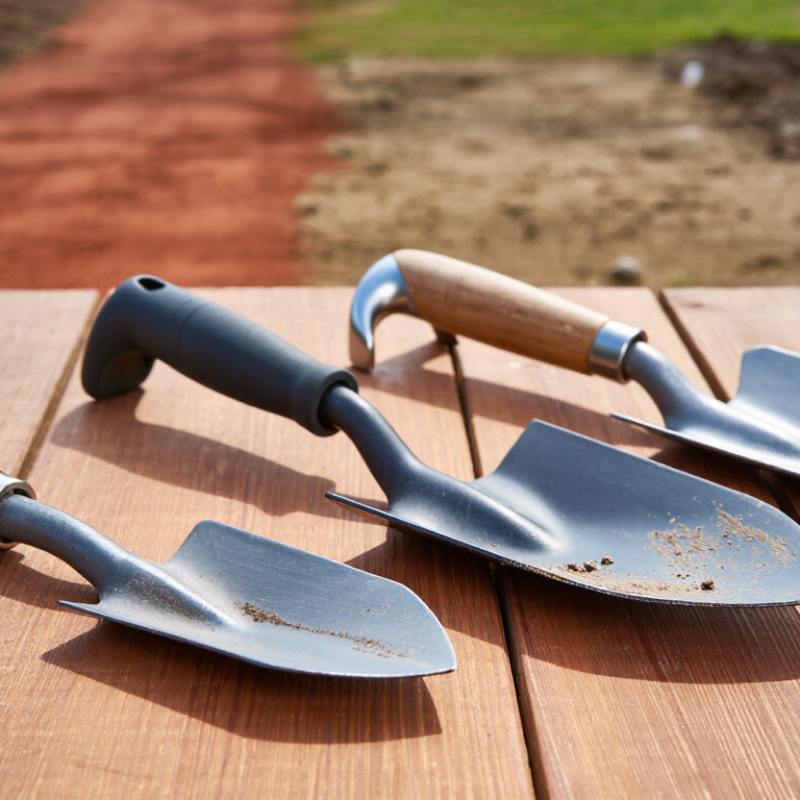
Choosing the best Post Hole Shovel in 2026 is less about finding the most expensive tool. It is about matching the shovel to your soil, project size, and working habits. Hard clay, loose sand, rocky ground, and wet garden beds each demand different strengths. A tool that performs well in soft soil may struggle badly against compacted ground.
Real-world use reveals details that product labels often overlook. Handle length affects leverage, while grip shape influences comfort after dozens of holes. Blade thickness matters when roots or small stones block the opening. Some models feel sturdy in a store but become tiring after an afternoon of fencing work. That difference is easy to miss. We will examine blade design, handle materials, weight, durability, and digging performance through practical criteria. The comparison will also consider user feedback and manufacturer specifications, not marketing claims alone.
There is no perfect choice.
A reliable recommendation should explain its limits. Budget models may offer excellent value, yet their hinges or grips can wear sooner. Premium shovels may improve control, but their higher cost is not always justified for occasional use. Weather, storage, and maintenance also influence service life. Even experienced users can overlook these factors. This guide aims to provide clear, evidence-based direction for homeowners, landscapers, and professional contractors. By the end, you should understand which features matter, which compromises are acceptable, and which Post Hole Shovel can handle your specific ground conditions with confidence.
Understanding Post Hole Shovel Types and Their Uses
How to Choose the Best Post Hole Shovel in 2026?
Understanding post hole shovel types makes selection easier. A clamshell digger has two hinged blades and removes loose soil efficiently. It works well for narrow, deep holes in prepared ground. A single-blade post hole shovel cuts through firm soil and small roots. Its slim shape gives better control near existing posts or buried cables. Use an auger when many evenly sized holes are needed. It reduces repeated lifting, but hard clay can make turning exhausting.
A drain spade has a narrow blade with a sharp edge. It suits shallow holes, trench edges, and careful soil shaping. Choose a long handle if you need extra reach. However, excessive length can reduce leverage in compact ground. Fiberglass handles resist moisture, while hardwood often feels warmer and easier to control. Check the blade connection before every job.
I once selected a lightweight digger for rocky soil. That was a poor choice. The narrow blades flexed, and progress became frustrating. Soil conditions matter more than appearance. Test the ground with a digging bar or garden fork first. In wet clay, clean the blades often to prevent sticking. In sandy soil, a wider scoop can remove material faster. Wear gloves, keep both feet stable, and avoid forcing a bent tool. A reliable shovel should feel balanced, not merely heavy.
Assessing Soil Conditions and Digging Requirements
How to Choose the Best Post Hole Shovel in 2026?
Assessing Soil Conditions and Digging Requirements
Soil should guide your shovel choice, not appearance alone. The USDA NRCS Web Soil Survey places soil drainage into seven classes, from very poorly drained to excessively drained. Poorly drained soil may cling to the blade and collapse into the hole. Excessively drained, sandy soil may require a narrow blade and repeated tamping. Check the survey, then test a small area with a spade.
Texture matters just as much. The USDA NRCS National Soil Survey Handbook separates soil by sand, silt, and clay percentages. Clay-rich ground feels sticky when wet and hard when dry. A pointed steel blade helps penetrate it, while a wider blade removes loose sandy soil faster. I often misjudge “dry” soil; a surface crust can hide damp clay below. Dig carefully.
Your hole depth and diameter also change the tool requirement. Lightweight digging needs less leverage, but deep fence holes demand a long handle and controlled lifting. For compacted layers, a separate digging bar may reduce strain. Do not force a shovel through buried stone. The Federal Highway Administration’s soil classification guidance uses particle size and plasticity to evaluate excavation behavior, which supports testing before buying. My imperfect rule is simple: match the blade to the hardest layer, not the easiest first scoop.
How to Choose the Best Post Hole Shovel in 2026?
Assessing Soil Conditions and Digging Requirements
Typical dry bulk density helps indicate how much resistance a post-hole shovel may encounter. Dense sandy soil generally benefits from a narrow, reinforced blade, while clay soil is easier to remove with a sharp edge and a pointed blade. Loam is usually suitable for a general-purpose post-hole shovel. Moisture, stones, roots, and compaction can significantly change actual digging difficulty.
Reference basis: representative dry bulk-density values commonly reported for agricultural soil textures; actual field values vary with moisture, organic matter, and compaction.
Comparing Blade Materials, Handles, and Shovel Designs
How to Choose the Best Post Hole Shovel in 2026?
Blade material determines how well a post hole shovel handles soil, roots, and gravel. High-carbon steel offers strong edges and useful impact resistance. Stainless steel resists rust, but it may feel less forgiving under heavy force. Powder-coated blades can reduce corrosion, although the coating eventually wears near the cutting edge. I prefer a medium-weight steel blade for general fence work. My first shovel was too heavy, and fatigue made every hole less accurate.
Handle design affects control more than many buyers expect. Fiberglass handles resist moisture and usually reduce splintering. Wood handles feel warm and flexible, but they need regular inspection for cracks. A D-grip supports two-handed pressure, while a straight handle gives better leverage in deeper holes. Look for a secure grip with no movement between the shaft and blade. Small looseness becomes frustrating after repeated digging.
Tips: Match the blade width to your post size and soil condition. Choose narrow blades for compact ground and crowded roots. Test the shovel’s balance before buying. Wear gloves, keep your back straight, and remove stones gradually. Do not rely on advertised durability alone. Check the joint, edge thickness, and handle finish in person when possible.
Evaluating Comfort, Durability, and Ease of Operation
How to Choose the Best Post Hole Shovel in 2026?
A good post hole shovel should feel balanced before it reaches the soil. The U.S. Bureau of Labor Statistics continues to list overexertion and bodily reaction among leading workplace injury events. That matters during repeated digging. Choose handles that allow a near-neutral wrist position. A cushioned grip can reduce pressure points, but excessive softness may weaken control. Test the opening and closing action with gloves. It should move smoothly, not snap shut. Short handles improve control in narrow spaces, while longer handles reduce bending. Neither option suits every user.
Durability depends on the blade, hinge, and connection points. Look for hardened steel, reinforced pivots, and tight fasteners. The U.S. Department of Agriculture’s soil survey guidance shows that soil texture strongly affects digging resistance. Clay can demand far more force than loose sandy soil. A narrow blade may enter hard ground better, but it removes less soil per cycle. That trade-off is easy to underestimate. I once favored a heavy tool because it felt stronger. After several holes, the extra weight became tiring. My judgment was incomplete. Check the tool’s mass, balance, and reach together. The handle should not twist under load. The hinge should remain aligned after repeated opening. The International Ergonomics Association emphasizes fitting tools to users and tasks, not forcing one design on everyone. Try several movements before buying. Comfort is measurable in practice.
Selecting the Best Post Hole Shovel for Your Project
Selecting the best post hole shovel starts with your project, not the price tag. A narrow blade suits fence posts and compact soil. A wider blade moves loose garden soil faster. For rocky ground, choose a reinforced steel blade and a strong shaft. In wet clay, a pointed tip usually penetrates better than a broad, flat edge.
Your body matters too. The National Safety Council’s Injury Facts 2024 estimated that preventable workplace injuries cost $167 billion in 2022. That figure includes lost wages, medical expenses, and productivity losses.
A shovel with a comfortable grip and suitable handle length can reduce awkward bending. It cannot eliminate fatigue. I learned that the hard way.
Check the digging depth and post diameter before buying. A blade around 15 to 20 centimeters wide often fits common fence work, but local soil may change that choice. USDA’s 2022 Census of Agriculture recorded about 1.9 million farms across the United States, showing how varied outdoor digging conditions can be. For occasional use, moderate weight may feel easier. For repeated work, durability deserves more attention. I once chose the lightest tool and regretted it after hitting gravel. Also inspect the socket, rivets, and grip. Small weaknesses become obvious underground.
Cepex is the brand for the fluid handling market belonging to the Fluidra group. One of the leading european manufacturer of valves and fittings in thermoplastic materials.
Dedicated to the swimming pool, irrigation and industrial markets, we distribute our products worldwide with the Fluidra commercial network and presence in 46 countries with 136 sales branches.
Your data will be processed by CEPEX S.A., with address at C. Lluís Companys, 51-53, 08400, Granollers (Barcelona), and C.I.F. nº A-08928707, to send you communications about our products based on your interests. You can consult more information about the processing of your data and how to exercise your rights as described in the Privacy Policy.
Technical cookies are strictly necessary for our website to work and you can navigate through it. These types of cookies are those that, for example, allow us to identify you, give you access to certain restricted parts of the page if necessary, or remember different options or services already selected by you, such as your privacy preferences. Therefore, they are activated by default, your authorization not being necessary in this regard. Through the configuration of your browser, you can block or alert the presence of this type of cookies, although such blocking will affect the proper functioning of the different functionalities of our website.
The analysis cookies allow us to study the navigation of the users of our website in general (for example, which sections of the page are the most visited, which services are used most and if they work correctly, etc.). From the statistical information on navigation on our website, we can improve both the operation of the page itself and the different services it offers. Therefore, these cookies do not have an advertising purpose, but only serve to make our website work better, adapting to our users in general. By activating them you will contribute to this continuous improvement. You can enable or disable these cookies by checking the corresponding box, being disabled by default.
Functionality cookies allow us to remember your preferences, to personalize certain characteristics and general options of our website, every time you access it (for example, the language in which the information is presented to you, the sections marked as favorites, your browser type, etc.) Therefore, this type of cookies does not have an advertising purpose, but by activating them you will improve the functionality of the website (for example, adapting to your type of browser) and the customization of it based on your preferences (for example, by presenting the information in the language that you have chosen in previous occasions), which will contribute to the ease, usability and comfort of our page during your navigation. You can enable or disable these cookies by checking the corresponding box, being disabled by default.
Advertising cookies allow us to manage the advertising spaces included in our website based on criteria such as the content shown or the frequency in which the ads are displayed. For example, if you have been shown the same ad several times on our website, and you have not shown a personal interest by clicking on it, it will not appear again. In summary, by activating this type of cookies, the advertising shown on our website will be more useful and diverse, and less repetitive. You can enable or disable these cookies by checking the corresponding box, being disabled by default.
Behavioral advertising cookies allow us to obtain information based on the observation of your browsing habits and behaviors on the web, in order to show you advertising content that best suits your personal tastes and interests. To understand it in a very simple way, we will give you a fictitious example: if your last searches on the web were related to suspense literature, we would show you advertising about suspense books. Therefore, activating this type of cookies, the advertising that we show you on our website will not be generic, but will be oriented to your searches, tastes and interests, therefore adjusting exclusively to you. You can enable or disable these cookies by checking the corresponding box, being disabled by default. To understand it in a very simple way, we will give you a fictitious example: if your last searches on the web were related to suspense literature, we would show you advertising about suspense books. Therefore, activating this type of cookies, the advertising that we show you on our website will not be generic, but will be oriented to your searches, tastes and interests, therefore adjusting exclusively to you. You can enable or disable these cookies by checking the corresponding box, being disabled by default.
We use our own and third-party cookies to ensure the proper functioning of the website and to analyse our services, improve your experience on our website and show you advertisements related to your interests according to profiling based on your browsing habits (e.g. websites visited). You can accept all cookies by clicking "ACCEPT" or set or reject them by clicking here. If you would like to know more about the use of cookies, please see our COOKIE POLICY.