
Why Choose an Integrated Stepper Motor for Your Project?
FLUID HANDLING EXPERTS

Blog, all our news

Why Choose an Integrated Stepper Motor for Your Project?

As projects evolve, choosing the right components becomes critical. Integrated Stepper Motors have emerged as a preferred choice in various applications, thanks to their precision and efficiency. According to a recent industry report by Research and Markets, the global integrated stepper motor market is expected to grow at a CAGR of 7.2% through 2026. This substantial growth indicates a shift towards smarter automation solutions.

Leading expert Dr. Emily Chen states, "The integration of stepper motors into compact designs improves both performance and space utilization." This demonstrates the importance of Integrated Stepper Motors in modern engineering projects. These motors offer robustness and reliability in automation, robotics, and manufacturing sectors.

However, they are not without challenges. Designers must consider thermal management and control complexity. While Integrated Stepper Motors promise efficiency, their selection requires careful evaluation. Balancing performance with potential limitations is key to successful implementation.
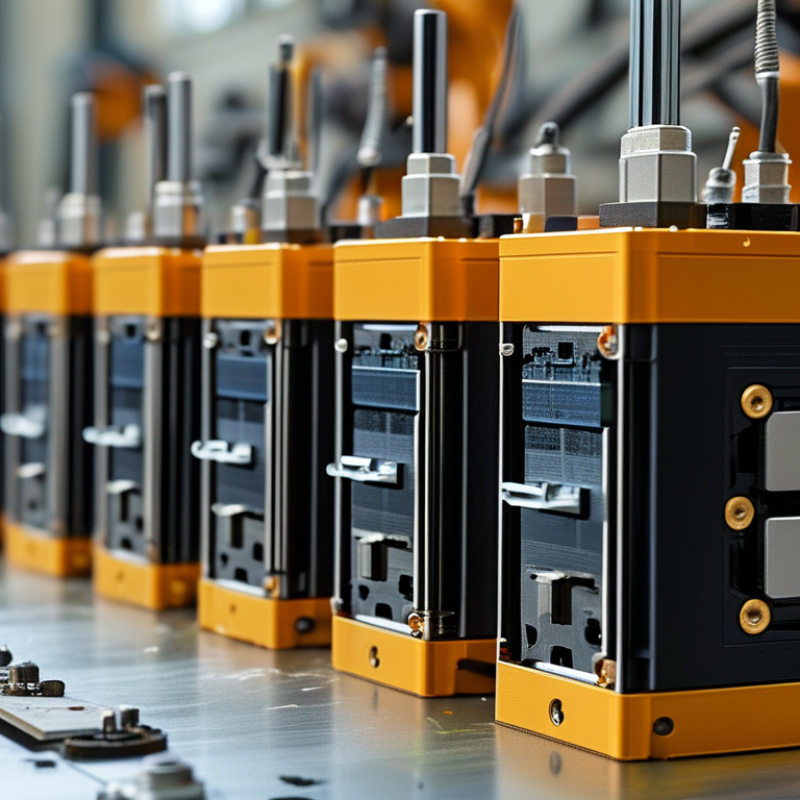
Why Choose an Integrated Stepper Motor for Your Project?

Understanding Integrated Stepper Motors: Key Features

Integrated stepper motors are emerging as popular choices for various projects. They combine the motor and driver in one unit. This design leads to a more compact setup, which is often essential in tight spaces. These motors are also easier to install, reducing assembly time. Users often report less complexity in wiring, which can simplify troubleshooting.

One notable feature is their precision. Integrated stepper motors usually provide better control over positioning. This makes them ideal for applications like 3D printing and robotics. However, they may have limitations in torque at higher speeds. Understanding these trade-offs is crucial in project planning.

Another aspect to consider is thermal management. Integrated designs typically generate more heat, which can affect performance. Users should pay attention to cooling methods to ensure longevity.

Cost is another factor that cannot be overlooked. While integrated stepper motors may be pricier, their efficiency can lead to cost savings in the long run. It's a balance between upfront expenses and overall performance. Exploring these aspects helps in determining if an integrated stepper motor aligns with project requirements.

Advantages of Using Integrated Stepper Motors in Projects

Integrated stepper motors offer several advantages for various projects. Their compact design simplifies integration into limited spaces. This is crucial in robotics or automated devices where space is tight. An integrated motor combines the driver and motor into one unit. This reduces the overall footprint and wiring complexity, saving valuable time during installation.

Another key benefit is the consistent performance across a range of applications. Integrated stepper motors maintain high torque at low speeds. This is essential for precise positioning tasks. Their ability to handle different loads and speeds makes them versatile. However, it’s important to note that integrated motors may have less customization than traditional models. For some projects, this may limit functionality.

Reliability is another factor to consider. Integrated stepper motors are designed for long-term use with minimal maintenance. Their sturdy construction often means fewer breakdowns. However, a project must account for potential challenges, such as heat dissipation. Engineers should ensure sufficient cooling in demanding environments. Attention to these details can enhance the motor's lifespan and performance.

Applications of Integrated Stepper Motors Across Various Industries

Integrated stepper motors have found a broad range of applications across various industries. In robotics, they drive precision movements. Their ability to control position and speed makes them ideal for robotic arms and autonomous vehicles. With reliable torque, they ensure tasks are performed with accuracy.

In the medical sector, integrated stepper motors power devices like syringes and pumps. These motors enhance the precision of drug delivery systems. In manufacturing, they drive automation in CNC machines and 3D printers. Their flexibility allows for intricate designs and quick modifications.

Despite their advantages, integrated stepper motors are not flawless. They can overheat in prolonged use, which may reduce performance. Noise can also be an issue in quiet environments. Users must find a balance between power and efficiency. These factors warrant careful consideration in project planning.

Comparing Integrated Stepper Motors with Traditional Stepper Motors

When considering stepper motors for your project, understanding the differences between integrated stepper motors and traditional ones is essential. Integrated stepper motors incorporate the driver circuit within the motor housing, resulting in a more compact design. This feature simplifies wiring and reduces installation time, which is beneficial for projects with space constraints.

Traditional stepper motors often require separate drivers, leading to more complex installations. This can make troubleshooting more challenging. Integrated designs eliminate many of these concerns. They are easier to set up and configure. This advantage enhances the overall efficiency of the project.

Tip: Always evaluate the voltage and current requirements of your project. Ensure that the integrated motor can handle the expected loads.

While integrated motors are convenient, they may limit customization. Adjusting performance can be more difficult since the electronics are built in. For some projects, this might not be a concern. However, if fine-tuning is crucial for your application, consider this aspect carefully.

Tip: Review your project’s long-term goals. An integrated motor might be ideal for short-term tasks but less suitable for evolving requirements.

Projects requiring versatility may benefit from traditional stepper motors. They allow for easier upgrades and modifications over time. Choosing the right motor depends on understanding these trade-offs.

Tips for Selecting the Right Integrated Stepper Motor for Your Needs

When selecting an integrated stepper motor for your project, consider several key factors. The motor's torque plays a crucial role. Ensure that it meets the torque requirements of your application. Too little torque can lead to missed steps, while excessive torque may cause overheating.

Efficiency is another important aspect. Look for motors with higher efficiency ratings. This can lead to reduced power consumption and better overall performance. Also, take note of the motor's operating voltage and current. These specifications will impact how it integrates with your system.

Finally, assess the precision needed for your project. Different applications require varying levels of accuracy. If you need fine adjustments, opt for a motor with high resolution. Remember, your choice impacts not just functionality but also the reliability of your project. Proper research and consideration will lead to the best selection for your needs.

Stepper Motor Performance Comparison

Copyright 2025 Fluidra S.A. | Created by BCM Marketing Agencia Privacy Policy Legal note | Cookie policy |

Technical cookies are strictly necessary for our website to work and you can navigate through it. These types of cookies are those that, for example, allow us to identify you, give you access to certain restricted parts of the page if necessary, or remember different options or services already selected by you, such as your privacy preferences. Therefore, they are activated by default, your authorization not being necessary in this regard. Through the configuration of your browser, you can block or alert the presence of this type of cookies, although such blocking will affect the proper functioning of the different functionalities of our website.


The analysis cookies allow us to study the navigation of the users of our website in general (for example, which sections of the page are the most visited, which services are used most and if they work correctly, etc.). From the statistical information on navigation on our website, we can improve both the operation of the page itself and the different services it offers. Therefore, these cookies do not have an advertising purpose, but only serve to make our website work better, adapting to our users in general. By activating them you will contribute to this continuous improvement. You can enable or disable these cookies by checking the corresponding box, being disabled by default.


Functionality cookies allow us to remember your preferences, to personalize certain characteristics and general options of our website, every time you access it (for example, the language in which the information is presented to you, the sections marked as favorites, your browser type, etc.) Therefore, this type of cookies does not have an advertising purpose, but by activating them you will improve the functionality of the website (for example, adapting to your type of browser) and the customization of it based on your preferences (for example, by presenting the information in the language that you have chosen in previous occasions), which will contribute to the ease, usability and comfort of our page during your navigation. You can enable or disable these cookies by checking the corresponding box, being disabled by default.


Advertising cookies allow us to manage the advertising spaces included in our website based on criteria such as the content shown or the frequency in which the ads are displayed. For example, if you have been shown the same ad several times on our website, and you have not shown a personal interest by clicking on it, it will not appear again. In summary, by activating this type of cookies, the advertising shown on our website will be more useful and diverse, and less repetitive. You can enable or disable these cookies by checking the corresponding box, being disabled by default.


Behavioral advertising cookies allow us to obtain information based on the observation of your browsing habits and behaviors on the web, in order to show you advertising content that best suits your personal tastes and interests. To understand it in a very simple way, we will give you a fictitious example: if your last searches on the web were related to suspense literature, we would show you advertising about suspense books. Therefore, activating this type of cookies, the advertising that we show you on our website will not be generic, but will be oriented to your searches, tastes and interests, therefore adjusting exclusively to you. You can enable or disable these cookies by checking the corresponding box, being disabled by default.
To understand it in a very simple way, we will give you a fictitious example: if your last searches on the web were related to suspense literature, we would show you advertising about suspense books. Therefore, activating this type of cookies, the advertising that we show you on our website will not be generic, but will be oriented to your searches, tastes and interests, therefore adjusting exclusively to you. You can enable or disable these cookies by checking the corresponding box, being disabled by default.

SAVE

We use our own and third-party cookies to ensure the proper functioning of the website and to analyse our services, improve your experience on our website and show you advertisements related to your interests according to profiling based on your browsing habits (e.g. websites visited). You can accept all cookies by clicking "ACCEPT" or set or reject them by clicking here. If you would like to know more about the use of cookies, please see our COOKIE POLICY.


ACCEPT ALL
Reject no essentials


