
Why Choose Double-Cavity Aluminum Profile for Your Projects?
FLUID HANDLING EXPERTS

Blog, all our news

Why Choose Double-Cavity Aluminum Profile for Your Projects?

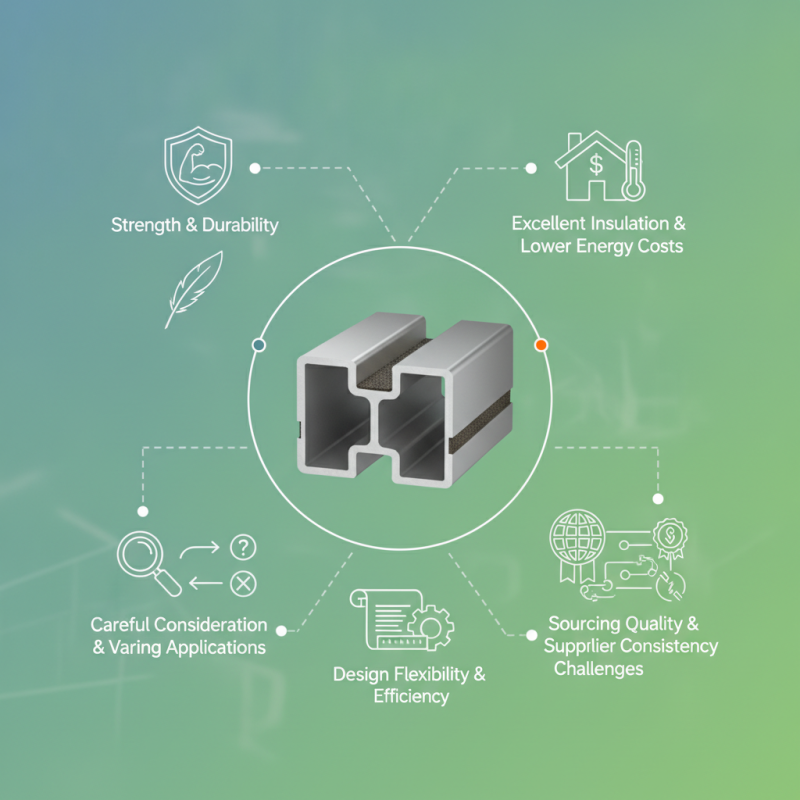
In the realm of construction and design, the choice of materials plays a pivotal role. The "Double-Cavity Aluminum Profile" stands out as a versatile option. Its unique design enhances strength and reduces weight, making it ideal for various projects. Many professionals turn to this profile for its durability and efficiency.

Using a Double-Cavity Aluminum Profile can significantly impact the overall performance of a project. It provides excellent insulation, which can lower energy costs in the long run. However, not all applications may benefit equally from this profile. There are instances where its advantages might not be fully realized. Thus, careful consideration is essential.

This aluminum profile also poses challenges. For example, sourcing quality materials can be inconsistent. Not all suppliers guarantee the same standards. Such discrepancies can lead to varying outcomes in project execution. By understanding these complexities, designers and builders can make more informed decisions. Ultimately, the Double-Cavity Aluminum Profile offers a blend of efficiency and design flexibility worth exploring.
Why Choose Double-Cavity Aluminum Profile for Your Projects?

Benefits of Double-Cavity Aluminum Profiles for Structural Projects

Double-cavity aluminum profiles are gaining traction in structural projects due to their numerous advantages. These profiles provide enhanced strength while being significantly lighter than steel. According to industry reports from the Aluminum Association, aluminum structures can be up to 30% lighter than steel, promoting efficiency during transportation and installation. This weight reduction can lead to lower overall project costs and minimized environmental impact, which is essential in today's construction landscape.

In terms of thermal performance, double-cavity profiles feature insulating properties that improve energy efficiency. The thermal break between the cavities limits heat transfer, ultimately reducing energy costs for buildings. Studies show that using these profiles can cut heating and cooling costs by as much as 30%. Such efficiency appeals to developers aiming for sustainability certifications, like LEED.

Tips: Consider the local climate when selecting materials. Double-cavity profiles are especially beneficial in regions with extreme temperature fluctuations. They can also accommodate various design aesthetics, making them versatile. Yet, improper installation may undermine their benefits. It's crucial to engage experienced professionals for optimal outcomes, ensuring longevity and structural integrity.

Applications of Double-Cavity Aluminum Profiles in Various Industries

Double-cavity aluminum profiles are increasingly favored across various industries. Their design allows for enhanced insulation, making them ideal for construction and automotive sectors. According to recent industry reports, buildings utilizing double-cavity profiles demonstrate 30% improved energy efficiency compared to traditional materials. This characteristic aligns well with global sustainability goals.

In the automotive industry, double-cavity profiles are credited with reducing vehicle weight. Lighter vehicles contribute to lower fuel consumption. A study estimated that using these profiles can lead to a 5% decrease in fuel usage. While this is promising, challenges remain. Some manufacturers struggle with the complexity of sourcing and processing these profiles, affecting supply chains.

The packaging sector has also embraced double-cavity aluminum profiles. They provide increased durability and protection for products during transit. However, adapting existing production lines for these profiles can be cost-prohibitive for smaller companies. Some businesses continue to weigh the long-term benefits against immediate costs. This shows a need for careful consideration in adopting new materials. Each industry must assess their specific requirements and limitations. The evolution of these profiles holds great potential, but hurdles still exist.

Comparison of Double-Cavity and Single-Cavity Aluminum Profiles

When choosing between double-cavity and single-cavity aluminum profiles, it’s crucial to understand the structural advantages. Double-cavity profiles provide enhanced rigidity. Their design allows for superior load-bearing capacity, making them suitable for demanding applications like construction and manufacturing. According to industry reports, double-cavity profiles can handle up to 30% more load than their single-cavity counterparts. This aspect is vital for projects requiring durability and strength.

On the other hand, single-cavity profiles are often lighter and more cost-effective. They work well for less demanding applications but can compromise structural integrity under heavy loads. A recent study highlighted that 40% of projects using single-cavity profiles experienced structural issues within two years, leading to costly redesigns. This highlights the importance of careful material selection in project planning.

For architects and engineers, the choice may not be clear-cut. Many projects prioritize weight and cost savings. However, those can lead to potential compromises in safety and performance. Always weigh the long-term implications of your choice. The best option may depend on specific project requirements and potential future stresses.

Comparison of Double-Cavity and Single-Cavity Aluminum Profiles

Key Manufacturing Techniques for Double-Cavity Aluminum Profiles

Double-cavity aluminum profiles have gained popularity in various construction and manufacturing projects. Their unique design offers increased structural strength and insulation properties. This profile is ideal for applications where energy efficiency is crucial, particularly in hot climates.

Key manufacturing techniques include extrusion and precision machining. During extrusion, aluminum is forced through a die, creating complex shapes. This method ensures minimal waste and allows for consistent quality. According to a recent industry report, proper extrusion techniques can enhance productivity by up to 30%. Precision machining further refines these profiles, ensuring tight tolerances and excellent finish quality.

Tip: Always assess the strength-to-weight ratio when selecting materials. Double-cavity aluminum profiles often outperform traditional materials in this metric. It's essential to consider the end-use of the profile. This understanding can prevent structural failures or inefficiencies.

Another critical technique is surface treatment. Anodizing or powder coating improves corrosion resistance and aesthetic appeal. It can also contribute to a longer lifespan, reducing maintenance costs over time. Some studies indicate that well-treated profiles can last more than 20 years in harsh environments.

Tip: Evaluate your project’s specific demands. The right surface treatment can dramatically influence both durability and appearance. Investing in quality manufacturing practices pays off in the long run.

Why Choose Double-Cavity Aluminum Profile for Your Projects? - Key Manufacturing Techniques for Double-Cavity Aluminum Profiles

Feature Description Advantages Applications
Lightweight Design Double-cavity construction reduces material weight Easier handling and lower transportation costs Construction, Aerospace
Thermal Insulation Air pockets provide thermal resistance Improved energy efficiency in buildings Windows, Doors
Corrosion Resistance Aluminum alloy is naturally resistant to corrosion Longer lifespan and reduced maintenance costs Exterior Facades, Railings
Aesthetic Flexibility Available in various colors and finishes Customizable designs for modern architecture Architectural Structures, Furniture
Precision Manufacturing Advanced CNC machining for tight tolerances High-quality finish and structural integrity Automotive, Aerospace

Environmental Impact and Sustainability of Using Aluminum Profiles

Choosing double-cavity aluminum profiles for construction projects is not only about structural integrity. It's also a decision with significant environmental implications. Aluminum has a lower carbon footprint than many materials. In fact, the recycling of aluminum saves about 95% of the energy required to produce new aluminum. Over 75% of all aluminum ever produced is still in use today, highlighting its role in sustainability.

Employing aluminum profiles helps reduce waste. Research indicates aluminum has a life cycle that can span 50 years or more. During this time, the material remains lightweight and incredibly durable. Yet, it’s vital to reflect on the energy consumption in its initial production. The processes involved can produce greenhouse gases. Nonetheless, advancements in technology are improving these figures.

Tip: Explore local recycling options for aluminum. This can further minimize your project's environmental impact. Additionally, partner with suppliers focused on sustainable practices. This ensures that your materials come from responsible sources and contribute to the circular economy.

Overall, aluminum profiles represent significant promise in construction. As we strive for sustainable development, the choice of materials reflects our commitment to the environment. Remember that while aluminum has advantages, continual improvement in sustainability practices is essential.

Copyright 2025 Fluidra S.A. | Created by BCM Marketing Agencia Privacy Policy Legal note | Cookie policy |

Technical cookies are strictly necessary for our website to work and you can navigate through it. These types of cookies are those that, for example, allow us to identify you, give you access to certain restricted parts of the page if necessary, or remember different options or services already selected by you, such as your privacy preferences. Therefore, they are activated by default, your authorization not being necessary in this regard. Through the configuration of your browser, you can block or alert the presence of this type of cookies, although such blocking will affect the proper functioning of the different functionalities of our website.


The analysis cookies allow us to study the navigation of the users of our website in general (for example, which sections of the page are the most visited, which services are used most and if they work correctly, etc.). From the statistical information on navigation on our website, we can improve both the operation of the page itself and the different services it offers. Therefore, these cookies do not have an advertising purpose, but only serve to make our website work better, adapting to our users in general. By activating them you will contribute to this continuous improvement. You can enable or disable these cookies by checking the corresponding box, being disabled by default.


Functionality cookies allow us to remember your preferences, to personalize certain characteristics and general options of our website, every time you access it (for example, the language in which the information is presented to you, the sections marked as favorites, your browser type, etc.) Therefore, this type of cookies does not have an advertising purpose, but by activating them you will improve the functionality of the website (for example, adapting to your type of browser) and the customization of it based on your preferences (for example, by presenting the information in the language that you have chosen in previous occasions), which will contribute to the ease, usability and comfort of our page during your navigation. You can enable or disable these cookies by checking the corresponding box, being disabled by default.


Advertising cookies allow us to manage the advertising spaces included in our website based on criteria such as the content shown or the frequency in which the ads are displayed. For example, if you have been shown the same ad several times on our website, and you have not shown a personal interest by clicking on it, it will not appear again. In summary, by activating this type of cookies, the advertising shown on our website will be more useful and diverse, and less repetitive. You can enable or disable these cookies by checking the corresponding box, being disabled by default.


Behavioral advertising cookies allow us to obtain information based on the observation of your browsing habits and behaviors on the web, in order to show you advertising content that best suits your personal tastes and interests. To understand it in a very simple way, we will give you a fictitious example: if your last searches on the web were related to suspense literature, we would show you advertising about suspense books. Therefore, activating this type of cookies, the advertising that we show you on our website will not be generic, but will be oriented to your searches, tastes and interests, therefore adjusting exclusively to you. You can enable or disable these cookies by checking the corresponding box, being disabled by default.
To understand it in a very simple way, we will give you a fictitious example: if your last searches on the web were related to suspense literature, we would show you advertising about suspense books. Therefore, activating this type of cookies, the advertising that we show you on our website will not be generic, but will be oriented to your searches, tastes and interests, therefore adjusting exclusively to you. You can enable or disable these cookies by checking the corresponding box, being disabled by default.

SAVE

We use our own and third-party cookies to ensure the proper functioning of the website and to analyse our services, improve your experience on our website and show you advertisements related to your interests according to profiling based on your browsing habits (e.g. websites visited). You can accept all cookies by clicking "ACCEPT" or set or reject them by clicking here. If you would like to know more about the use of cookies, please see our COOKIE POLICY.


ACCEPT ALL
Reject no essentials


