
China Best TPB 90 Pneumatic Paving Breaker for Sale?
FLUID HANDLING EXPERTS

Blog, all our news

China Best TPB 90 Pneumatic Paving Breaker for Sale?

Searching for the China Best TPB 90 Pneumatic Paving Breaker for Sale requires more than comparing prices. A reliable choice must balance impact energy, air consumption, tool weight, handle comfort, and replacement-part availability. On a busy road project, these details become real quickly. The breaker may face concrete slabs, asphalt edges, compacted stone, or stubborn repair patches.

Pneumatic-tool specialist Michael J. O’Connor offers a practical reminder: “A breaker earns its value through steady performance, not impressive specifications alone.” That principle matters when evaluating a TPB 90 Pneumatic Paving Breaker. A high-impact model should start smoothly, maintain consistent blows, and resist excessive vibration during long shifts. It should also match the available air compressor. An undersized compressor can make a powerful breaker feel disappointingly weak.

Look closely at the cylinder, piston, valve system, retainer, and spring condition. Ask whether the supplier provides tested parts and clear maintenance guidance. Check the actual operating pressure, hose diameter, noise level, and shipping protection. Small omissions can become expensive delays.

The lowest price is not always the best value. I may be overly cautious here, but service support deserves equal attention. Factory inspection records, responsive technical advice, and honest specifications build confidence. Still, buyers should verify every claim independently. Product pages can sound polished. Field performance tells the harder truth.
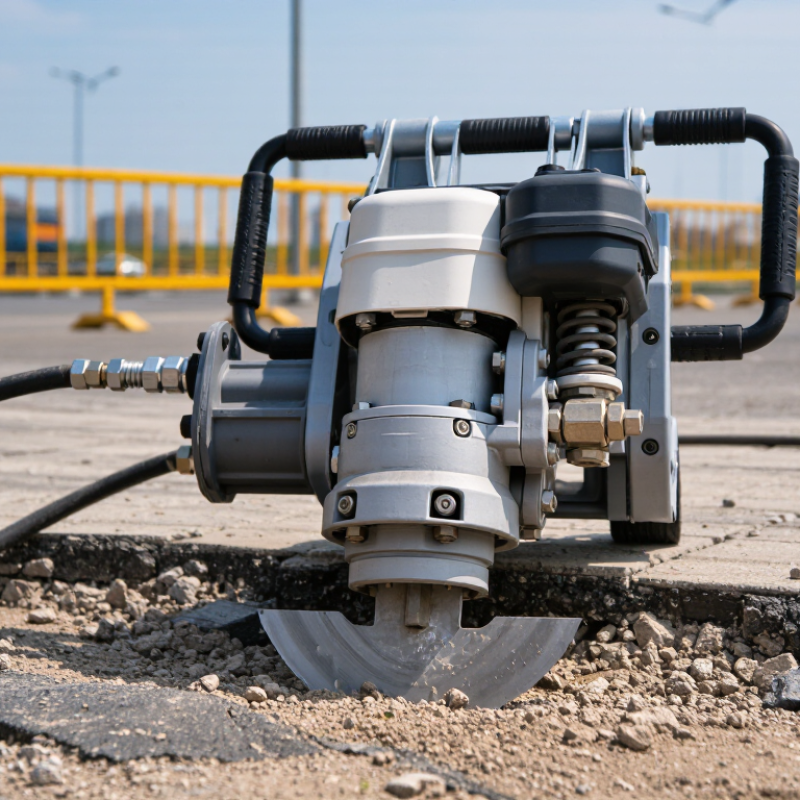
China Best TPB 90 Pneumatic Paving Breaker for Sale?

What Is a TPB-90 Pneumatic Paving Breaker?

A TPB-90 pneumatic paving breaker is a heavy-duty hand tool designed to fracture concrete, asphalt, masonry, and compacted ground. It uses compressed air to drive an internal piston against a steel chisel. Each impact transfers force into a small working area, helping operators remove hard surfaces without using electrical power.

The “90” designation usually identifies a particular model class, but specifications can vary between manufacturers. Check the actual impact rate, air consumption, operating pressure, weight, and shank size before purchase.

In field use, its strong impact makes it suitable for road repair, foundation work, and controlled demolition. However, it is not a universal solution. Excessive pressure can increase wear, while a dull chisel wastes energy and slows production. The operator also needs firm footing and steady control.

Tips:

Drain the air line before connecting the breaker. Inspect the hose, couplings, retaining spring, and chisel every shift. Lubricate the air inlet with the recommended pneumatic oil. Keep the tool aligned with the surface, and avoid prying sideways. Wear hearing, eye, hand, and foot protection. Short breaks matter. They reduce vibration exposure and help maintain accurate handling. Clearance around the work area should also be checked, because broken concrete can travel farther than expected.

How Does the TPB-90 Pneumatic Breaker Work?

A TPB-90 pneumatic paving breaker converts compressed air into repeated piston impacts. Air enters the cylinder and shifts an internal valve. The valve drives the piston forward, striking the tool shank. Exhaust air then returns the piston for another cycle. This process may deliver roughly 1,000 blows per minute under typical working conditions. Many specifications associate “90” with a 90 mm cylinder bore, but buyers should verify this detail. Model naming is not perfectly consistent.

Field performance depends heavily on air supply. The U.S. Department of Energy reports that compressed-air leaks can waste 20–30% of compressor output. A leaking hose may reduce impact force before the operator notices it. Clean, dry air and regular oiling also protect the valve and piston. Small maintenance habits matter. In practical work, the breaker should remain aligned with the surface, not forced sideways.

Vibration deserves equal attention. EU-OSHA guidance references the European action value of 2.5 m/s² and limit value of 5 m/s² for daily hand-arm vibration exposure. Actual exposure varies with material, pressure, bit condition, and operator technique. A short demonstration may feel comfortable, yet a full shift can tell a different story. Buyers should request measured vibration data, not rely only on catalog language. That is where many evaluations remain incomplete.

Key Specifications and Performance Evaluation

A TPB 90 pneumatic paving breaker is typically built for road repair, concrete removal, and trenching work. Its performance depends on more than impact force. Check the air pressure, hose size, valve condition, and tool alignment before judging the machine.

Many TPB 90 models operate near 0.63 MPa and deliver approximately 1,200 blows per minute. Air consumption often ranges around 1.2 cubic metres per minute, but specifications vary by manufacturer and production batch. A working weight near 17 kilograms offers useful impact strength without becoming impossible to control. The hexagonal shank should match the required chisel precisely. Loose fitting reduces energy transfer.

Performance feels strongest on aged concrete and compacted paving layers. The breaker can create a sharp, repeated impact through a 30-centimetre slab, provided the compressor maintains stable pressure. It may struggle with heavily reinforced concrete. That is normal. Operators should avoid forcing the bit sideways, because this increases wear on the piston and front head. Two-minute work intervals can reduce heat and hand fatigue. Ear, eye, foot, and vibration protection remain necessary on every site.

Real evaluations should record output per hour, air consumption, vibration, and maintenance frequency. Published figures are useful, but they are not the whole story. A unit may meet its rated blows in a workshop and feel weaker through a long, narrow hose. Field testing sometimes reveals this gap. Check spare-part access and inspect the trigger, hose coupling, and retaining spring before purchase.

How to Compare Chinese TPB-90 Manufacturers

China Best TPB 90 Pneumatic Paving Breaker for Sale?

How to Compare Chinese TPB-90 Manufacturers

Comparing Chinese TPB-90 manufacturers requires more than checking the lowest quotation. Ask for operating pressure, air consumption, impact frequency, net weight, and shank dimensions. These figures should match a clear test sheet, not only a sales description. Request videos showing the breaker working on concrete, preferably with a visible pressure gauge and timer.

Inspect the production details. A reliable factory should explain cylinder machining, piston tolerance, heat treatment, and retainer design. Ask how each unit is tested before shipment. Consistent trigger movement matters. So does stable hose coupling performance. Small defects become expensive on a dusty construction site. Review spare-parts availability, packaging strength, and the supplier’s response time. A complete parts list is useful.

Do not judge quality from a polished sample alone. Compare two or three samples under the same air pressure and tool condition. Record vibration, oil leakage, sound changes, and breaking speed. Ask for material certificates and quality records when available. Factory experience with export packing can also reduce transit damage. One practical mistake is accepting impressive impact figures without checking air demand. A compressor may struggle, even when the breaker performs well in a short demonstration. I would also verify dimensions personally, because catalog drawings can contain small errors. Look for traceable inspection records, honest answers, and a willingness to discuss limitations. A supplier that admits a weakness may be more dependable than one promising perfection.

China Best TPB 90 Pneumatic Paving Breaker for Sale? - How to Compare Chinese TPB-90 Manufacturers

Evaluation Dimension Typical TPB-90 Reference Preferred Specification or Evidence How to Compare Suppliers Risk Indicator
Product type Hand-held pneumatic paving breaker for concrete, asphalt and masonry demolition. The quotation should clearly identify the tool as a TPB-90 class paving breaker and state its intended applications. Check that all suppliers are quoting the same tool class rather than visually similar light-duty breakers. Unclear model definition or inconsistent specifications.
Tool weight Approximately 18–20 kg for many TPB-90 listings, excluding hose and tools. A measured net weight with a defined configuration and a tolerance stated in the technical sheet. Compare net weight, shipping weight and operating weight separately. Weight is quoted without accessories or differs substantially from the listed range.
Overall length Common published dimensions are around 500 mm, depending on handle and retainer design. Length should be measured from the rear housing to the tool retainer, with the measurement method specified. Confirm that dimensions are not copied from a different breaker size. Dimension drawings and catalogue data do not match.
Impact frequency Typically about 16–21 Hz, subject to air pressure, hose size and tool condition. Test data should state operating pressure, hose inside diameter, oil condition and measurement method. Compare measured performance under identical air-supply conditions. Frequency is advertised without test conditions.
Air consumption Many listings specify approximately 1.0–1.2 m³/min, but the reference pressure must be confirmed. The supplier must specify free-air delivery, operating pressure and whether the value is average or maximum consumption. Select the tool only after checking compressor capacity and simultaneous equipment load. Air consumption is given only as a vague “low consumption” claim.
Recommended air pressure Common operating specifications are around 0.5–0.63 MPa. The operating range, maximum allowable pressure and safety instructions should be documented. Verify compatibility with the local compressor, regulator and air-line system. No maximum pressure or pressure-test information is provided.
Air inlet and hose TPB-90 class tools commonly use a large pneumatic connection and a hose with approximately 19 mm internal diameter. Connection thread, hose inside diameter, coupling type and recommended hose length must be stated. Compare the complete air-line requirement, not only the tool inlet size. Small hose recommendations may cause pressure drop and reduced performance.
Tool shank compatibility A commonly listed shank size for this class is approximately 30 mm × 19 mm; dimensions vary by design. A dimensioned shank drawing and compatible chisel list should be supplied. Check local availability and price of moil points, chisels and cutting tools. Shank dimensions are omitted or described only as “standard.”
Housing and critical materials The cylinder, piston, valve and retainer are critical load-bearing or wear components. Request material grades, heat-treatment information and inspection records for critical parts. Compare documented process controls rather than relying on housing appearance. No material or heat-treatment information is available.
Lubrication system Pneumatic breakers require regular lubrication with suitable air-tool oil or an approved lubricator system. The manual should specify lubricant type, lubrication frequency and recommended quantity. Check whether lubrication instructions are clear for daily site use. No lubrication schedule or unsuitable lubricant guidance.
Vibration and noise information Vibration and sound levels depend on the test method, material being broken and operating conditions. Request declared emission values with the applicable test method and uncertainty information. Compare complete occupational-safety data, not isolated decibel or vibration figures. Safety values are missing, unrealistic or unsupported by test records.
Factory testing A functional test should confirm starting, impact operation, air tightness and abnormal noise. Require a pre-shipment inspection report linked to the actual batch or serial number. Give higher priority to suppliers willing to provide video and measurable test records. Only visual inspection is performed.
Spare-parts support Common wear parts include pistons, valves, seals, retainers, springs and tool bits. The supplier should provide a parts list, exploded drawing, part numbers and recommended stock. Compare availability, lead time and interchangeability of wear parts. Parts are available only as an undocumented complete assembly.
Documentation A professional supply package should include a manual, packing list, technical sheet and safety instructions. Documents should match the quoted configuration and shipment contents. Check consistency of dimensions, pressure, air consumption and accessories across all documents. Different documents contain conflicting specifications.
Warranty and after-sales service Warranty terms vary by supplier and should be defined in writing before order confirmation. The agreement should state warranty duration, exclusions, response time and replacement-part responsibility. Evaluate total ownership cost, not only the initial purchase price. Verbal warranty promises without written terms.
Quotation and landed cost The final cost includes the tool, bits, hose or couplings, packaging, freight, insurance, duties and local charges. Request a line-item quotation with trade terms, packaging details and delivery schedule. Rank offers by comparable delivered cost and included components. A low unit price excludes essential accessories or after-sales costs.

Note: TPB-90 specifications can vary by design, production batch and test conditions. Confirm the final values through the supplier’s current technical drawing, test report and pre-shipment inspection before placing an order.

Buying, Operating, and Maintaining a TPB-90 Breaker

China Best TPB 90 Pneumatic Paving Breaker for Sale?

Buying, Operating, and Maintaining a TPB-90 Breaker

Buying a TPB-90 breaker requires more than checking its price. Confirm its working pressure, air consumption, impact frequency, shank size, and service parts availability. Match the tool with the compressor under real job conditions, not only its advertised output. A long, undersized hose can reduce striking force and increase operating delays. Inspect the cylinder, trigger, retaining spring, and tool bit before purchase. Request test records and a clear maintenance schedule from the supplier. Details matter.

During operation, keep both hands on the breaker and stand with balanced footing. Let the tool deliver the impact. Do not force it sideways. The UK Health and Safety Executive identifies 2.5 m/s² A(8) as the hand-arm vibration action value and 5 m/s² as the exposure limit. Track work time with a practical exposure log. NIOSH also treats 85 dBA as an important occupational noise level, so hearing protection and noise measurement are sensible. Actual exposure depends on material, pressure, posture, and bit condition.

Tips: Drain the compressor tank daily. Clean the air filter often. Add approved pneumatic oil before each shift, unless the manual states otherwise. Rotate or replace a rounded bit. Stop immediately after unusual rattling, air leakage, or weak impacts. My field experience suggests operators often over-lubricate; excess oil can attract abrasive dust. Recheck the manual. Small assumptions can become expensive repairs.

Copyright 2025 Fluidra S.A. | Created by BCM Marketing Agencia Privacy Policy Legal note | Cookie policy |

Technical cookies are strictly necessary for our website to work and you can navigate through it. These types of cookies are those that, for example, allow us to identify you, give you access to certain restricted parts of the page if necessary, or remember different options or services already selected by you, such as your privacy preferences. Therefore, they are activated by default, your authorization not being necessary in this regard. Through the configuration of your browser, you can block or alert the presence of this type of cookies, although such blocking will affect the proper functioning of the different functionalities of our website.


The analysis cookies allow us to study the navigation of the users of our website in general (for example, which sections of the page are the most visited, which services are used most and if they work correctly, etc.). From the statistical information on navigation on our website, we can improve both the operation of the page itself and the different services it offers. Therefore, these cookies do not have an advertising purpose, but only serve to make our website work better, adapting to our users in general. By activating them you will contribute to this continuous improvement. You can enable or disable these cookies by checking the corresponding box, being disabled by default.


Functionality cookies allow us to remember your preferences, to personalize certain characteristics and general options of our website, every time you access it (for example, the language in which the information is presented to you, the sections marked as favorites, your browser type, etc.) Therefore, this type of cookies does not have an advertising purpose, but by activating them you will improve the functionality of the website (for example, adapting to your type of browser) and the customization of it based on your preferences (for example, by presenting the information in the language that you have chosen in previous occasions), which will contribute to the ease, usability and comfort of our page during your navigation. You can enable or disable these cookies by checking the corresponding box, being disabled by default.


Advertising cookies allow us to manage the advertising spaces included in our website based on criteria such as the content shown or the frequency in which the ads are displayed. For example, if you have been shown the same ad several times on our website, and you have not shown a personal interest by clicking on it, it will not appear again. In summary, by activating this type of cookies, the advertising shown on our website will be more useful and diverse, and less repetitive. You can enable or disable these cookies by checking the corresponding box, being disabled by default.


Behavioral advertising cookies allow us to obtain information based on the observation of your browsing habits and behaviors on the web, in order to show you advertising content that best suits your personal tastes and interests. To understand it in a very simple way, we will give you a fictitious example: if your last searches on the web were related to suspense literature, we would show you advertising about suspense books. Therefore, activating this type of cookies, the advertising that we show you on our website will not be generic, but will be oriented to your searches, tastes and interests, therefore adjusting exclusively to you. You can enable or disable these cookies by checking the corresponding box, being disabled by default.
To understand it in a very simple way, we will give you a fictitious example: if your last searches on the web were related to suspense literature, we would show you advertising about suspense books. Therefore, activating this type of cookies, the advertising that we show you on our website will not be generic, but will be oriented to your searches, tastes and interests, therefore adjusting exclusively to you. You can enable or disable these cookies by checking the corresponding box, being disabled by default.

SAVE

We use our own and third-party cookies to ensure the proper functioning of the website and to analyse our services, improve your experience on our website and show you advertisements related to your interests according to profiling based on your browsing habits (e.g. websites visited). You can accept all cookies by clicking "ACCEPT" or set or reject them by clicking here. If you would like to know more about the use of cookies, please see our COOKIE POLICY.


ACCEPT ALL
Reject no essentials


