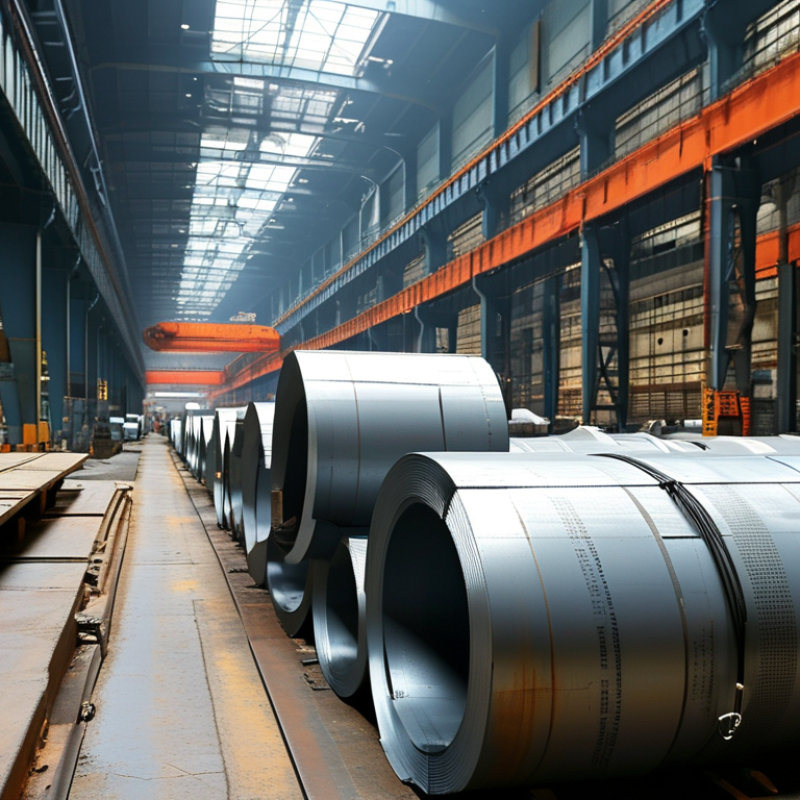
Top H Beam Manufacturers in China for Global Buyers
China has become a major sourcing base for H Beam Manufacturers serving construction, infrastructure, energy, and industrial projects worldwide. Its mills offer broad size ranges, competitive pricing, and flexible production volumes. Yet low prices alone do not identify a dependable supplier.
“Quality is built into the process, not inspected into the product,” says Dr. Charles J. Carter, a recognized structural steel professional and former AISC president. This principle matters when comparing H Beam Manufacturers. Buyers should examine steel grades, dimensional tolerances, welding quality, heat treatment, and production controls. Factory experience matters too.
Look beyond attractive quotations.
Reliable manufacturers should provide mill test certificates, chemical analysis, mechanical test results, and traceable heat numbers. They should also understand ASTM, EN, JIS, or GB/T requirements. A serious supplier can explain how its H beams meet project specifications, rather than sending a vague catalogue.
This guide reviews leading H Beam Manufacturers in China for global buyers. It considers factory capability, product consistency, inspection support, export experience, packaging, and delivery performance. Photos of straight flanges, stamped identification, and bundled beams can reveal useful details. However, photographs cannot replace independent inspection.
No ranking is perfect. Market information changes, and supplier performance may vary between projects. Buyers should verify current certifications, production capacity, references, and contract terms before placing an order. A manufacturer with excellent equipment may still communicate poorly. Another smaller mill may provide stronger technical support.
The practical goal is simple: connect with a supplier that delivers compliant H beams, clear documentation, and predictable service.
China’s H Beam Industry and Its Role in Global Construction
China’s H Beam Industry and Its Role in Global Construction
China’s H beam industry supports bridges, warehouses, factories, ports, and high-rise structures worldwide. Its scale allows manufacturers to produce common sizes and customized sections in large volumes. Modern rolling lines improve dimensional accuracy, surface quality, and production consistency. Experienced buyers still inspect mill certificates, chemical composition, yield strength, and weldability before placing orders.
Reliable manufacturers usually maintain controlled heating, rolling, cooling, and straightening procedures. These steps influence flange thickness, web alignment, and load performance on site. Independent testing can verify tensile strength, impact resistance, ultrasonic quality, and coating adhesion. Clear documentation also helps engineers match Chinese production with ASTM, EN, JIS, or project-specific requirements.
Logistics is another important part of China’s global role. H beams may travel by truck, rail, and bulk vessel before reaching a construction site. Proper bundling reduces movement and protects edges during handling. Yet large-scale production does not remove every risk. Delays, specification misunderstandings, and minor surface defects still occur. No supply chain is perfect.
That lesson matters. Buyers should compare production capacity, inspection records, communication practices, and after-sales support rather than choosing only by price. Some suppliers may promise fast delivery without explaining actual stock conditions. A careful review of drawings, tolerances, packing plans, and delivery terms prevents expensive changes later. China remains a major structural steel source, but dependable results require technical cooperation on both sides.
Key Criteria for Evaluating Chinese H Beam Manufacturers
Top H Beam Manufacturers in China for Global Buyers
Choosing a Chinese H beam manufacturer requires more than comparing prices. Start with production experience, equipment capacity, and quality control records. A reliable supplier should explain its steel grades, welding methods, rolling process, and dimensional tolerances clearly. Ask for recent mill test certificates, not only standard templates. The heat number should match the delivered material.
Factory verification adds practical confidence. Review production lines, storage conditions, inspection tools, and packing methods through a live video call or an independent audit. Check whether the manufacturer performs tensile, chemical composition, ultrasonic, and visual tests. Small details matter. Poorly protected edges can suffer damage during ocean transport.
Export experience also deserves careful attention. Confirm loading plans, bundle markings, document accuracy, and experience with your destination’s standards. Compare sample measurements with the quoted specifications before placing a large order. A professional manufacturer should provide traceable inspection records and respond to technical questions without vague promises.
No checklist is perfect. A polished certificate can still miss a production problem. Independent pre-shipment inspection remains worthwhile, especially for large projects. It may add cost and time, but discovering uneven flanges after delivery costs far more. One practical weakness is often overlooked: communication. Delayed replies or unclear drawings can create errors, even when the steel itself meets the required grade.
Standardized mass is a practical benchmark when evaluating H-beam manufacturers. Buyers can compare the quoted mass per meter with reference values from GB/T 11263, while also verifying dimensional tolerances, steel grade, mechanical test reports, surface quality, traceability, and export documentation.
Leading H Beam Manufacturers Serving International Buyers
China remains a major sourcing base for H beams used in warehouses, bridges, industrial platforms, and solar structures. World Steel Association’s World Steel in Figures 2024 reported China’s 2023 crude steel output at about 1.02 billion tonnes. This scale supports broad production capacity, but volume alone does not prove consistent quality.
Leading H beam manufacturers serving international buyers usually provide mill test certificates, heat numbers, dimensional records, and traceable inspection files. Buyers should check flange width, web thickness, straightness, yield strength, and impact performance against the agreed standard. Common references include GB/T 11263, EN 10025, ASTM A6, and ISO 657-1. Independent ultrasonic testing can identify internal defects before shipment. It is a small cost compared with replacing a damaged shipment.
Reliable suppliers also understand export details. They protect beam edges, separate bundles with steel straps, and prepare loading plans for containers or bulk vessels. Moisture control matters during long sea transport. According to the OECD’s Steel Market Developments report, global steel demand and trade conditions remain sensitive to construction cycles and regional policy changes. Therefore, buyers should review production lead times, raw material surcharges, payment safeguards, and after-sales response. No supplier is perfect. Even a well-prepared specification may miss local fabrication needs. A sample review, factory audit, and pre-shipment inspection can expose those gaps early.
Top H Beam Manufacturers in China for Global Buyers – Leading H Beam Manufacturers Serving International Buyers
Capability Area
Commonly Offered Data
International Standards
Typical Product Scope
Quality Documentation
Buyer Verification Point
Structural Steel Grades
S235JR, S275JR, S355JR and S355J2 for general structural applications
EN 10025-2
Building frames, industrial platforms, warehouses and infrastructure
Mill test certificate with chemical composition and mechanical properties
Confirm grade, impact-test temperature and delivery condition
North American Grade Options
A36 and A572 Grade 50 are widely specified for structural steel projects
ASTM A36 and ASTM A572/A572M
Commercial buildings, bridges, equipment supports and steel structures
Heat number traceability, tensile test and yield-strength results
Check whether the quotation refers to ASTM, CSA or project-specific requirements
Japanese Grade Options
SS400 and SM490-series grades are used in compatible structural applications
JIS G3101 and JIS G3106
General structures, fabricated components and heavy steelwork
Inspection certificate and dimensional inspection report
Verify the exact JIS grade and its equivalence before substitution
Chinese Grade Options
Q235B, Q355B and Q355D are common domestic structural steel grades
GB/T 1591 and GB/T 11263
Wide-flange beams, welded structures and construction projects
Chinese standard mill certificate, heat number and test records
Confirm whether the project accepts GB grades or requires an international standard
Section Size Availability
Common depth range approximately 100–900 mm; larger sections may require project confirmation
GB/T 11263, EN 10365 and equivalent product specifications
Light, medium and heavy H sections for different structural loads
Section drawing, mass-per-metre table and dimensional report
Match nominal depth, flange width, web thickness and flange thickness
Standard Lengths
Commercial lengths commonly include 6 m, 9 m and 12 m; customized lengths may be available
Order-specific dimensional tolerance requirements
Containerized shipments, project packages and cut-to-length orders
Packing list showing piece count, length and theoretical weight
Review maximum transport length and cutting-loss calculations
Dimensional Tolerance
Controlled limits apply to height, flange width, web thickness, straightness and mass
Applicable product standard, such as EN 10034 or GB/T 11263
Rolled H beams supplied for fabrication and structural assembly
Dimensional inspection report and calibrated measurement records
Use the tolerance standard stated in the purchase contract
Surface Condition
As-rolled black surface; shot-blasted, primed or painted finishes may be specified
Project coating specification and preparation standard
Indoor structures, outdoor construction and corrosion-protection systems
Surface-treatment report, coating thickness record and paint batch details
Define surface-preparation grade, coating system and dry-film thickness
Testing Capability
Tensile testing, bend testing, impact testing and chemical analysis according to grade
EN, ASTM, JIS or GB testing requirements stated in the order
Standard structural orders and inspection-sensitive infrastructure projects
Third-party inspection report when required by the buyer
Specify testing frequency, sampling method and independent inspector
Export Packing
Steel straps, seaworthy bundling, moisture protection and identification tags
Buyer packing instructions and destination-port requirements
Breakbulk, container and project cargo shipments
Commercial invoice, packing list, certificate of origin and bill of lading
Confirm bundle weight, lifting points, markings and container limitations
Typical Export Regions
Asia-Pacific, the Middle East, Africa, Europe and Latin America
Destination-country import and construction standards
Industrial buildings, solar structures, warehouses and infrastructure
Origin documents and product compliance documents as requested
Check import duties, local certification and port handling requirements
Commercial Lead-Time Planning
Stock orders are generally faster; rolling and customized orders require production scheduling
Contract delivery schedule and inspection hold points
Spot purchases, repeat orders and project-based supply programs
Production schedule, inspection release and shipping documents
Request a confirmed production window rather than relying only on a standard estimate
Order Suitability
Best evaluated by specification
Grade, section size, length, tolerance and coating must be compared together
Suitable for buyers requiring traceable structural steel supply
Use approved drawings, inspection plans and signed technical specifications
Compare offers on equivalent standards, net weight and delivered cost
Note: The specifications above represent commonly used H-beam product categories and international purchasing criteria. Actual size availability, production capacity, lead time, inspection scope and export documentation should be confirmed against the supplier’s current quotation, applicable standard and project requirements.
Product Standards, Quality Control, and Customization Options
Top H Beam Manufacturers in China for Global Buyers
Product standards should be confirmed before comparing prices. Chinese H beam manufacturers commonly work with GB/T 11263, while export projects may require ASTM, EN, JIS, or equivalent specifications. Buyers should request the exact steel grade, flange dimensions, web thickness, length tolerance, and surface condition. A familiar standard can still hide different testing requirements.
Quality control should follow the beam through each production stage. Experienced mills inspect chemical composition, rolling temperature, straightness, and dimensional accuracy. Ultrasonic testing can help identify internal flaws, especially in heavy sections. Each batch should include a mill test certificate showing yield strength, tensile strength, elongation, and impact results when required. Independent inspection is also useful. It adds cost, but it can expose packing errors before shipment.
Customization often includes fixed lengths, drilled holes, welded plates, primer coating, shot blasting, and special packing. Some projects need tighter tolerances than standard production allows. That detail must be written into the purchase contract, not left in email conversations. Samples are valuable, though they cannot represent every production batch. No supplier is flawless. Even a strong inspection plan may miss handling damage after testing. Buyers should check loading photos, bundle markings, and moisture protection before approving shipment. Small details matter.
How Global Buyers Can Select and Purchase H Beams from China
China remains central to the global steel supply chain. World Steel Association data reports China produced about 1.005 billion tonnes of crude steel in 2024. This scale offers broad H beam availability, but volume does not guarantee consistency.
Global buyers should define the section size, steel grade, length, tolerance, surface condition, and destination standard. Compare GB/T 11263 with ASTM A36, ASTM A572, or EN 10025 requirements. Ask each manufacturer for recent mill test certificates, heat numbers, chemical results, and mechanical properties. Request production photos and verify whether the stated mill actually made the beams. A video call can reveal storage conditions, rust, and labeling practices. I would also order a small trial batch before signing a large contract. That costs more initially. It may prevent expensive rework later.
Tips: Use an independent inspection agency before shipment. Check beam dimensions at several points, not only at the ends. Confirm ultrasonic testing when structural risk is high. Record the inspection method in the purchase contract. Specify packaging, marking, loading photos, and Incoterms clearly. A low quotation can hide weaker steel, inaccurate weights, or port delays. Buyers should also compare net weight against theoretical weight and review tolerance clauses carefully. Perfect paperwork is not proof of perfect steel, and this is where many procurement plans remain too optimistic.
Cepex is the brand for the fluid handling market belonging to the Fluidra group. One of the leading european manufacturer of valves and fittings in thermoplastic materials.
Dedicated to the swimming pool, irrigation and industrial markets, we distribute our products worldwide with the Fluidra commercial network and presence in 46 countries with 136 sales branches.
Your data will be processed by CEPEX S.A., with address at C. Lluís Companys, 51-53, 08400, Granollers (Barcelona), and C.I.F. nº A-08928707, to send you communications about our products based on your interests. You can consult more information about the processing of your data and how to exercise your rights as described in the Privacy Policy.
Technical cookies are strictly necessary for our website to work and you can navigate through it. These types of cookies are those that, for example, allow us to identify you, give you access to certain restricted parts of the page if necessary, or remember different options or services already selected by you, such as your privacy preferences. Therefore, they are activated by default, your authorization not being necessary in this regard. Through the configuration of your browser, you can block or alert the presence of this type of cookies, although such blocking will affect the proper functioning of the different functionalities of our website.
The analysis cookies allow us to study the navigation of the users of our website in general (for example, which sections of the page are the most visited, which services are used most and if they work correctly, etc.). From the statistical information on navigation on our website, we can improve both the operation of the page itself and the different services it offers. Therefore, these cookies do not have an advertising purpose, but only serve to make our website work better, adapting to our users in general. By activating them you will contribute to this continuous improvement. You can enable or disable these cookies by checking the corresponding box, being disabled by default.
Functionality cookies allow us to remember your preferences, to personalize certain characteristics and general options of our website, every time you access it (for example, the language in which the information is presented to you, the sections marked as favorites, your browser type, etc.) Therefore, this type of cookies does not have an advertising purpose, but by activating them you will improve the functionality of the website (for example, adapting to your type of browser) and the customization of it based on your preferences (for example, by presenting the information in the language that you have chosen in previous occasions), which will contribute to the ease, usability and comfort of our page during your navigation. You can enable or disable these cookies by checking the corresponding box, being disabled by default.
Advertising cookies allow us to manage the advertising spaces included in our website based on criteria such as the content shown or the frequency in which the ads are displayed. For example, if you have been shown the same ad several times on our website, and you have not shown a personal interest by clicking on it, it will not appear again. In summary, by activating this type of cookies, the advertising shown on our website will be more useful and diverse, and less repetitive. You can enable or disable these cookies by checking the corresponding box, being disabled by default.
Behavioral advertising cookies allow us to obtain information based on the observation of your browsing habits and behaviors on the web, in order to show you advertising content that best suits your personal tastes and interests. To understand it in a very simple way, we will give you a fictitious example: if your last searches on the web were related to suspense literature, we would show you advertising about suspense books. Therefore, activating this type of cookies, the advertising that we show you on our website will not be generic, but will be oriented to your searches, tastes and interests, therefore adjusting exclusively to you. You can enable or disable these cookies by checking the corresponding box, being disabled by default. To understand it in a very simple way, we will give you a fictitious example: if your last searches on the web were related to suspense literature, we would show you advertising about suspense books. Therefore, activating this type of cookies, the advertising that we show you on our website will not be generic, but will be oriented to your searches, tastes and interests, therefore adjusting exclusively to you. You can enable or disable these cookies by checking the corresponding box, being disabled by default.
We use our own and third-party cookies to ensure the proper functioning of the website and to analyse our services, improve your experience on our website and show you advertisements related to your interests according to profiling based on your browsing habits (e.g. websites visited). You can accept all cookies by clicking "ACCEPT" or set or reject them by clicking here. If you would like to know more about the use of cookies, please see our COOKIE POLICY.