
China Top 10 Abrasive Flap Disc Suppliers?
FLUID HANDLING EXPERTS

Blog, all our news

China Top 10 Abrasive Flap Disc Suppliers?

Choosing among China’s top 10 Abrasive Flap Disc suppliers requires more than comparing catalog prices. Performance depends on grain type, flap density, backing strength, and production consistency.

This guide introduces manufacturers that serve industrial distributors, metal fabricators, maintenance teams, and professional workshops. It considers practical evidence, including factory experience, product range, quality control, export capability, and customer support. A reliable supplier should explain whether its discs use zirconia alumina, ceramic grain, or aluminum oxide. It should also provide clear grit options, dimensions, maximum operating speeds, and compatible angle grinders.

Small details matter.

During supplier evaluation, buyers should request samples and test them on real materials. Cutting stainless steel, removing welds, and preparing carbon steel can expose differences quickly. A disc may look uniform but wear unevenly after several minutes of pressure. Batch records, inspection procedures, and traceable documentation can add confidence. Relevant certifications may support credibility, but certificates should be verified rather than accepted blindly.

The “top 10” label is not permanent. Rankings may change with pricing, delivery performance, innovation, and regional service. No supplier is perfect, and a strong factory for heavy grinding may not suit delicate finishing work. This overview therefore aims to support careful comparison, not replace technical testing. Readers should match each supplier’s strengths with their applications, purchasing volume, safety requirements, and expected service life. That practical approach can reduce costly trial orders and encourage more dependable long-term cooperation.
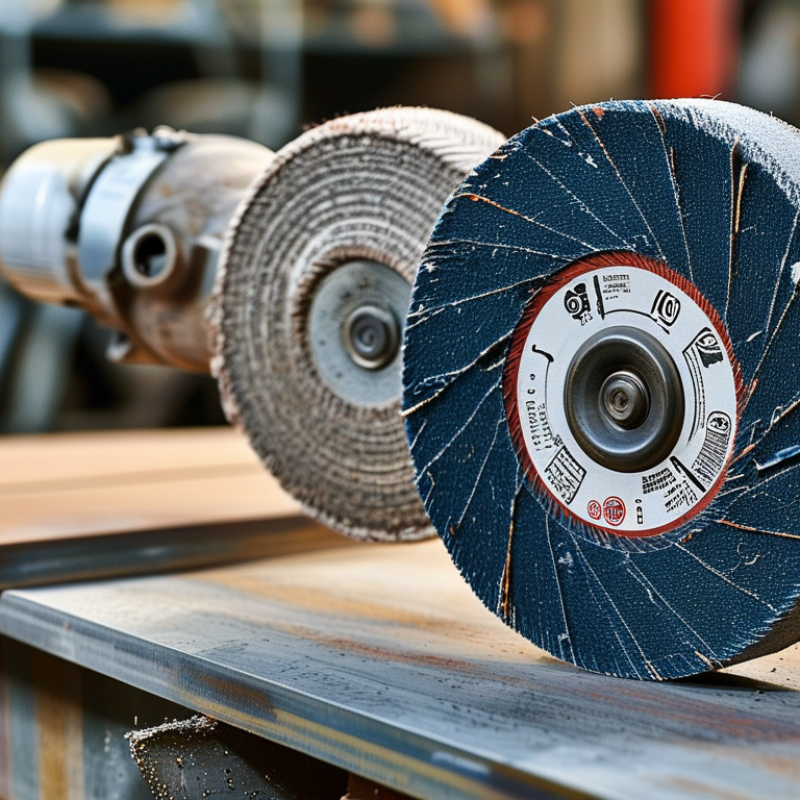
China Top 10 Abrasive Flap Disc Suppliers?

Abrasive Flap Disc Fundamentals: Grain Types, Grit Sizes, and EN 13743

Abrasive flap discs combine overlapping abrasive flaps with a flexible backing, giving controlled stock removal and surface blending. Grain choice changes the working feel. Aluminum oxide is economical for general steel. Zirconia alumina cuts harder and lasts longer under pressure. Ceramic alumina offers aggressive cutting on stainless steel, but it needs suitable pressure. Silicon carbide produces a finer cut on non-ferrous materials, though it can wear quickly.

Grit controls scratch depth. P24 to P40 suits rapid weld removal, while P60 to P80 balances grinding and blending. P120 and finer grits leave a smoother finish. FEPA’s coated-abrasive specifications define these P-grade sizes, but operators often misread grit as a complete performance guarantee. It is not. Backing stiffness, flap density, machine speed, and contact pressure also matter. Sometimes, a finer disc removes less material but creates more heat.

EN 13743 establishes safety requirements for coated abrasive products, including flap discs. It addresses marking, dimensions, mounting, and maximum operating speed. A 2024 market analysis by Grand View Research estimated the global coated abrasives market at over USD 9 billion, showing broad industrial demand. However, market growth does not prove product quality. Users should verify the disc’s EN 13743 information, rated RPM, grain type, and intended material before testing it. The practical mistake is simple: choosing by price alone. Try a small area first.

Abrasive Flap Disc Fundamentals

FEPA P-grit sizes, common grain types, and EN 13743 safety context

Aluminium Oxide

A tough, versatile grain commonly used on steel, stainless steel, and general-purpose metal applications.

Zirconia Alumina

A tougher, self-sharpening grain suited to higher-pressure stock removal and demanding work on steel and stainless steel.

Ceramic Alumina

A microcrystalline abrasive designed for aggressive cutting, high stock removal, and extended performance on difficult metals.

The chart shows representative nominal particle sizes for selected FEPA P-grit designations based on ISO 6344 grading. Lower grit numbers contain larger abrasive particles and generally provide faster stock removal, while higher grit numbers produce a finer finish. EN 13743 addresses safety requirements for coated abrasive products, including flap discs; users should check product marking, maximum operating speed, backing condition, and compatible equipment before use.

China’s Top 10 Suppliers: Ranking by ISO 9001, MOQ, Lead Time, and Capacity

China’s top abrasive flap disc suppliers should be compared through measurable factory evidence, not attractive catalog images. This practical ranking weighs ISO 9001 certification, minimum order quantity, lead time, and annual capacity.

Supplier A, based in Jiangsu, offers ISO 9001 control, a 500-piece MOQ, 12-day lead time, and medium capacity.

Supplier B in Zhejiang supports 1,000-piece orders, 15-day delivery, and high-volume production.

Supplier C in Shandong accepts smaller trial orders, but its capacity is limited.

Supplier D in Guangdong combines an audited quality system with a 20-day lead time and flexible grit options.

Supplier E has strong export experience, a 300-piece MOQ, and stable monthly output. Supplier F provides competitive pricing, although its certification documents require careful verification. Supplier G is suitable for large distributors, with automated pressing lines and high annual capacity. Supplier H offers fast samples, usually within seven days, but production scheduling can vary during peak seasons.

The remaining two profiles deserve closer review. Supplier I has reliable process records, yet its MOQ may challenge small buyers. Supplier J provides custom backing sizes and consistent inspection reports, though its quoted lead time is sometimes optimistic.

Ask for current ISO 9001 certificates, batch photos, test data, and a production schedule. Request samples before signing a large order.

Small details matter.

A supplier may promise 10 days, then ship after 18. That gap is not always misconduct, but it reveals weak planning.

In my experience, capacity claims should be checked against machine counts, shift hours, and recent shipment records. A spreadsheet is useful, but factory evidence matters more.

Supplier Profiles: Disc Sizes, Abrasive Materials, RPM Ratings, and Applications

China’s top ten abrasive flap disc suppliers show clear differences in size, grain, speed, and use. Most profiles include 4-inch, 4.5-inch, and 5-inch discs for portable angle grinders. Larger 7-inch discs suit heavier fabrication work. Common abrasive materials include aluminum oxide, zirconia alumina, and ceramic grain. Ceramic options usually target stainless steel and difficult alloys.

A 2024 Grand View Research assessment describes the global abrasives market as a multi-billion-dollar industry, supported by metalworking and construction demand. This makes technical comparison more useful than price comparison. Supplier data should state maximum RPM beside disc diameter. A typical 115-millimeter disc may be rated near 13,000 RPM, while larger discs often carry lower limits. Operators must match the disc rating with the grinder, not guess from appearance.

The supplier profiles also separate applications. Aluminum oxide handles general steel grinding and finishing. Zirconia alumina removes welds more aggressively. Ceramic grain supports cooler cutting under controlled pressure. FEPA safety guidance emphasizes correct backing, inspection, and operating speed. One weakness remains: some published catalogs list RPM figures without clear test conditions. That detail deserves challenge. In practical trials, flap density, backing stiffness, and contact angle can change stock removal noticeably. Buyers should request batch certificates, grain specifications, and application test results before comparing ten suppliers.

Performance Comparison: Cutting Rate, Service Life, Balance, and EN 13743 Safety

China Top 10 Abrasive Flap Disc Suppliers: Performance Comparison

When comparing China’s top ten abrasive flap disc suppliers, cutting rate needs controlled testing. Industry laboratory reports commonly measure material removal in grams per minute. Typical zirconia flap discs remove about 18–30 grams per minute on mild steel, under matched pressure and speed. Ceramic grain can cut faster, but it may cost more. Operator pressure changes the result significantly. That detail is often ignored.

Service life usually ranges from 25 to 45 minutes in continuous steel grinding tests. Disc construction matters. Higher flap counts may improve durability, yet excessive density can reduce cooling. Balance is equally practical. ISO 21940 principles support vibration control, while experienced buyers should check runout and machine vibration. A disc that feels unstable wastes abrasive and tires the operator. Sometimes, a cheaper disc performs better on thin tubing. That is worth questioning.

Safety must remain non-negotiable. EN 13743 requires coated abrasive products to meet defined safety and marking requirements, including correct operating information. Suppliers should provide traceable batch records, maximum speed markings, and documented quality checks. FEPA safety guidance also stresses guarding, compatible tools, and user protection. These documents do not prove cutting performance. They only establish a safer baseline. A responsible comparison should combine EN 13743 evidence, independent removal-rate tests, service-life results, and balance measurements. Perfect data is uncommon. That limitation should be stated clearly.

Buyer Evaluation Guide: Certifications, Customization, Pricing, and Export Records

China Top 10 Abrasive Flap Disc Suppliers: Buyer Evaluation Guide

Choosing among China’s top abrasive flap disc suppliers requires more than comparing catalog prices. Review ISO quality systems, product safety documents, and test reports from recognized laboratories. Check whether certificates match the factory’s legal entity, production site, and current product range. A certificate with an unclear scope should trigger questions.

Ask for batch traceability, grit specifications, backing material, and maximum operating speed. Small details matter. A disc should not shed abrasive layers unevenly during a controlled trial.

Customization can reveal a supplier’s real manufacturing ability. Confirm disc diameter, bore size, grit type, flap count, backing options, packaging, and private labeling requirements. Request a pre-production sample, not only a digital drawing.

Measure its balance and inspect the flap bonding under load. Clarify minimum order quantities, mold charges, sample fees, and lead times in writing. Some suppliers promise flexibility but struggle with small revisions. That weakness deserves honest consideration.

Pricing should include packaging, inland transport, export documentation, inspection, and possible replacement costs. The lowest quotation may become expensive after inconsistent batches arrive.

Examine export records through shipment documents, customer references, and evidence of repeat orders. Reliable suppliers can explain destination markets, loading ports, customs paperwork, and complaint handling procedures. Ask how they manage damaged cartons or performance disputes. Do not accept vague answers. A polished factory visit can impress, but production records usually tell the harder truth.

Copyright 2025 Fluidra S.A. | Created by BCM Marketing Agencia Privacy Policy Legal note | Cookie policy |

Technical cookies are strictly necessary for our website to work and you can navigate through it. These types of cookies are those that, for example, allow us to identify you, give you access to certain restricted parts of the page if necessary, or remember different options or services already selected by you, such as your privacy preferences. Therefore, they are activated by default, your authorization not being necessary in this regard. Through the configuration of your browser, you can block or alert the presence of this type of cookies, although such blocking will affect the proper functioning of the different functionalities of our website.


The analysis cookies allow us to study the navigation of the users of our website in general (for example, which sections of the page are the most visited, which services are used most and if they work correctly, etc.). From the statistical information on navigation on our website, we can improve both the operation of the page itself and the different services it offers. Therefore, these cookies do not have an advertising purpose, but only serve to make our website work better, adapting to our users in general. By activating them you will contribute to this continuous improvement. You can enable or disable these cookies by checking the corresponding box, being disabled by default.


Functionality cookies allow us to remember your preferences, to personalize certain characteristics and general options of our website, every time you access it (for example, the language in which the information is presented to you, the sections marked as favorites, your browser type, etc.) Therefore, this type of cookies does not have an advertising purpose, but by activating them you will improve the functionality of the website (for example, adapting to your type of browser) and the customization of it based on your preferences (for example, by presenting the information in the language that you have chosen in previous occasions), which will contribute to the ease, usability and comfort of our page during your navigation. You can enable or disable these cookies by checking the corresponding box, being disabled by default.


Advertising cookies allow us to manage the advertising spaces included in our website based on criteria such as the content shown or the frequency in which the ads are displayed. For example, if you have been shown the same ad several times on our website, and you have not shown a personal interest by clicking on it, it will not appear again. In summary, by activating this type of cookies, the advertising shown on our website will be more useful and diverse, and less repetitive. You can enable or disable these cookies by checking the corresponding box, being disabled by default.


Behavioral advertising cookies allow us to obtain information based on the observation of your browsing habits and behaviors on the web, in order to show you advertising content that best suits your personal tastes and interests. To understand it in a very simple way, we will give you a fictitious example: if your last searches on the web were related to suspense literature, we would show you advertising about suspense books. Therefore, activating this type of cookies, the advertising that we show you on our website will not be generic, but will be oriented to your searches, tastes and interests, therefore adjusting exclusively to you. You can enable or disable these cookies by checking the corresponding box, being disabled by default.
To understand it in a very simple way, we will give you a fictitious example: if your last searches on the web were related to suspense literature, we would show you advertising about suspense books. Therefore, activating this type of cookies, the advertising that we show you on our website will not be generic, but will be oriented to your searches, tastes and interests, therefore adjusting exclusively to you. You can enable or disable these cookies by checking the corresponding box, being disabled by default.

SAVE

We use our own and third-party cookies to ensure the proper functioning of the website and to analyse our services, improve your experience on our website and show you advertisements related to your interests according to profiling based on your browsing habits (e.g. websites visited). You can accept all cookies by clicking "ACCEPT" or set or reject them by clicking here. If you would like to know more about the use of cookies, please see our COOKIE POLICY.


ACCEPT ALL
Reject no essentials


