
China Best Stainless Steel for High Heat Applications?
FLUID HANDLING EXPERTS

Blog, all our news

China Best Stainless Steel for High Heat Applications?

Choosing China’s best stainless steel for high-heat applications requires more than comparing price, polish, or chromium content. Heat changes everything. At 600°C, oxidation, creep, thermal expansion, and carbide precipitation can influence service life. A bright surface may still hide serious metallurgical weakness.

The World Stainless Stainless Steel in Figures 2024 report records more than 60 million tonnes of global stainless steel production in 2023. This scale confirms stainless steel’s industrial importance, but volume does not guarantee high-temperature performance. The International Energy Agency also identifies industrial heat as a major energy challenge, increasing pressure for durable furnace, boiler, petrochemical, and exhaust components.

Dr. James R. Davis, author of ASM’s Stainless Steels handbook, explains that stainless steel relies on a chromium-rich passive film for protection. His warning is practical: “Chromium content alone does not guarantee performance at elevated temperatures.” Grade selection still matters.

For many applications, 309S and 310S offer stronger oxidation resistance than common 304 stainless steel. 316L may resist corrosion well, yet its molybdenum advantage does not automatically make it the best choice for prolonged extreme heat. Nickel balance, carbon level, welding quality, and actual operating temperature deserve equal attention.

This is where Stainless Steel And Heat becomes a useful engineering question, not a marketing phrase. The “best” Chinese supplier should provide mill certificates, heat-treatment records, ASTM or EN compliance, and traceable testing. One uncomfortable point remains. Laboratory data cannot fully predict every furnace atmosphere. Moisture, sulfur, cycling, and installation errors may rewrite the result.
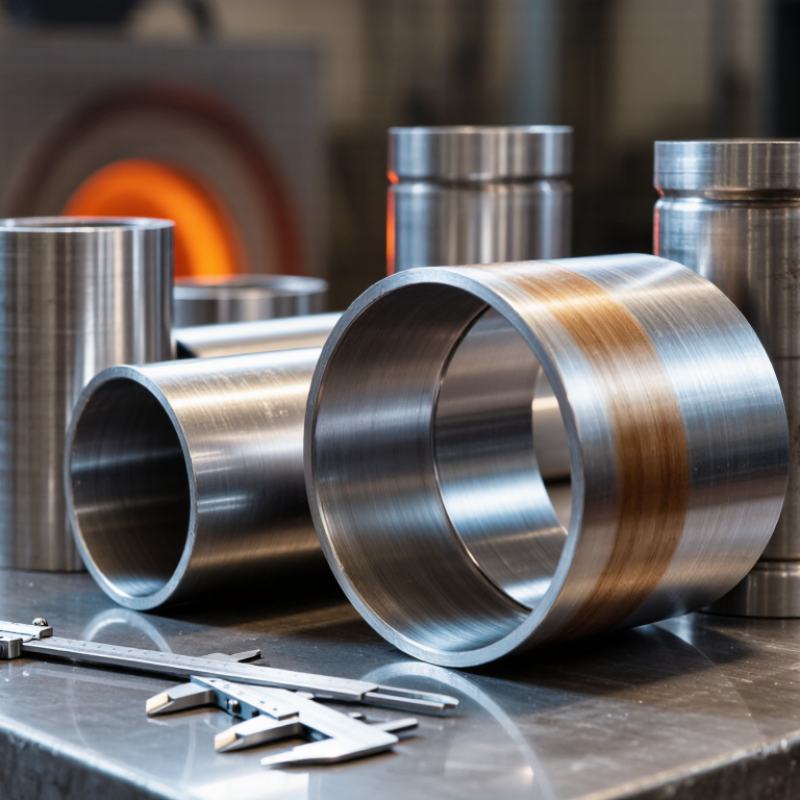
China Best Stainless Steel for High Heat Applications?

Defining High-Heat Stainless Steel: 304, 316L, 310S, and 253MA Grades

Choosing stainless steel for high-heat service requires more than reading the maximum temperature. Furnace atmosphere, thermal cycling, load, welding, and oxidation risks can change the result. A grade that survives a dry laboratory test may scale faster beside sulfur-bearing gases or repeated cooling.

Grade 304 is a practical option for moderate heat, clean air, and general equipment parts. It offers good forming and welding performance, but repeated exposure above roughly 800°C can cause scaling and strength loss.

Grade 316L adds molybdenum for better corrosion resistance. However, its low carbon content does not automatically make it a superior high-heat grade. It may be useful near heat and corrosive condensates, but prolonged severe heating needs closer evaluation.

Grade 310S contains higher chromium and nickel, supporting oxidation resistance in furnace components, radiant tubes, and burner surroundings. It still needs correct thickness and joint design. Grade 253MA uses alloying additions that improve oxidation resistance and creep performance at elevated temperatures. It can be especially effective in heat-treatment baskets and supporting fixtures. Temperature alone is not enough.

Ask what happens during the full cycle.

One practical mistake is selecting 316L simply because it sounds more durable. That choice can disappoint in continuous furnace service. In some trials, 304 performs acceptably for short cycles, while 310S or 253MA offers better life under constant heat.

The final decision should compare atmosphere, stress, scale formation, fabrication quality, and expected maintenance intervals. Testing a small sample remains wise, even when published data looks convincing.

Comparing Chromium–Nickel Chemistry: 310S Contains About 25% Cr and 20% Ni

China Best Stainless Steel for High Heat Applications?

For high-heat service, 310S stands out because its chemistry supports both oxidation resistance and structural stability. ASTM A240/A240M specifies approximately 24–26% chromium and 19–22% nickel for 310S stainless steel. This is notably richer than 304, which typically contains 18–20% chromium and 8–10.5% nickel. More chromium helps form a protective oxide layer. More nickel supports a stable austenitic structure during repeated heating and cooling.

That chemistry matters near furnaces, radiant tubes, heat exchangers, and industrial ovens. Technical guidance from the Nickel Institute reports that 310-type alloys can provide useful oxidation resistance in air at temperatures approaching 1,100°C, depending on atmosphere, loading, and surface condition. ASM Handbook, Volume 1, also identifies high-chromium, high-nickel austenitic steels as practical choices for elevated-temperature equipment. Real service is less perfect. Sulfur, carbon deposits, thermal cycling, and poor welding can shorten performance. Chemistry alone cannot guarantee long life. In my experience reviewing high-temperature specifications, designers sometimes overlook thickness loss and thermal expansion. That mistake becomes expensive. ASTM data defines composition, not every operating result. Test coupons and atmosphere-specific evaluation remain worthwhile before production use.

China Best Stainless Steel for High Heat Applications? — Comparing Chromium–Nickel Chemistry

310S contains approximately 25% chromium and 20% nickel, giving it a higher alloy content than common 304 and 316L stainless steels.

Values show approximate nominal midpoints of standard composition ranges by weight. 310S is commonly specified at about 24–26% Cr and 19–22% Ni, while 304, 316L, and 253MA generally contain lower or differently balanced chromium–nickel levels. Actual composition depends on the applicable material standard and product specification.

Reference basis: typical UNS and EN grade chemistry ranges for 310S/1.4845, 304/1.4301, 316L/1.4404, and 253MA/1.4835.

Evaluating Service Limits: 304 Handles About 870°C Continuous Oxidation Exposure

304 stainless steel is often specified for high-heat equipment, but 870°C is not a universal safety promise. Industry technical guidance commonly places 304 near 870°C for continuous oxidation exposure in air. Intermittent exposure may approach 925°C, depending on geometry and atmosphere. These figures describe oxidation resistance, not full structural performance.

At 870°C, a furnace tube can develop a dark, tightly bonded oxide layer. Repeated shutdowns may crack that scale, especially near welds and sharp corners. ASM Handbook, Volume 13A, explains that oxidation generally follows parabolic kinetics, so scale growth slows with time. Real equipment is less predictable. Thermal cycling, sulfur, chlorides, moisture, and poor surface preparation can accelerate damage.

Strength is the uncomfortable issue. Stainless steel loses substantial load-carrying capacity at elevated temperature, so pressure design must follow applicable code values rather than oxidation limits. Long exposure between roughly 425°C and 815°C can also promote chromium carbide precipitation in 304, increasing sensitization risk near welds. ASTM and ASME material requirements help, but they cannot replace furnace-specific testing. A small pilot coupon, exposed beside the component, can reveal scaling and distortion more honestly than a datasheet. 304 may work at 870°C in clean air. It may not survive the same temperature beside contaminated combustion gases.

Selecting China-Made 310S: ASME SA240 Compliance, Testing, and Traceability

China Best Stainless Steel for High Heat Applications?

Selecting China-Made 310S: ASME SA240 Compliance, Testing, and Traceability

For high-temperature equipment, 310S stainless steel is often selected for its strong oxidation resistance and stable performance. However, “China-made” should never mean “certificate only.” The material must be verified against ASME SA240 requirements, including chemical composition, mechanical properties, dimensions, and heat treatment condition.

A reliable purchasing review begins with the material test report, or MTR. Check the grade, plate thickness, heat number, production route, and delivery condition. The reported chemistry should match 310S limits, especially chromium and nickel content. Tensile and yield results need comparison with the applicable specification. Independent PMI testing can confirm the alloy at receiving. It is a small step, but it can prevent a costly mix-up.

Traceability must continue from the plate to the finished component. Heat numbers should appear on documents, tags, and inspection records. Visual inspection should examine scale, surface cracks, edge damage, and uneven flatness. Ultrasonic testing may be appropriate for critical thick plate, depending on the project specification. Third-party inspection adds useful distance, though it is not perfect. A stamped report can still contain weak sampling or unclear records. Ask for calibration certificates, test methods, and raw results. High heat service also depends on design stress, atmosphere, welding, and thermal cycling—not only the stainless grade.

Balancing Heat, Creep, Corrosion, Cost, and Fabrication for Final Grade Selection

Choosing the best stainless steel for high heat applications in China requires more than checking the maximum temperature. Heat exposure, load, corrosion, cost, and fabrication must be evaluated together. A grade that survives a dry furnace may fail quickly in a sulfur-bearing atmosphere. Under constant load, creep can also distort supports, trays, or thin-wall tubes.

For many furnace parts, 309 and 310 stainless steels offer strong oxidation resistance at elevated temperatures. Their higher chromium and nickel content usually increase material cost. Stabilized grades such as 321 or 347 can perform better near welded areas. They reduce sensitization risks during repeated heating cycles. However, they may not provide the best resistance in every chemical environment. Creep strength depends on temperature, stress, section thickness, and service time.

Corrosion remains easy to underestimate. Grade 316 may resist wet chlorides well, yet it is not automatically the right choice for hot oxidizing service. Fabrication also matters. Poor welding, sharp corners, and uncontrolled distortion can erase the benefit of a premium grade. Ask suppliers for heat numbers, mill certificates, mechanical data, and relevant creep or oxidation results. Verify them with independent inspection when the equipment is critical. Cost comparisons should include machining, welding, maintenance, and early replacement. The cheapest sheet can become expensive after one failed shutdown. I would not select a grade from a temperature chart alone. Real service conditions are often messier than the specification suggests.

Copyright 2025 Fluidra S.A. | Created by BCM Marketing Agencia Privacy Policy Legal note | Cookie policy |

Technical cookies are strictly necessary for our website to work and you can navigate through it. These types of cookies are those that, for example, allow us to identify you, give you access to certain restricted parts of the page if necessary, or remember different options or services already selected by you, such as your privacy preferences. Therefore, they are activated by default, your authorization not being necessary in this regard. Through the configuration of your browser, you can block or alert the presence of this type of cookies, although such blocking will affect the proper functioning of the different functionalities of our website.


The analysis cookies allow us to study the navigation of the users of our website in general (for example, which sections of the page are the most visited, which services are used most and if they work correctly, etc.). From the statistical information on navigation on our website, we can improve both the operation of the page itself and the different services it offers. Therefore, these cookies do not have an advertising purpose, but only serve to make our website work better, adapting to our users in general. By activating them you will contribute to this continuous improvement. You can enable or disable these cookies by checking the corresponding box, being disabled by default.


Functionality cookies allow us to remember your preferences, to personalize certain characteristics and general options of our website, every time you access it (for example, the language in which the information is presented to you, the sections marked as favorites, your browser type, etc.) Therefore, this type of cookies does not have an advertising purpose, but by activating them you will improve the functionality of the website (for example, adapting to your type of browser) and the customization of it based on your preferences (for example, by presenting the information in the language that you have chosen in previous occasions), which will contribute to the ease, usability and comfort of our page during your navigation. You can enable or disable these cookies by checking the corresponding box, being disabled by default.


Advertising cookies allow us to manage the advertising spaces included in our website based on criteria such as the content shown or the frequency in which the ads are displayed. For example, if you have been shown the same ad several times on our website, and you have not shown a personal interest by clicking on it, it will not appear again. In summary, by activating this type of cookies, the advertising shown on our website will be more useful and diverse, and less repetitive. You can enable or disable these cookies by checking the corresponding box, being disabled by default.


Behavioral advertising cookies allow us to obtain information based on the observation of your browsing habits and behaviors on the web, in order to show you advertising content that best suits your personal tastes and interests. To understand it in a very simple way, we will give you a fictitious example: if your last searches on the web were related to suspense literature, we would show you advertising about suspense books. Therefore, activating this type of cookies, the advertising that we show you on our website will not be generic, but will be oriented to your searches, tastes and interests, therefore adjusting exclusively to you. You can enable or disable these cookies by checking the corresponding box, being disabled by default.
To understand it in a very simple way, we will give you a fictitious example: if your last searches on the web were related to suspense literature, we would show you advertising about suspense books. Therefore, activating this type of cookies, the advertising that we show you on our website will not be generic, but will be oriented to your searches, tastes and interests, therefore adjusting exclusively to you. You can enable or disable these cookies by checking the corresponding box, being disabled by default.

SAVE

We use our own and third-party cookies to ensure the proper functioning of the website and to analyse our services, improve your experience on our website and show you advertisements related to your interests according to profiling based on your browsing habits (e.g. websites visited). You can accept all cookies by clicking "ACCEPT" or set or reject them by clicking here. If you would like to know more about the use of cookies, please see our COOKIE POLICY.


ACCEPT ALL
Reject no essentials


