
China Top OEM Rubber Seal O Ring Factory for Global Buyers
FLUID HANDLING EXPERTS

Blog, all our news

China Top OEM Rubber Seal O Ring Factory for Global Buyers

China has become a major sourcing base for precision rubber components, including seals used in pumps, valves, engines, and hydraulic systems. Industry data supports this direction. Grand View Research identifies automotive, industrial machinery, and aerospace as important demand sectors for rubber products. Smithers’ The Future of Rubber 2024 also highlights stronger interest in durable compounds, cleaner processing, and production traceability. However, market figures vary between reports because some include molded parts, while others measure only finished seals.

An experienced OEM Rubber Seal O-Ring Factory must therefore offer more than competitive pricing. Material selection matters. NBR suits many oil-contact applications, while EPDM performs better with water, steam, and weather exposure. A 70 Shore A compound may look standard, yet compression, temperature, surface finish, and groove design can change its actual performance. Robert Flitney, author of Seals and Sealing Handbook, describes the O-ring as “probably the most widely used seal in the world.” Its simplicity can mislead buyers.

Reliable factories should provide compound identification, batch records, dimensional inspection, and practical sample testing. A clean mold, controlled flash, and consistent curing cycle are visible details. They often reveal process discipline. ISO 9001 systems and customer-specific inspection plans add useful confidence, but certification alone never guarantees perfect parts. That is worth remembering. Even strong suppliers can miss a tolerance, misunderstand a medium, or recommend an unsuitable elastomer. Global buyers should ask precise questions, verify samples, and review real application data before approving mass production.
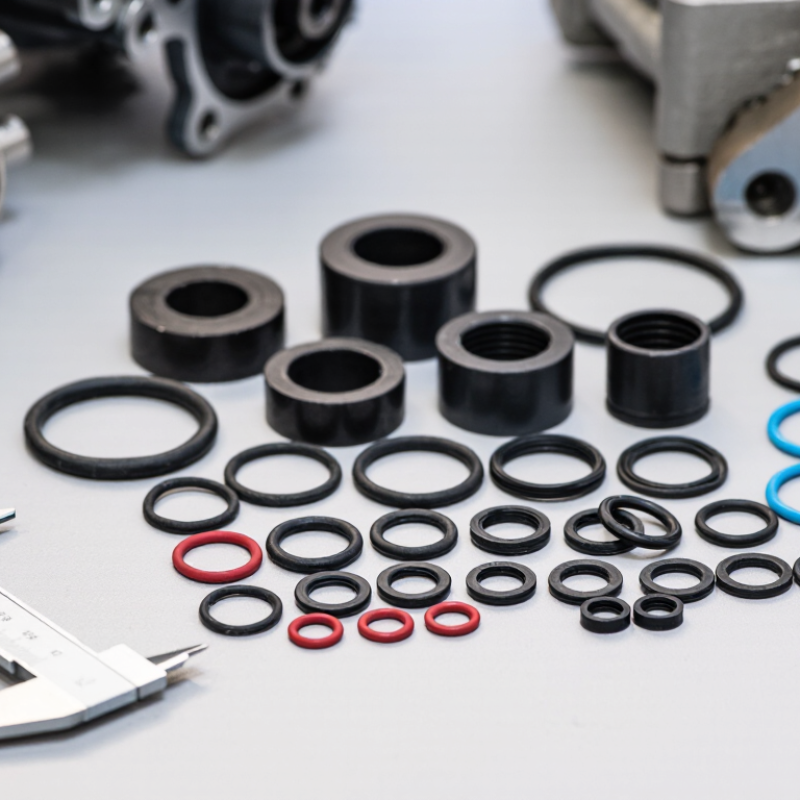
China Top OEM Rubber Seal O Ring Factory for Global Buyers

Company Profile and OEM Rubber Seal O-Ring Manufacturing Scope

Our factory focuses on OEM rubber seal O-ring manufacturing for industrial buyers and engineering teams.

The production site combines compound preparation, molding, trimming, inspection, and packing in one workflow. Experienced technicians review drawings, grooves, hardness requirements, and working temperatures before production begins. Small details matter here.

Materials and Custom Manufacturing

Our manufacturing scope covers standard and custom O-rings in several rubber compounds, including nitrile, silicone, EPDM, and fluorocarbon-based materials. Material selection depends on temperature, pressure, fluid contact, and installation conditions.

We support prototype samples, trial tooling, mass production, and repeat orders. Custom colors, dimensions, packaging, and identification methods can also be discussed.

Every batch receives dimensional checks, visual inspection, and hardness testing when required. Selected orders may receive additional tests based on the customer’s application.

Engineering Experience and Quality Control

Practical experience has taught us that a perfect drawing does not always create a perfect seal.

Groove design, surface finish, compression, and assembly technique can change performance. We therefore communicate with buyers before quoting complex parts. Our team records production parameters and keeps inspection data for order traceability.

There is still room to improve, especially when unusual materials or very tight tolerances are involved. In such cases, we prefer sample verification over confident assumptions. This approach helps global buyers build a more dependable OEM supply plan.

Rubber Materials and O-Ring Design Options for Global Applications

Choosing an O-ring begins with the working environment, not the catalog. In our production experience, NBR suits many oil and pneumatic applications. EPDM performs better with hot water, steam, and weather exposure. Silicone remains useful for wide temperature changes and clean-contact applications. FKM handles many fuels and aggressive fluids, but compatibility must be verified. Material selection can fail when temperature, pressure, and chemical exposure are reviewed separately. Test them together.

Design details decide whether a seal survives daily cycling. Engineers should confirm groove dimensions, squeeze, stretch, and extrusion gaps before tooling. A static seal may need different hardness from a dynamic seal. Surface finish matters; a rough shaft can cut the sealing line. For high pressure, backup rings and controlled clearances may be necessary. Small errors become visible as leakage, flattened sections, or twisted rings. Not every problem needs a harder compound.

For global buyers, reliable supply includes traceable compounds, dimensional inspection, and sample validation. We compare first-article measurements against drawings, then check compression set and visual defects. Packaging should protect rings from ozone, heat, dust, and deformation during storage. We also review regional standards and application records before mass production. Our process is not perfect; unusual media and real installation habits can expose gaps in testing. That is why feedback from field technicians remains valuable. A careful design review often prevents a costly replacement.

China Top OEM Rubber Seal O Ring Factory for Global Buyers - Rubber Materials and O-Ring Design Options for Global Applications
Category Material or Design Option Typical Technical Data Key Advantages Main Limitations Typical Global Applications
Rubber Material Selection
Elastomer NBR / Buna-N Typical service range: approximately -30°C to +100°C.
Good resistance to mineral oils, hydraulic fluids and fuels.
Cost-effective; good abrasion resistance; strong sealing performance in petroleum-based fluid systems. Limited resistance to ozone, weathering, sunlight and many polar fluids such as glycol-based fluids. Hydraulic equipment, pneumatic systems, oil seals, fuel systems and general industrial machinery.
Elastomer FKM / Fluorocarbon Typical service range: approximately -20°C to +200°C, depending on compound.
Excellent resistance to many oils, fuels, solvents and high temperatures.
High-temperature capability; low gas permeability; good chemical and fuel resistance. Not generally recommended for hot water, steam, strong alkalis or certain amines; low-temperature flexibility is compound-dependent. Automotive fuel systems, aerospace equipment, chemical processing, pumps, valves and high-temperature hydraulics.
Elastomer EPDM Typical service range: approximately -50°C to +150°C.
Excellent resistance to hot water, steam, weathering, ozone and many glycol-based fluids.
Long outdoor service life; excellent weather and ozone resistance; suitable for water and brake-fluid applications. Poor compatibility with petroleum oils, mineral oils and many hydrocarbon fuels. Water systems, HVAC equipment, solar thermal systems, brake systems, outdoor equipment and steam service.
Elastomer Silicone / VMQ Typical service range: approximately -60°C to +200°C.
Maintains flexibility across a wide temperature range.
Excellent low-temperature flexibility; good resistance to ozone, weathering and dry heat; available in many hygienic grades. Lower tear and abrasion resistance; limited resistance to many fuels, oils and high-pressure dynamic service. Food-processing equipment, medical devices, laboratory equipment, electrical components and low-load static seals.
Elastomer CR / Neoprene Typical service range: approximately -40°C to +120°C.
Moderate resistance to oils, refrigerants, weathering and ozone.
Balanced mechanical properties; good weather resistance; useful in refrigeration and general engineering. Lower chemical resistance than FKM; not suitable for some aromatic and highly polar fluids. Refrigeration systems, air-conditioning equipment, electrical enclosures, marine equipment and general machinery.
Elastomer FFKM / Perfluoroelastomer Typical service range: approximately -20°C to +300°C, depending on compound.
Very high resistance to aggressive chemicals and elevated temperatures.
Exceptional chemical resistance; suitable for demanding semiconductor, pharmaceutical and chemical-processing environments. Higher material cost; compound selection is important for low-temperature flexibility and compression-set performance. Semiconductor manufacturing, chemical processing, vacuum systems, pharmaceutical equipment and high-purity applications.
Elastomer FVMQ / Fluorosilicone Typical service range: approximately -60°C to +175°C.
Better fuel and solvent resistance than standard silicone.
Combines wide-temperature flexibility with improved resistance to fuels and aviation fluids. Lower mechanical strength and abrasion resistance than many general-purpose elastomers. Aerospace fuel systems, aviation equipment, automotive fuel handling and low-temperature sealing.
O-Ring Design and Configuration Options
Cross-Section Standard AS568 Inch Series Standard inch O-ring sizes are identified by dash numbers and defined by nominal inside diameter and cross-section. Widely used in North American industrial, hydraulic and aerospace equipment. Requires correct inch-size identification; interchangeability with metric sizes should not be assumed. Hydraulic cylinders, industrial valves, pumps, aircraft systems and replacement sealing programs.
Cross-Section Standard ISO 3601 Metric Series Metric O-ring dimensions and tolerances are specified for industrial and aerospace applications under ISO 3601. Suitable for global equipment designs using metric dimensions; supports standardized sizing and inspection. Groove dimensions, tolerances and application requirements must match the selected ISO size and class. European, Asian and international industrial machinery, automotive systems and fluid-control equipment.
Sealing Arrangement Static Axial Seal Seals between stationary faces; groove design must control squeeze and prevent extrusion under pressure. Simple configuration; suitable for flanges, covers, end caps and face-sealing joints. Poor groove design or excessive pressure can cause leakage, extrusion or compression set. Flanges, manifolds, pressure covers, heat exchangers and stationary pipe connections.
Sealing Arrangement Static Radial Seal Seals between a plug or housing and a bore; controlled radial squeeze is required. Compact and reliable for stationary shafts, plugs, connectors and housing assemblies. Surface finish, concentricity and installation stretch must be controlled to avoid leakage. Valves, hydraulic cartridges, sensor housings, pipe plugs and connector assemblies.
Sealing Arrangement Dynamic Reciprocating Seal Used where the mating surface moves linearly; lubrication, clearance and pressure direction are critical. Provides a compact sealing solution for moderate reciprocating movement. More sensitive to friction, wear, spiral failure, extrusion and surface defects than static sealing. Hydraulic cylinders, pneumatic actuators, plunger pumps and reciprocating process equipment.
Sealing Arrangement Dynamic Rotary Seal Used around rotating shafts; speed, lubrication, eccentricity and surface finish must be evaluated. Compact design for low-to-moderate rotary motion where operating conditions are controlled. Higher friction and heat generation; may be unsuitable for high-speed or poorly lubricated shafts. Rotary valves, mixers, pumps, drive systems and low-speed rotating equipment.
Extrusion Control Backup Ring Configuration A backup ring is installed beside the O-ring to reduce extrusion into the clearance gap under high pressure. Improves high-pressure capability and helps protect the O-ring from nibbling and extrusion damage. Adds components and assembly considerations; correct orientation and material compatibility are required. High-pressure hydraulics, injection equipment, gas systems and pressure-control valves.
Compound Hardness 70 Shore A General-Purpose Grade Common hardness selection for a balance of sealing force, extrusion resistance and installation flexibility. Broad applicability for static and moderate dynamic sealing. May require a softer or harder compound when sealing low-pressure gaps or high-pressure conditions. General industrial equipment, hydraulic systems, pneumatic controls and standard valve assemblies.
Surface and Coating Lubricated or Low-Friction Surface Dry-film or compatible assembly lubrication can reduce installation damage and friction during movement. Supports easier assembly and can reduce twisting, cutting and start-up friction. Lubricant or coating must be chemically compatible with the elastomer and the operating medium. Automated assembly, pneumatic equipment, hydraulic cartridges, medical devices and dynamic applications.
Technical values are typical engineering guidance rather than universal limits. Final selection should verify fluid compatibility, temperature, pressure, speed, clearance gap, groove dimensions, surface finish, compression set, regulatory requirements and the applicable dimensional standard.

Step-by-Step OEM O-Ring Production and Quality Control Process

China Top OEM Rubber Seal O Ring Factory for Global Buyers

A reliable OEM O-ring begins with a clear drawing, application data, and material requirements. Engineers check media exposure, temperature, pressure, hardness, and groove dimensions before production. This step prevents many sealing failures. Material batches are inspected for compound identity, hardness, and contamination. Small samples are tested before mixing begins.

The compound is mixed under controlled time and temperature. Operators record each batch number. The rubber is then molded into O-rings using approved tooling. Molding pressure, curing temperature, and cycle time require close monitoring. After trimming, trained inspectors check flash, surface marks, cracks, and deformation. Dimensional checks use calibrated gauges, vision systems, or optical measurement equipment. We also test tensile strength, elongation, compression set, and heat aging when required. No process is perfect. A minor tool-wear issue can still escape early inspection, so production data needs regular review.

Tips: Request a first-article sample before mass production. Confirm the material certificate and test report. Store finished O-rings away from sunlight, ozone, heat, and sharp edges. Keep packaging clean and traceable. If the seal serves a critical application, approve testing conditions in writing. Small details matter.

Custom Manufacturing, Packaging, and International Order Services

A capable China OEM rubber seal O-ring factory starts with the customer’s drawing, not a standard catalog. Engineers review groove dimensions, operating temperature, pressure, and chemical exposure before recommending rubber compounds. Nitrile, silicone, EPDM, and fluorocarbon materials serve different applications. Small details matter. A 0.2-millimeter change can affect sealing performance.

Custom manufacturing includes mold development, sample approval, production control, and inspection records. Each batch can be checked for dimensions, hardness, surface defects, and compression behavior.

Material identification should remain traceable from incoming compound to packed goods. We do not promise zero variation. Real production requires measured tolerances, clear communication, and timely correction when results miss expectations.

Packaging is designed around distance and handling.

O-rings may be separated by size, sealed in moisture-resistant bags, and placed in strong cartons with readable labels. International order services can include commercial invoices, packing lists, shipment coordination, and export documentation. Buyers also need practical updates about lead times and partial shipments. Mistakes happen when specifications are assumed. Confirming drawings, quantities, labels, and delivery terms prevents avoidable delays.

How Global Buyers Can Evaluate and Select the Right Factory

Selecting a China-based OEM rubber seal O-ring factory requires more than comparing prices. Global buyers should inspect production experience, material control, and communication habits. Ask how the factory handles drawings, tolerance changes, and urgent replacement orders. A capable engineering team should explain compression set, hardness, temperature range, and media resistance in practical terms.

Request samples made with the same compound and tooling used for mass production. Check dimensions with calibrated gauges, not visual inspection alone. Review batch records, incoming material checks, and final inspection reports. Certificates for rubber compounds should identify the material grade and test method. An on-site or independent audit can reveal storage conditions, mold maintenance, and cleanliness around the molding area.

Do not rely on a polished showroom. It may hide weak process control. Speak with the quality manager and production supervisor directly. Ask for a corrective-action report from a previous defect. The response matters more than a perfect claim. A reliable factory should accept reasonable third-party testing and explain its limits honestly. Buyers should also confirm packaging, labeling, export documents, lead times, and change-notification procedures. A low quotation can become expensive when tolerances drift or communication slows. Small pilot orders are safer, although they cannot expose every long-term problem.

Copyright 2025 Fluidra S.A. | Created by BCM Marketing Agencia Privacy Policy Legal note | Cookie policy |

Technical cookies are strictly necessary for our website to work and you can navigate through it. These types of cookies are those that, for example, allow us to identify you, give you access to certain restricted parts of the page if necessary, or remember different options or services already selected by you, such as your privacy preferences. Therefore, they are activated by default, your authorization not being necessary in this regard. Through the configuration of your browser, you can block or alert the presence of this type of cookies, although such blocking will affect the proper functioning of the different functionalities of our website.


The analysis cookies allow us to study the navigation of the users of our website in general (for example, which sections of the page are the most visited, which services are used most and if they work correctly, etc.). From the statistical information on navigation on our website, we can improve both the operation of the page itself and the different services it offers. Therefore, these cookies do not have an advertising purpose, but only serve to make our website work better, adapting to our users in general. By activating them you will contribute to this continuous improvement. You can enable or disable these cookies by checking the corresponding box, being disabled by default.


Functionality cookies allow us to remember your preferences, to personalize certain characteristics and general options of our website, every time you access it (for example, the language in which the information is presented to you, the sections marked as favorites, your browser type, etc.) Therefore, this type of cookies does not have an advertising purpose, but by activating them you will improve the functionality of the website (for example, adapting to your type of browser) and the customization of it based on your preferences (for example, by presenting the information in the language that you have chosen in previous occasions), which will contribute to the ease, usability and comfort of our page during your navigation. You can enable or disable these cookies by checking the corresponding box, being disabled by default.


Advertising cookies allow us to manage the advertising spaces included in our website based on criteria such as the content shown or the frequency in which the ads are displayed. For example, if you have been shown the same ad several times on our website, and you have not shown a personal interest by clicking on it, it will not appear again. In summary, by activating this type of cookies, the advertising shown on our website will be more useful and diverse, and less repetitive. You can enable or disable these cookies by checking the corresponding box, being disabled by default.


Behavioral advertising cookies allow us to obtain information based on the observation of your browsing habits and behaviors on the web, in order to show you advertising content that best suits your personal tastes and interests. To understand it in a very simple way, we will give you a fictitious example: if your last searches on the web were related to suspense literature, we would show you advertising about suspense books. Therefore, activating this type of cookies, the advertising that we show you on our website will not be generic, but will be oriented to your searches, tastes and interests, therefore adjusting exclusively to you. You can enable or disable these cookies by checking the corresponding box, being disabled by default.
To understand it in a very simple way, we will give you a fictitious example: if your last searches on the web were related to suspense literature, we would show you advertising about suspense books. Therefore, activating this type of cookies, the advertising that we show you on our website will not be generic, but will be oriented to your searches, tastes and interests, therefore adjusting exclusively to you. You can enable or disable these cookies by checking the corresponding box, being disabled by default.

SAVE

We use our own and third-party cookies to ensure the proper functioning of the website and to analyse our services, improve your experience on our website and show you advertisements related to your interests according to profiling based on your browsing habits (e.g. websites visited). You can accept all cookies by clicking "ACCEPT" or set or reject them by clicking here. If you would like to know more about the use of cookies, please see our COOKIE POLICY.


ACCEPT ALL
Reject no essentials


