
What Is the Best Water Based Polyurethane Resin from China?
FLUID HANDLING EXPERTS

Blog, all our news

What Is the Best Water Based Polyurethane Resin from China?

Choosing the best Water Based Polyurethane Resin from China requires more than comparing price per kilogram. The decision involves performance, consistency, documentation, and technical support. A resin may look attractive in a sample test, yet fail after drying on a humid production line. Small details matter.

Industry data supports this growing focus. Grand View Research identifies water-based coatings as a major expanding segment, driven by lower volatile organic compound emissions and stricter environmental expectations. MarketsandMarkets also forecasts continued growth for the global waterborne coatings market through the coming years. These reports indicate strong demand, but market growth does not prove that every Chinese supplier offers equal quality. That assumption needs challenging.

This article examines how to evaluate Chinese polyurethane resin manufacturers using practical and measurable criteria. Important points include solid content, viscosity stability, adhesion, abrasion resistance, yellowing resistance, drying time, and film flexibility. Technical data sheets should be checked against laboratory results. Factory samples should also be tested on the actual substrate, not only on glass panels. A good resin should form a smooth film, resist whitening, and maintain performance after repeated rubbing.

Supplier reliability deserves equal attention. ISO-certified production, batch traceability, independent testing, and responsive application support can reduce production risk. Certifications may help, but they should not replace performance testing. Sometimes, the cheapest option becomes costly after rework, rejected batches, or delayed deliveries. The best choice is rarely the most impressive brochure. It is the supplier that delivers stable chemistry, transparent evidence, and consistent results under real manufacturing conditions.
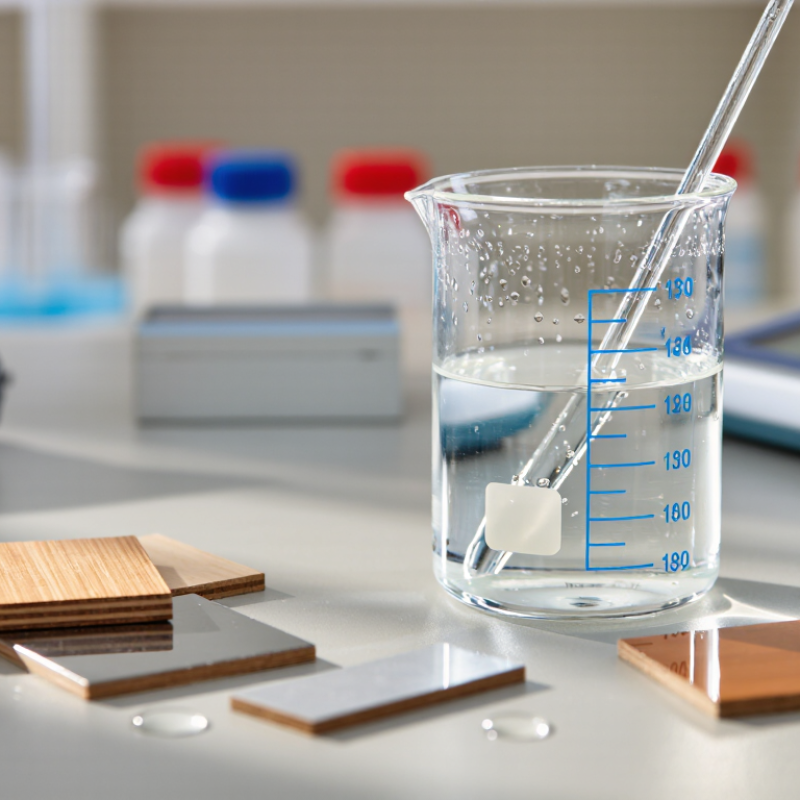
What Is the Best Water Based Polyurethane Resin from China?

Understanding Water-Based Polyurethane Resin and Its Main Properties

Water-based polyurethane resin uses water as its primary dispersion medium instead of most organic solvents. After application, water evaporates and the polymer particles form a continuous protective film. The result can be flexible, abrasion-resistant, and comparatively low in volatile organic compounds (VOCs). It is not automatically harmless.

Grand View Research has reported that the global water-based polyurethane market was valued at over USD 2 billion in recent years, with continued growth expected through the decade. MarketsandMarkets also identifies coatings, adhesives, and synthetic leather as major demand areas. These figures show market momentum, not product quality. A reliable Chinese resin should be assessed through solids content, viscosity, pH, particle size, tensile strength, elongation, hardness, and drying time. Small changes can affect spray stability and surface feel.

Testing matters most. In practical trials, I would compare the same resin on identical fabric, wood, or metal panels. Check gloss after seven days, not only after one hour. Measure abrasion resistance and water whitening under controlled conditions. A resin with 35–45% solids may improve transport efficiency, but higher solids can increase viscosity and complicate application. That trade-off is easy to overlook. ISO or ASTM test methods can improve comparability, although laboratory results may not match every factory line. The “best” water-based polyurethane resin from China is therefore the one whose technical data, batch consistency, documentation, and tested performance fit the intended application.

What Is the Best Water-Based Polyurethane Resin from China? – Understanding Water-Based Polyurethane Resin and Its Main Properties

The best water-based polyurethane resin depends on the required balance of hardness, flexibility, chemical resistance, appearance, curing speed, and application method. The figures below are typical technical ranges for commonly used resin categories and should be confirmed by the supplier’s technical data sheet.

Resin Category Typical Solid Content Typical pH Typical Viscosity at 25°C Film Characteristics Key Performance Properties Limitations to Consider Best-Fit Applications Overall Selection Priority
Aliphatic Water-Based PUD 30–45% 7.0–9.0 50–1,000 mPa·s Clear, non-yellowing, flexible to moderately hard Excellent light stability, good abrasion resistance, good outdoor appearance, strong adhesion to many substrates Usually more expensive than aromatic grades; may require additional crosslinking for maximum chemical resistance Wood coatings, leather finishes, textile coatings, automotive interiors, clear topcoats ★★★★★
Aromatic Water-Based PUD 30–50% 7.0–9.0 50–1,500 mPa·s Hard or flexible films with good mechanical strength Good hardness, tensile strength, adhesion, and cost efficiency More likely to yellow under UV exposure; less suitable for clear exterior finishes Industrial primers, textile binders, adhesives, indoor coatings, synthetic leather ★★★★☆
Self-Crosslinking Water-Based PUD 30–45% 7.0–9.0 100–2,000 mPa·s Durable film with improved hardness after drying or heat treatment Enhanced water resistance, solvent resistance, blocking resistance, and abrasion resistance Pot life, storage stability, and curing conditions must be carefully controlled Protective coatings, packaging coatings, demanding textile finishes, industrial surfaces ★★★★★
Two-Component Water-Based PU 35–60% after mixing 7.0–9.0 before mixing 100–3,000 mPa·s after mixing Hard, tough, and highly crosslinked film Very high chemical resistance, water resistance, abrasion resistance, and durability Limited pot life; requires accurate mixing, application control, and appropriate curing Industrial flooring, heavy-duty wood coatings, machinery, metal, and high-performance protective finishes ★★★★★
Polycarbonate-Based Water-Based PUD 30–45% 7.0–9.0 100–2,000 mPa·s Tough, flexible, clear, and highly durable Excellent hydrolysis resistance, good weathering resistance, strong abrasion resistance, and long service life Typically higher cost and may require optimized drying conditions Premium leather, automotive, electronics, outdoor coatings, and high-durability finishes ★★★★★
Polyether-Based Water-Based PUD 30–45% 7.0–9.0 50–1,500 mPa·s Soft, elastic, and flexible film Good low-temperature flexibility, hydrolysis resistance, and elongation May provide lower hardness, gloss, and solvent resistance than polyester- or polycarbonate-based systems Flexible films, textiles, soft-touch coatings, elastomeric materials, and flexible adhesives ★★★★☆
Polyester-Based Water-Based PUD 30–45% 7.0–9.0 100–2,000 mPa·s Balanced hardness, flexibility, and surface smoothness Good adhesion, gloss, printability, and mechanical strength Hydrolysis resistance can be lower than that of polyether- or polycarbonate-based systems unless specially designed Wood, plastic, leather, metal primers, packaging, and general industrial coatings ★★★★☆
Water-Based PU-Acrylic Hybrid 35–55% 7.0–9.0 100–3,000 mPa·s Good hardness, gloss, adhesion, and surface appearance Balanced cost-performance ratio, good weathering potential, and easy formulation flexibility Ultimate flexibility and chemical resistance may be lower than those of specialized pure PU systems Decorative coatings, wood finishes, general industrial coatings, and architectural applications ★★★★☆
High-Solid Water-Based PU Dispersion 45–60% 7.0–9.0 500–5,000 mPa·s Higher build, faster film formation, and reduced drying load Lower water usage per unit of coating, improved productivity, and good final-film performance Higher viscosity can make spraying, leveling, and storage stability more challenging Industrial coatings, thick-film applications, flooring, and high-productivity production lines ★★★★☆
Selection note: For outdoor clear coatings, an aliphatic or polycarbonate-based dispersion is generally preferred. For maximum chemical and abrasion resistance, a two-component or self-crosslinking system is usually more suitable. For flexible substrates, polyether-based or soft aliphatic polyurethane dispersions are often the better choice. Actual performance depends on resin chemistry, additives, substrate preparation, coating thickness, drying conditions, and final formulation.

How Water-Based Polyurethane Resin Is Formulated and Manufactured in China

China’s water-based polyurethane resin is formulated through controlled polymer chemistry, not simple dilution. Polyols, aliphatic or aromatic isocyanates, internal emulsifiers, and chain extenders are selected for the target coating. The prepolymer is usually produced under dry, heated conditions. Deionized water then drives phase inversion, creating fine polymer particles. A final chain-extension step adjusts molecular weight and film strength. Research and Markets reports that the global waterborne coatings market is expanding at roughly 5% annually, increasing demand for reliable polyurethane dispersions.

In Chinese plants, manufacturing commonly combines stainless-steel reactors, vacuum dehydration, metered feeding, and high-shear dispersion. Operators carefully control temperature, mixing speed, pH, and residual monomer levels. Typical quality checks include solids content, viscosity, particle-size distribution, minimum film-forming temperature, adhesion, and abrasion resistance. A practical batch may show 30–45% solids, depending on the intended application. According to published technical data from the U.S. Environmental Protection Agency, waterborne technologies can substantially reduce VOC emissions compared with conventional solvent-based systems.

The difficult part is consistency. A small pH drift can change storage stability. Excessive shear may create foam or damage particle structure. Experienced manufacturers therefore test pilot batches before full production, then retain samples for aging tests. ASTM methods are often used for adhesion, hardness, and water resistance. Some formulations still underperform in cold environments. That limitation deserves honest review, not optimistic marketing. Better results usually come from matching resin chemistry, additives, substrate preparation, and curing conditions.

What Is the Best Water-Based Polyurethane Resin from China?

A water-based polyurethane resin is selected by balancing solids content, film performance, drying speed, flexibility, adhesion, and environmental requirements. The chart presents a representative finished polyurethane dispersion formulation by weight.

Representative formulation target: water is used as the dispersion medium, while polyurethane solids provide the main film-forming performance. Actual recipes vary according to the intended application, resin chemistry, target solids, and required coating properties.

Key Performance Factors for Evaluating Polyurethane Resin Quality

What Is the Best Water Based Polyurethane Resin from China?

Key Performance Factors for Evaluating Polyurethane Resin Quality

The best water based polyurethane resin depends on its final application. A coating for leather needs flexibility, adhesion, and soft touch. Flooring applications demand abrasion resistance and strong chemical durability. Do not judge quality from appearance alone.

Start with measurable data. Check solids content, viscosity, pH, particle size, and drying time. These values affect application stability and production speed. Test adhesion on the actual substrate, not only on laboratory panels. Examine gloss, transparency, yellowing, and film hardness after curing. Small differences matter.

Consistency is critical.

A reliable supplier should provide traceable batch records, technical data, and storage guidance. Request samples from different production batches when possible. Compare performance after heat, humidity, and repeated bending. A resin may perform well during the first week, then show weakness under stress. That result deserves attention, not excuses.

Packaging and transport conditions also influence quality. Excessive heat or freezing can change viscosity and film formation. Confirm the recommended storage range before placing a large order. I would also question unusually low pricing. It may reflect efficient production, but it can also hide weaker raw materials or limited testing. No single laboratory result proves overall quality. A balanced evaluation combines data, application trials, and honest communication.

How to Compare Chinese Suppliers, Certifications, and Technical Support

Choosing the best water-based polyurethane resin from China requires more than comparing prices. MarketsandMarkets reported that the global waterborne coatings market could grow from about USD 76.8 billion in 2023 to USD 106.4 billion by 2028. This growth increases supplier choices, but also increases quality differences. Request the supplier’s TDS, SDS, batch CoA, and production traceability. Check solids content, viscosity, pH, particle size, drying time, adhesion, and freeze-thaw stability. These figures should match your application, not only the sample label.

Certifications need careful reading. ISO 9001 confirms a quality-management system, not automatic resin performance. Ask for the certificate scope, issuing body, validity, and factory address. For export projects, request current REACH, RoHS, or other market-specific declarations. Independent laboratory reports are more useful when they identify the exact resin grade and test method. Technical support also matters. A capable supplier should explain formulation ratios, defoamer compatibility, substrate preparation, storage temperature, and troubleshooting steps. Vague answers are a warning sign.

Tips: Send the same test formula to three suppliers. Compare viscosity after storage, not only on delivery day. Keep samples from each batch. A factory may provide excellent laboratory data but weak production consistency. That risk is easy to overlook. During pilot testing, record mixing speed, temperature, humidity, and drying time. Ask for a written response within a defined period. Fast replies are helpful, but accurate replies are better. Sometimes, a slightly higher resin cost reduces reformulation, rejected batches, and technical delays. The cheapest quotation may become the most expensive decision.

Choosing the Best Chinese Water-Based Polyurethane Resin for Your Needs

Choosing the Best Chinese Water-Based Polyurethane Resin for Your Needs

The best water-based polyurethane resin depends on your application, equipment, and finishing expectations. In practical sampling, I compare viscosity, solid content, pH, drying speed, and film flexibility. A resin for wood coating may need a different balance than one used on plastic, textile, or metal. Request a current technical data sheet and a small sample before making a production decision. Small details matter.

Tips: Test the resin on your actual substrate. Record mixing ratios, drying temperature, humidity, and coating thickness. Check adhesion after 24 and 72 hours. Ask whether the supplier provides batch consistency records and technical support. Do not rely on a smooth sample alone.

Experienced suppliers should explain storage limits, recommended additives, and application methods clearly. Reliable documentation may include safety information, quality inspection results, and relevant compliance statements. However, paperwork cannot replace your own trial. A sample can perform well in a laboratory and behave differently on a factory line. I have seen minor humidity changes affect leveling and surface feel. That result is not convenient, but it deserves attention. Compare at least two formulations under identical conditions, including abrasion, water resistance, and recoat performance. Consider communication speed, packaging quality, and response to technical problems. The lowest price may become expensive when defects, delays, or reformulation are added.

Copyright 2025 Fluidra S.A. | Created by BCM Marketing Agencia Privacy Policy Legal note | Cookie policy |

Technical cookies are strictly necessary for our website to work and you can navigate through it. These types of cookies are those that, for example, allow us to identify you, give you access to certain restricted parts of the page if necessary, or remember different options or services already selected by you, such as your privacy preferences. Therefore, they are activated by default, your authorization not being necessary in this regard. Through the configuration of your browser, you can block or alert the presence of this type of cookies, although such blocking will affect the proper functioning of the different functionalities of our website.


The analysis cookies allow us to study the navigation of the users of our website in general (for example, which sections of the page are the most visited, which services are used most and if they work correctly, etc.). From the statistical information on navigation on our website, we can improve both the operation of the page itself and the different services it offers. Therefore, these cookies do not have an advertising purpose, but only serve to make our website work better, adapting to our users in general. By activating them you will contribute to this continuous improvement. You can enable or disable these cookies by checking the corresponding box, being disabled by default.


Functionality cookies allow us to remember your preferences, to personalize certain characteristics and general options of our website, every time you access it (for example, the language in which the information is presented to you, the sections marked as favorites, your browser type, etc.) Therefore, this type of cookies does not have an advertising purpose, but by activating them you will improve the functionality of the website (for example, adapting to your type of browser) and the customization of it based on your preferences (for example, by presenting the information in the language that you have chosen in previous occasions), which will contribute to the ease, usability and comfort of our page during your navigation. You can enable or disable these cookies by checking the corresponding box, being disabled by default.


Advertising cookies allow us to manage the advertising spaces included in our website based on criteria such as the content shown or the frequency in which the ads are displayed. For example, if you have been shown the same ad several times on our website, and you have not shown a personal interest by clicking on it, it will not appear again. In summary, by activating this type of cookies, the advertising shown on our website will be more useful and diverse, and less repetitive. You can enable or disable these cookies by checking the corresponding box, being disabled by default.


Behavioral advertising cookies allow us to obtain information based on the observation of your browsing habits and behaviors on the web, in order to show you advertising content that best suits your personal tastes and interests. To understand it in a very simple way, we will give you a fictitious example: if your last searches on the web were related to suspense literature, we would show you advertising about suspense books. Therefore, activating this type of cookies, the advertising that we show you on our website will not be generic, but will be oriented to your searches, tastes and interests, therefore adjusting exclusively to you. You can enable or disable these cookies by checking the corresponding box, being disabled by default.
To understand it in a very simple way, we will give you a fictitious example: if your last searches on the web were related to suspense literature, we would show you advertising about suspense books. Therefore, activating this type of cookies, the advertising that we show you on our website will not be generic, but will be oriented to your searches, tastes and interests, therefore adjusting exclusively to you. You can enable or disable these cookies by checking the corresponding box, being disabled by default.

SAVE

We use our own and third-party cookies to ensure the proper functioning of the website and to analyse our services, improve your experience on our website and show you advertisements related to your interests according to profiling based on your browsing habits (e.g. websites visited). You can accept all cookies by clicking "ACCEPT" or set or reject them by clicking here. If you would like to know more about the use of cookies, please see our COOKIE POLICY.


ACCEPT ALL
Reject no essentials



