
Choosing the best Plaza Musical Fountains in China requires more than watching spectacular videos. A reliable comparison should consider design, engineering, public access, maintenance, and visitor experience. The largest display is not always the most impressive. Sometimes, a smaller fountain creates stronger emotion through better timing, clearer music, and thoughtful lighting.
This guide examines prominent fountain venues across China’s major cities, including large civic squares, waterfront plazas, and commercial districts. Each site will be viewed from several practical angles. We will consider water height, nozzle precision, LED color quality, sound balance, viewing distance, crowd movement, and operating schedules. Maintenance also matters. Clean water, stable pumps, safe walkways, and well-managed electrical systems shape the real experience. These details are easy to miss in promotional footage. They matter greatly on site.
Expect vivid scenes: silver water columns rising beside illuminated buildings, mist catching blue and gold light, and bass notes moving through a crowded evening plaza. Yet no ranking is perfect. Weather, seasonal programming, repairs, and local events can change a performance quickly. A fountain that feels unforgettable on a calm summer night may seem ordinary during a windy visit. This article therefore combines visible beauty with practical evidence, drawing on venue information, visitor observations, and professional fountain design principles. The goal is not to declare one universal winner. It is to identify which Plaza Musical Fountains offer the strongest balance of artistry, technology, reliability, and public enjoyment.
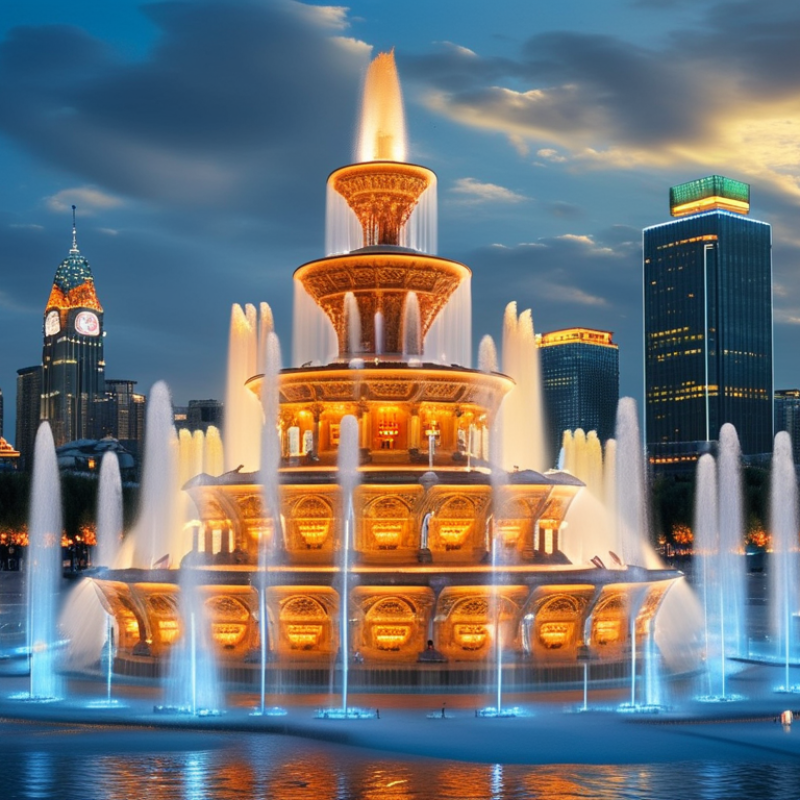
In China’s large public plazas, the best musical fountain is not simply the tallest installation. Height must suit surrounding buildings, viewing distance, wind, and local climate. A 25-meter jet may look impressive, yet strong wind can scatter water onto walkways. Engineers should study several viewing points before selecting nozzle heights. On-site experience matters here. A fountain should frame people, not block them.
Flow rate determines rhythm, density, and operating cost. High flow can create a powerful curtain, while smaller streams provide delicate musical detail. Designers often divide the basin into hydraulic zones, allowing quick changes between soft and dramatic movements. Pumps need stable performance, not only peak capacity. If pressure falls during a performance, the pattern becomes uneven. That flaw is easy to notice. Water quality also affects nozzle performance, especially in dusty outdoor plazas.
Power planning must include pumps, underwater lights, audio equipment, and control cabinets. Electrical loads should be measured under real operating conditions, with protection against moisture and overload. The control system connects timing, water height, lighting, and music with precise coordination.
Reliable systems also allow manual intervention when sensors detect abnormal pressure or water levels. I would not call a fountain perfect after one impressive show. Repeated tests, maintenance records, and public feedback reveal more. Sometimes, a lower jet, slower sequence, and quieter pump create a better plaza experience.

China’s leading plaza fountains differ sharply in nozzle count, footprint, and choreography. Public project specifications commonly report Xi’an’s large civic fountain at about 350 metres long, over 100 metres wide, and more than 1,000 nozzles. Another coastal plaza installation covers approximately 8,000 square metres with nearly 600 nozzles. A newer central-China project uses close to 2,000 nozzles, yet its active performance zone is smaller.
The published figures are not perfectly consistent.
Show scale also depends on pump capacity, projection height, lighting channels, and audience distance.
Field observations suggest that dense nozzle layouts create sharper patterns, while wider spacing produces stronger visual rhythm across a large square.
The 2023 China Water Resources Bulletin recorded national water use at about 590.7 billion cubic metres, reinforcing the need to examine water efficiency. China’s GB/T 18921-2019 reclaimed-water standard is also relevant when systems reuse treated water.
A professional comparison should therefore check recirculation rates, filtration cycles, pump energy, maintenance access, and noise levels.
The China Urban Construction Statistical Yearbook provides useful municipal infrastructure context, but it does not standardize fountain performance data. That gap matters.
A fountain with fewer nozzles may deliver a cleaner show and lower operating costs, while a massive array can overwhelm visitors with spray, glare, and repetition. I would measure the experience from several viewing points, not only from promotional photographs.
What Are the Best Plaza Musical Fountains in China?
A strong plaza fountain balances hydraulic power with clear audiovisual timing. Flow rate, measured in m³/h, should match nozzle height, basin size, and spray density. Excessive flow may create mist, noise, and unnecessary energy use. Insufficient flow produces weak patterns. Details matter. In a public plaza, operators should record real flow readings during commissioning, not rely only on pump labels.
Sound quality also needs practical testing. Musical fountains often use loudspeakers near open seating areas, but the target dB level must remain comfortable for visitors. Technicians should measure sound at audience positions, including daytime traffic noise and surrounding buildings. Reflections can make music seem harsher than expected. That result is easy to underestimate. A reliable design separates equipment noise from performance audio and provides adjustable volume limits.
DMX control can coordinate valves, lights, pumps, and playback cues with millisecond-level planning. Timing should be checked at slow movements and rapid musical changes. A small delay between a jet and its light can weaken the entire performance. I have found that manual observation still matters, even after software testing. Water pressure changes, wind, and maintenance conditions can alter the effect. A better specification includes test scenes, backup timing files, sensor feedback, and clear maintenance records. Some installations still prioritize dramatic height over stable operation, which deserves reconsideration.
Hydraulic and AV performance comparison by water flow, audience-area sound level, DMX512 control capacity, and show-control response time.
The figures represent realistic planning ranges for compact, medium, large, and landmark plaza fountain systems. Water flow is shown in m³/h, sound pressure is measured in dB(A) near the audience zone, DMX512 capacity is expressed in universes of up to 512 channels, and response time indicates the approximate delay between a lighting or audio cue and the hydraulic-control command.
Choosing a musical fountain in China requires more than comparing light programs. Safety begins below the show surface. Pool depth should match access control, cleaning work, and visitor behavior. A shallow basin may reduce drowning exposure, yet it can still cause slips or impact injuries. Designers should confirm edge geometry, drain protection, anti-slip finishes, and emergency access. During site reviews, I look for hidden corners where water collects. Those details are easy to miss.
Spray reach must be tested under changing wind, not only during calm commissioning conditions. A jet crossing a walkway can wet paving, obscure faces, or reach electrical equipment. Use wind sensors, adjustable nozzles, and clear exclusion zones where needed. Filtration also deserves close attention. The system should control suspended solids, disinfectant levels, and microbial risk through documented testing. Turnover rates, filter loading, and maintenance intervals need written records. Clear water is not proof of safe water.
Reliable operators build a risk register from observations, inspection reports, near misses, water tests, and weather records. They review crowd density, child behavior, pump faults, and evacuation times. Numbers should guide decisions, not decorate a tender document. Targets for response time, spray drift, and inspection frequency must fit the site and current Chinese requirements. I would question any design depending on perfect supervision. People become distracted. Systems need fail-safe shutdowns, visible warnings, and trained staff.
What Are the Best Plaza Musical Fountains in China?
The best plaza musical fountain is not always the one with the lowest quotation. Lifecycle cost matters more than opening-day appearance. Hydraulic Institute and Europump’s Pump Life Cycle Costs guide estimates that energy can represent about 40% of a pump’s total ownership cost. Initial purchase may be only 10%. Actual ratios vary, but the warning is useful.
CAPEX includes pumps, nozzles, control cabinets, lighting, filtration, pipework, and civil installation. OPEX includes electricity, water treatment, cleaning, inspections, and seasonal operation. A 30 kW pump running eight hours daily uses about 87,600 kWh annually. At 0.80 yuan per kWh, that equals roughly 70,080 yuan. Variable-frequency drives and programmed water levels can reduce waste, but savings require correct hydraulic commissioning. Oversized pumps remain a common mistake.
Tips: Request a five-year cost model, not only an equipment price. Ask for measured flow, head, motor efficiency, standby hours, filter-cleaning time, and spare-part intervals. The U.S. Department of Energy notes that pumping systems can represent 25–50% of industrial electricity use, depending on the site. Plaza fountains differ, yet the principle applies. Choose controls with maintenance logs and accessible service areas. A cheaper system may consume more energy and require more labor. That uncomfortable trade-off deserves careful review.

Cepex is the brand for the fluid handling market belonging to the Fluidra group. One of the leading european manufacturer of valves and fittings in thermoplastic materials.
Dedicated to the swimming pool, irrigation and industrial markets, we distribute our products worldwide with the Fluidra commercial network and presence in 46 countries with 136 sales branches.


