
Best Infrared Thermal Imaging Camera for Your Needs?
FLUID HANDLING EXPERTS

Blog, all our news

Best Infrared Thermal Imaging Camera for Your Needs?

In recent years, the demand for Infrared Thermal Imaging Cameras has soared. According to a market research report by Grand View Research, the global thermal imaging market is expected to reach $7.7 billion by 2026. This growth reflects the increasing applications of thermal cameras in various sectors, including building inspections, electrical maintenance, and surveillance. These devices help identify thermal anomalies, which can lead to significant cost savings.

Despite their benefits, choosing the right Infrared Thermal Imaging Camera can be challenging. The market is filled with options, each tailored for specific needs. Various models offer different temperature ranges and resolutions. However, many users still struggle to grasp the technical specifications and their implications. It's crucial to balance performance with cost, as the most expensive camera is not always the best fit for every application.

A well-informed choice hinges on understanding individual requirements. Each scenario—be it home inspections or industrial applications—demands unique features. Therefore, exploring professional reviews and user feedback is vital. This approach ensures you select a reliable camera that meets your specific needs.
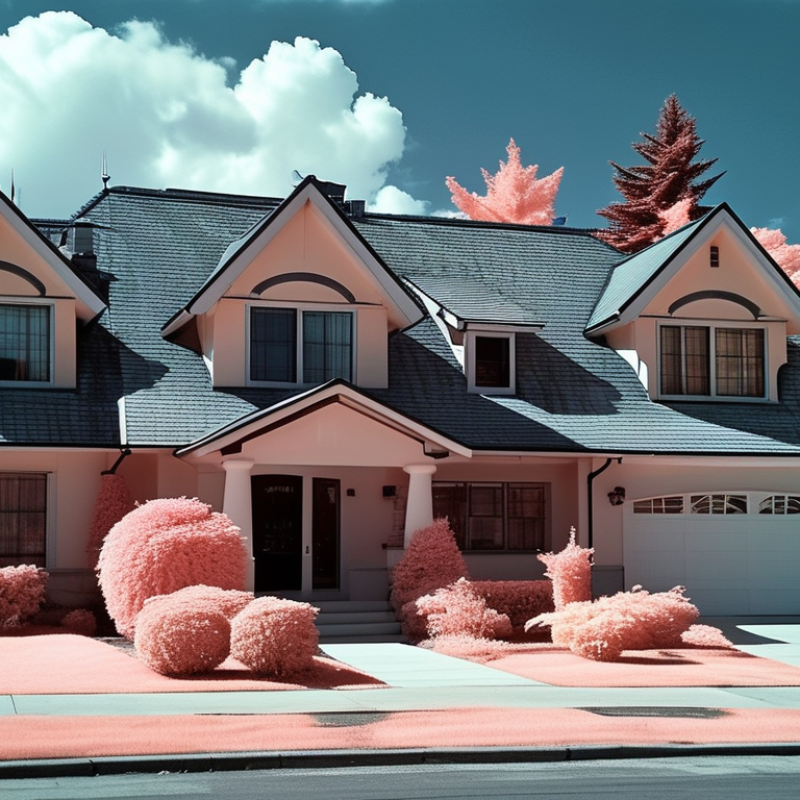
Best Infrared Thermal Imaging Camera for Your Needs?

Understanding Infrared Thermal Imaging Technology and its Applications

Infrared thermal imaging technology uses infrared radiation to create images of heat patterns. This method is vital across various sectors, including home inspections, healthcare, and industrial maintenance. By detecting temperature differences, this technology reveals hidden problems that the naked eye cannot see. It identifies insulation issues, leaks, and even potential electrical failures in machinery.

Using thermal cameras can enhance safety and efficiency. In healthcare, they help in diagnosing conditions by visualizing blood flow and inflammation. In building inspections, they can pinpoint energy loss, helping homeowners save on utility bills. However, not all thermal cameras are the same. Their effectiveness often depends on resolution, sensitivity, and the environment in which they are used. It’s crucial to choose the right camera for specific needs.

Many users may overlook the importance of understanding the underlying technology. A basic grasp of infrared radiation and thermodynamics can significantly improve how one uses these devices. While thermal imaging is a powerful tool, it is not infallible. Users must be aware of its limitations and the context of the images captured. Without sufficient knowledge, misinterpretation of thermal data can lead to misguided conclusions.

Best Infrared Thermal Imaging Camera for Your Needs?

Camera Model Resolution (Pixels) Temperature Range (°C) Frame Rate (Hz) Weight (g) Price (USD)
Model A 320 x 240 -20 to 300 30 400 500
Model B 640 x 480 -40 to 150 60 350 750
Model C 1024 x 768 -20 to 500 25 600 1200
Model D 384 x 288 0 to 400 50 450 650

Key Features to Evaluate When Choosing a Thermal Imaging Camera

When selecting the best infrared thermal imaging camera, several key features stand out. Resolution is crucial. High-resolution images can provide more detail. This is vital for accurate temperature readings. According to industry data, cameras with a resolution of 320x240 pixels are becoming the standard. Higher resolutions, like 640x480, enhance image clarity and analysis capabilities.

Field of view (FOV) also plays a significant role. A wider FOV allows for capturing larger areas in a single shot. This can be especially beneficial in applications like building inspections. A narrower FOV might be suitable for specific tasks but may miss broader issues. Industry reports suggest that thermal cameras with a 30° by 40° FOV are popular for general-purpose use.

Another factor is the thermal sensitivity, often referred to as NETD (Noise Equivalent Temperature Difference). A lower NETD value indicates better sensitivity and can detect smaller temperature differences. For quality control and troubleshooting, a NETD of 50 mK or lower is recommended. This ensures precision in detecting issues. While these features are essential, balancing them against budget and specific application needs is important. Each use case might require a different set of priorities, leading to continuous reflection on one’s choices.

Top Infrared Thermal Imaging Cameras in 2023: A Comparative Analysis

When selecting an infrared thermal imaging camera in 2023, various factors come into play. Users need to assess resolution, sensitivity, and temperature range. High-resolution cameras provide clearer images, allowing better identification of issues. Meanwhile, a camera's sensitivity affects its ability to detect slight temperature variations. This is crucial for tasks like electrical inspections or building diagnostics.


Several models excel in different environments. For instance, some cameras are more suited for industrial applications, offering robust durability. Others may cater to home inspections, focusing on user-friendly interfaces. Battery life also varies significantly, which can impact usability during extended fieldwork. Testing various models reveals strengths and weaknesses, allowing for more informed decisions.


Budget considerations are essential but should complement functionality. Cheaper options might lack necessary features, while high-end models can overwhelm novice users. Striking a balance can be challenging. While more features may appear advantageous, they often complicate the user experience. It’s important to reflect on the specific needs before making a purchase, ensuring that the chosen camera aligns well with practical applications.

Industry Standards and Certifications for Thermal Imaging Devices

When choosing an infrared thermal imaging camera, understanding industry standards is crucial. Certifications like ASTM E1933 and ISO 18434 define the performance and reliability expected in these devices. These standards ensure that cameras can accurately detect temperature variations, essential for applications in building inspections, electrical safety, and even medical diagnostics.

Reports suggest that over 70% of thermal imaging cameras on the market do not meet basic certification requirements. Such discrepancies can lead to misdiagnoses in inspections or overlooked safety hazards. Thermal imaging devices operate best when they adhere to standards, creating a foundation for trust in their functionality.

While many cameras boast advanced features, not all comply with regulatory benchmarks. This can create confusion for users. Even professionals might hesitate in making informed decisions due to inconsistent data. Seeking devices that proudly display compliance certifications is vital. Users must also stay updated on evolving industry benchmarks to ensure their equipment remains relevant and effective.

Cost vs. Performance: Budget Considerations for Thermal Cameras

Choosing the best infrared thermal imaging camera involves balancing cost and performance. For many users, budget constraints are a primary concern. You may find higher-priced models offer superior resolution and advanced features. However, your specific needs may not warrant such investments.

Consider what you will use the camera for. Is it for home inspections, HVAC diagnostics, or wildlife observation? Each application may require different specifications. A basic model might suffice for occasional use. Yet, if reliability is paramount, a mid-range camera could prove essential.

Tips: Always research essential features. Look for resolution, sensitivity, and user-friendly interfaces. Some inexpensive models may lack necessary specifications. Reflect on what features are non-negotiable for your work. Seek reviews and user feedback to determine real-world performance. A cheaper product may seem appealing, yet it could fall short of expectations. Prioritize quality over price for professional use.

Cost vs. Performance: Budget Considerations for Thermal Cameras

Copyright 2025 Fluidra S.A. | Created by BCM Marketing Agencia Privacy Policy Legal note | Cookie policy |

Technical cookies are strictly necessary for our website to work and you can navigate through it. These types of cookies are those that, for example, allow us to identify you, give you access to certain restricted parts of the page if necessary, or remember different options or services already selected by you, such as your privacy preferences. Therefore, they are activated by default, your authorization not being necessary in this regard. Through the configuration of your browser, you can block or alert the presence of this type of cookies, although such blocking will affect the proper functioning of the different functionalities of our website.


The analysis cookies allow us to study the navigation of the users of our website in general (for example, which sections of the page are the most visited, which services are used most and if they work correctly, etc.). From the statistical information on navigation on our website, we can improve both the operation of the page itself and the different services it offers. Therefore, these cookies do not have an advertising purpose, but only serve to make our website work better, adapting to our users in general. By activating them you will contribute to this continuous improvement. You can enable or disable these cookies by checking the corresponding box, being disabled by default.


Functionality cookies allow us to remember your preferences, to personalize certain characteristics and general options of our website, every time you access it (for example, the language in which the information is presented to you, the sections marked as favorites, your browser type, etc.) Therefore, this type of cookies does not have an advertising purpose, but by activating them you will improve the functionality of the website (for example, adapting to your type of browser) and the customization of it based on your preferences (for example, by presenting the information in the language that you have chosen in previous occasions), which will contribute to the ease, usability and comfort of our page during your navigation. You can enable or disable these cookies by checking the corresponding box, being disabled by default.


Advertising cookies allow us to manage the advertising spaces included in our website based on criteria such as the content shown or the frequency in which the ads are displayed. For example, if you have been shown the same ad several times on our website, and you have not shown a personal interest by clicking on it, it will not appear again. In summary, by activating this type of cookies, the advertising shown on our website will be more useful and diverse, and less repetitive. You can enable or disable these cookies by checking the corresponding box, being disabled by default.


Behavioral advertising cookies allow us to obtain information based on the observation of your browsing habits and behaviors on the web, in order to show you advertising content that best suits your personal tastes and interests. To understand it in a very simple way, we will give you a fictitious example: if your last searches on the web were related to suspense literature, we would show you advertising about suspense books. Therefore, activating this type of cookies, the advertising that we show you on our website will not be generic, but will be oriented to your searches, tastes and interests, therefore adjusting exclusively to you. You can enable or disable these cookies by checking the corresponding box, being disabled by default.
To understand it in a very simple way, we will give you a fictitious example: if your last searches on the web were related to suspense literature, we would show you advertising about suspense books. Therefore, activating this type of cookies, the advertising that we show you on our website will not be generic, but will be oriented to your searches, tastes and interests, therefore adjusting exclusively to you. You can enable or disable these cookies by checking the corresponding box, being disabled by default.

SAVE

We use our own and third-party cookies to ensure the proper functioning of the website and to analyse our services, improve your experience on our website and show you advertisements related to your interests according to profiling based on your browsing habits (e.g. websites visited). You can accept all cookies by clicking "ACCEPT" or set or reject them by clicking here. If you would like to know more about the use of cookies, please see our COOKIE POLICY.


ACCEPT ALL
Reject no essentials



