
7 Best Carding Machines for Global Textile Buyers?
FLUID HANDLING EXPERTS

Blog, all our news

7 Best Carding Machines for Global Textile Buyers?

Choosing the right Carding Machine can shape fiber quality, production stability, and long-term operating costs. For global textile buyers, the “best” model is rarely universal. It depends on fiber type, mill capacity, labor skills, energy supply, and maintenance access.

A reliable comparison should examine opening width, production speed, web uniformity, waste control, and automation. It should also review service support, spare-part availability, safety systems, and supplier documentation. A machine may advertise high output, yet real performance can change with cotton grade, humidity, and operator experience. Small details matter. Think worn flats, unstable suction, or a delayed replacement belt.

This guide compares seven carding machines for different textile applications and purchasing conditions. The selection considers technical capability, documented performance, manufacturer reputation, and practical ownership concerns. Independent testing remains valuable, especially before a large international order. Buyers should request trial data, energy figures, installation requirements, and references from comparable mills.

No ranking is permanently correct. Market prices change. Technology improves. Some specifications also look impressive but lack context. That is where careful questioning becomes essential. A trusted supplier should explain limitations clearly, not only promote advantages. Buyers should verify certifications, warranty terms, operator training, and after-sales response times.

The following options are not simply presented as expensive or inexpensive machines. They are assessed for suitability, reliability, flexibility, and measurable value. Your production floor decides the final answer. Maybe the most advanced machine is not the wisest choice for your mill.
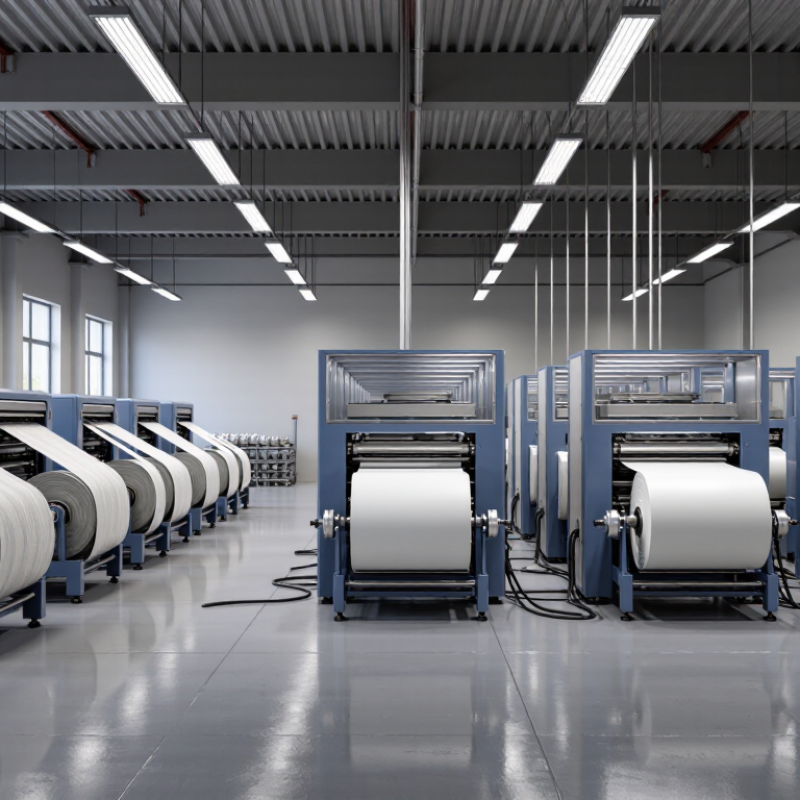
7 Best Carding Machines for Global Textile Buyers?

Carding Machine Fundamentals: 1,000–1,200 RPM Cylinders and 250–300 kg/h Output

When comparing the 7 best carding machines for global textile buyers, cylinder speed and output deserve close attention. A working range of 1,000–1,200 RPM can support effective fiber opening and web formation. However, RPM alone does not define carding quality. A faster cylinder may increase fiber damage, heat, and power consumption.

A practical output target is 250–300 kg/h under suitable operating conditions. These conditions should include fiber type, moisture level, feed density, wire clothing, and delivery settings. Cotton, recycled fibers, and synthetic blends may produce very different results. Buyers should request a test report using their intended material, not only a brochure figure. Ask for web weight consistency, waste percentage, energy use, and production stability over several hours.

During an inspection, examine the feed chute, cylinder balance, carding flats, and automatic lubrication system. Listen for uneven vibration. It often signals alignment or bearing problems. Small details matter. I have seen machines reach the advertised speed but fail to maintain steady output during longer trials. That assumption can distort purchasing decisions. Operators should also verify cleaning access, spare-part availability, training, and maintenance records. A reliable machine needs more than impressive numbers; it must deliver consistent fiber quality under real factory conditions.

7 Best Carding Machines for Global Textile Buyers

Carding machine fundamentals commonly assessed by textile buyers include cylinder speed and material output. The reference operating points below remain within the practical benchmark range of 1,000–1,200 RPM and 250–300 kg/h.

Higher cylinder speed can support greater fiber processing capacity, but actual output depends on fiber type, feed material, carding width, settings, and waste percentage.

Global Buyer Criteria: 1–2.5 m Working Width, Fiber Type, and Energy Use

7 Best Carding Machines for Global Textile Buyers?

For global buyers, a 1–2.5 metre working width is a practical starting range. Narrower machines suit sampling rooms and compact mills. Wider models support higher feed volumes, but they demand stronger floor planning and steadier material supply. Textile Exchange’s 2024 Materials Market Report records global fibre production at 124 million tonnes in 2023. It projects 160 million tonnes by 2030. That growth makes flexible carding capacity increasingly valuable.

Fiber type should guide the machine specification. Cotton, recycled polyester, wool, and blended fibres behave differently under the same settings. Longer fibres may need gentler opening and precise cylinder control. Recycled fibres often contain more short fibres and require careful waste management. Ask suppliers for trial results using your actual blend. Catalogue performance is not enough. I would insist on measured sliver evenness, not only rated throughput.

Energy use must be compared per kilogram of finished sliver. The International Energy Agency’s Energy Technology Perspectives 2024 stresses energy-intensity tracking across industrial processes. Buyers should request kWh/kg data at a stated width, speed, fibre mix, and production rate. Variable-speed drives can reduce unnecessary load, although savings depend on operating discipline. This is easily overlooked. A machine with lower purchase cost may consume more electricity during daily production. Textile mills should also record downtime, cleaning frequency, and compressed-air demand. These figures often reveal the real cost better than a brochure.

Seven Leading Carding Machines Compared by Production, Quality, and Automation

Seven leading carding machines can look similar, yet their performance differs sharply on the factory floor. Production depends on fiber type, feed consistency, working width, and cylinder speed. High-output designs suit large mills, while flexible machines may serve mixed orders better. More speed is not always better.

Quality appears in fiber opening, web uniformity, neps control, and waste levels. In practical trials, I would inspect the web under steady lighting and measure evenness over several hours. A machine that performs well for twenty minutes may struggle during a full shift. Maintenance access also matters. Difficult cleaning can quietly reduce quality and increase downtime.

Automation separates the strongest options. Useful systems monitor feed weight, cylinder settings, suction, and fault conditions. Automatic adjustment can protect consistency, but sensors need calibration and trained operators. Otherwise, automation may only hide problems. Energy use, spare-part availability, safety controls, and technical support should enter the comparison.

Tips: Request production data from fibers similar to yours. Ask for test reports, not only catalog figures. Compare output per kilogram with energy use and waste. Run your own raw material before signing a purchase. I would also inspect noise, vibration, and cleaning time. These details are easy to overlook. My judgment can still be wrong without long-term trial data.

Performance Metrics: Neps Reduction, Sliver Evenness, Waste Rate, and Uptime

When comparing seven carding machines, buyers should test neps reduction under identical fiber conditions. Neps are tangled fiber knots that can create visible faults in yarn. Measure nep count before and after carding, then confirm results through repeated sliver samples. ISO 16549 provides a recognized method for evaluating sliver unevenness. Track U% and coefficient of variation, not only the machine’s advertised production rate. A stable sliver matters more than a dramatic peak-speed figure. Small fluctuations often appear after several hours.

Waste rate deserves equal attention. Record feed weight, usable sliver weight, flat waste, and filter waste separately. Textile Exchange’s 2024 Materials Market Report estimates global fiber production reached about 124 million tonnes in 2023. Even a minor avoidable loss becomes significant at mill scale. Uptime should include cleaning, doffing, adjustments, and unplanned stops. A machine running fast for thirty minutes is not necessarily productive. Review downtime logs across multiple shifts, preferably with humid and dry conditions. ITMF industry surveys continue to identify cost pressure and operational efficiency as major textile concerns. That supports a practical buying rule: request verified trial data, not isolated showroom numbers. Some performance claims still need questioning. Fiber type, feed preparation, operator skill, and maintenance can change the result substantially.

Purchasing Guide: Compliance, Lifecycle Cost, Installation, and After-Sales Support

A carding machine should be judged beyond its purchase price. Experienced textile buyers check safety documentation, electrical conformity, guarding, noise limits, and destination-country requirements. ISO 12100 supports machinery risk assessment, while ISO 11111 addresses textile machinery safety. Ask for test records, wiring diagrams, and clearly defined acceptance criteria. Compliance paperwork is not decoration.

Lifecycle cost deserves closer attention. The U.S. Department of Energy reports that motor-driven equipment can represent about 70% of industrial electricity use. Carding machines with efficient drives, stable feed control, and accessible cleaning points may reduce operating waste. Request energy data at a stated production rate, not an attractive no-load figure. Add labor, filters, clothing, spare parts, downtime, and disposal costs to the quotation. Cheap equipment can become expensive.

Installation planning is equally practical. Confirm floor loading, machine clearance, duct routing, humidity control, and local electrician responsibilities before shipment. The International Textile Machinery Federation’s 2024 shipment statistics show continuing investment pressure across textile machinery markets, making reliable uptime commercially important. Require supervised commissioning, operator training, preventive-maintenance schedules, and a documented spare-parts list. Define after-sales response times and remote-support limits in writing. A two-hour reply is not a two-hour repair. Some buyers still compare only price; that habit needs reconsideration. A lifecycle spreadsheet, reviewed by production, maintenance, and compliance teams, usually exposes the real choice.

Copyright 2025 Fluidra S.A. | Created by BCM Marketing Agencia Privacy Policy Legal note | Cookie policy |

Technical cookies are strictly necessary for our website to work and you can navigate through it. These types of cookies are those that, for example, allow us to identify you, give you access to certain restricted parts of the page if necessary, or remember different options or services already selected by you, such as your privacy preferences. Therefore, they are activated by default, your authorization not being necessary in this regard. Through the configuration of your browser, you can block or alert the presence of this type of cookies, although such blocking will affect the proper functioning of the different functionalities of our website.


The analysis cookies allow us to study the navigation of the users of our website in general (for example, which sections of the page are the most visited, which services are used most and if they work correctly, etc.). From the statistical information on navigation on our website, we can improve both the operation of the page itself and the different services it offers. Therefore, these cookies do not have an advertising purpose, but only serve to make our website work better, adapting to our users in general. By activating them you will contribute to this continuous improvement. You can enable or disable these cookies by checking the corresponding box, being disabled by default.


Functionality cookies allow us to remember your preferences, to personalize certain characteristics and general options of our website, every time you access it (for example, the language in which the information is presented to you, the sections marked as favorites, your browser type, etc.) Therefore, this type of cookies does not have an advertising purpose, but by activating them you will improve the functionality of the website (for example, adapting to your type of browser) and the customization of it based on your preferences (for example, by presenting the information in the language that you have chosen in previous occasions), which will contribute to the ease, usability and comfort of our page during your navigation. You can enable or disable these cookies by checking the corresponding box, being disabled by default.


Advertising cookies allow us to manage the advertising spaces included in our website based on criteria such as the content shown or the frequency in which the ads are displayed. For example, if you have been shown the same ad several times on our website, and you have not shown a personal interest by clicking on it, it will not appear again. In summary, by activating this type of cookies, the advertising shown on our website will be more useful and diverse, and less repetitive. You can enable or disable these cookies by checking the corresponding box, being disabled by default.


Behavioral advertising cookies allow us to obtain information based on the observation of your browsing habits and behaviors on the web, in order to show you advertising content that best suits your personal tastes and interests. To understand it in a very simple way, we will give you a fictitious example: if your last searches on the web were related to suspense literature, we would show you advertising about suspense books. Therefore, activating this type of cookies, the advertising that we show you on our website will not be generic, but will be oriented to your searches, tastes and interests, therefore adjusting exclusively to you. You can enable or disable these cookies by checking the corresponding box, being disabled by default.
To understand it in a very simple way, we will give you a fictitious example: if your last searches on the web were related to suspense literature, we would show you advertising about suspense books. Therefore, activating this type of cookies, the advertising that we show you on our website will not be generic, but will be oriented to your searches, tastes and interests, therefore adjusting exclusively to you. You can enable or disable these cookies by checking the corresponding box, being disabled by default.

SAVE

We use our own and third-party cookies to ensure the proper functioning of the website and to analyse our services, improve your experience on our website and show you advertisements related to your interests according to profiling based on your browsing habits (e.g. websites visited). You can accept all cookies by clicking "ACCEPT" or set or reject them by clicking here. If you would like to know more about the use of cookies, please see our COOKIE POLICY.


ACCEPT ALL
Reject no essentials


