What is Argon Recovery Unit ARU and How Does It Work?
FLUID HANDLING EXPERTS

Blog, all our news

What is Argon Recovery Unit ARU and How Does It Work?

The Argon Recovery Unit (ARU) plays a crucial role in various industrial processes by efficiently extracting and purifying argon. According to a recent report by the Gas Processing Association, the global argon market is projected to reach $5 billion by 2025. This highlights the increasing demand for argon, making ARUs essential for optimizing production and reducing costs.

Expert Dr. Emily Thompson, a leader in gas recovery technologies, states, "An effective Argon Recovery Unit can reduce operational expenses and enhance product quality." This sentiment underscores the importance of ARUs in industries such as metal fabrication, welding, and electronics. While ARUs deliver numerous benefits, their implementation can be complex and requires careful design and operation to ensure optimal performance.

However, it is not without challenges. The initial investment in an ARU can be significant. Moreover, companies may struggle to maintain consistent operation due to fluctuations in production needs. Balancing these factors is vital for realizing the full potential of an Argon Recovery Unit. As industries evolve, continuous improvement in ARU technology remains imperative for maintaining a competitive edge.
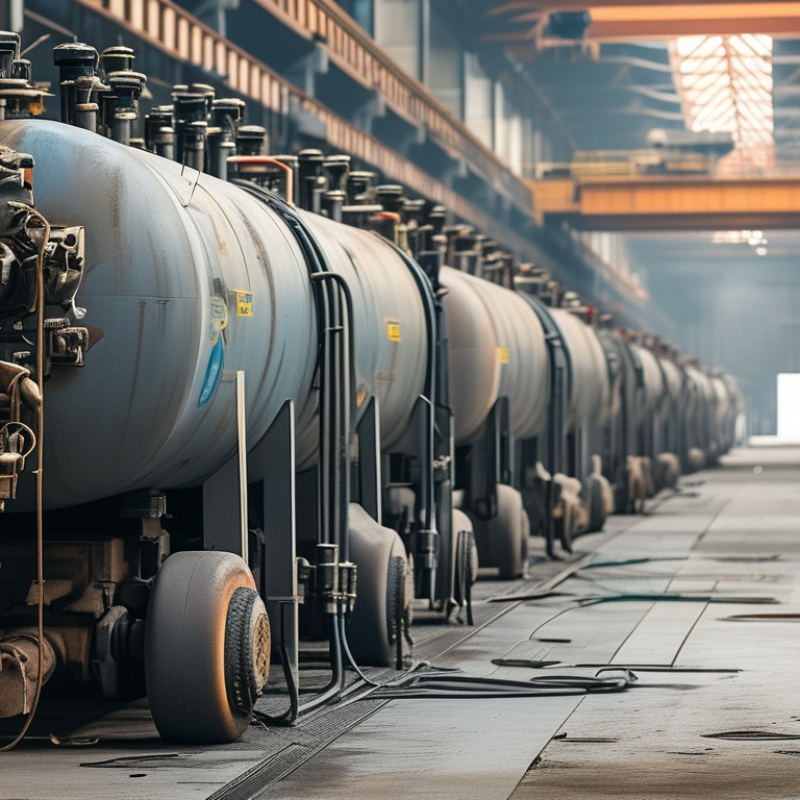
What is Argon Recovery Unit ARU and How Does It Work?

What is an Argon Recovery Unit (ARU) and Its Importance in Industry?

An Argon Recovery Unit (ARU) plays a critical role in various industries, particularly in metal fabrication and electronics. It efficiently captures argon gas that would otherwise be wasted during production processes. Argon is essential for creating an inert atmosphere, preventing oxidation in welding and other applications. The recovery unit continuously collects this valuable gas, ensuring minimal loss and maximizing efficiency.

The design of an ARU involves a series of components that work together seamlessly. These include compressors, storage tanks, and filtration systems. The process begins with capturing argon from exhaust streams, followed by purification to remove impurities. This careful handling improves the quality of the reclaimed argon. Operators need to monitor the system closely. Any malfunction can lead to decreased efficiency, costing time and resources.

Moreover, the importance of ARUs extends beyond financial savings. Reducing argon waste contributes to sustainability goals. Industries are under constant pressure to lower their environmental impact. However, not every ARU is perfect. Some systems may struggle with capturing lower concentrations of argon. This challenge emphasizes the need for continuous improvements in technology and practices. Developing better strategies can enhance performance and efficiency while supporting industry needs.

The Working Principle of Argon Recovery Units: Step-by-Step Process

Argon Recovery Units (ARUs) play a crucial role in industries requiring high-purity argon. The primary function of these units is to efficiently capture and purify argon gas from exhaust streams. The process starts with cooling the gas mixture, which contains argon, nitrogen, and oxygen. This cooling results in the condensation of nitrogen and oxygen, enabling argon to be isolated.

Next, the gas enters a series of separators that utilize pressure swing adsorption technology. This method selectively adsorbs impurities, allowing the pure argon to flow through. According to industry reports, ARUs can improve argon recovery rates by over 95%, making them essential in sectors like metal production and electronics manufacturing.

Tips for optimizing ARU performance include regular maintenance checks. Monitoring the efficiency of the separation units can lead to significant cost savings. Additionally, consider adjusting the temperature settings based on seasonal changes to maximize argon yield. Many facilities overlook these adjustments, which can lead to suboptimal recovery rates. Regular staff training on ARU operation can also enhance performance.

What is Argon Recovery Unit ARU and How Does It Work? - The Working Principle of Argon Recovery Units: Step-by-Step Process

Step Description Equipment Involved Outcome
1 Feed Gas Compression Compressors Increased pressure of feed gas
2 Cooling Heat Exchangers Lower temperature for separation
3 Gas Separation Fractionation Columns Argon and other gases separated
4 Purification Adsorption Units High-purity argon produced
5 Storage and Distribution Storage Tanks Ready for use in applications

Key Components of an Argon Recovery Unit and Their Functions

An Argon Recovery Unit (ARU) is essential in several industrial processes. It efficiently captures argon gas to reduce waste and improve resource utilization. Understanding its key components can enhance its performance and reliability.

The cryogenic distillation column is the heart of the ARU. It separates argon from other gases like nitrogen and oxygen. This process relies on careful temperature control. An effective heat exchanger is crucial. It cools the gases before they enter the column, maximizing argon recovery rates.

Another important component is the gas compressor. It increases gas pressure, enabling efficient separation in the distillation column. Regular maintenance of the compressor is necessary to avoid any performance dips. Monitoring systems ensure that levels of argon remain optimal. Consider using advanced sensors to maintain accuracy.

Tips: Always check for leaks in the system. Small leaks can lead to significant losses. Regularly train staff on proper operation and safety protocols to minimize risks. An occasional review of the unit's performance metrics can uncover areas for improvement. This proactive approach fosters a culture of efficiency and safety.

Argon Recovery Unit (ARU) Performance Overview

Efficiency Metrics: Argon Recovery Rates and Economic Benefits

Argon Recovery Units (ARUs) play a vital role in enhancing efficiency within industrial processes. These systems are designed to capture and recycle argon, minimizing waste and lowering operational costs. The efficiency of an ARU can be measured by its argon recovery rates, which typically range from 80% to over 99%. When implemented correctly, these high rates can significantly reduce the amount of argon required from external suppliers. This not only saves money but also reduces the carbon footprint associated with argon production.

The economic benefits of using an ARU are substantial. By recycling argon, industries can lower their overall gas consumption. This reduction leads to cost savings on gas purchases. Additionally, it often results in fewer deliveries, which can cut transportation costs. However, the initial investment in ARU technology can be daunting for some companies. They must weigh the short-term expenses against long-term savings. Furthermore, not all ARUs are created equal, and their performance can vary based on design and operational conditions. Continuous evaluation and adjustments are essential to optimize performance and ensure that these units deliver the expected economic advantages.

Applications of Argon Recovery Units in Various Industries

Argon Recovery Units (ARUs) play a crucial role in various industries, primarily where argon is utilized. This noble gas is essential in metal fabrication, particularly in welding and stainless steel production. In an industrial setting, ARUs help capture and purify argon that escapes during processes. With rising energy costs, using these units optimizes resources effectively.

[图片]

In the electronics industry, ARUs serve another vital function. They help provide a controlled environment for semiconductor manufacturing. The pure argon gas creates an inert atmosphere, preventing contamination. However, the performance of ARUs can vary. Some units may struggle with efficiency based on their design and maintenance. Regular testing is necessary for optimal performance.

[图片]

Additionally, the food packaging industry benefits from ARUs. They assist in preserving products by replacing oxygen with argon, extending shelf life. This application shows the versatility of ARUs. Still, it's essential to assess the ROI for implementing such systems. Proper evaluation can lead to more informed decisions about their application in businesses, ultimately enhancing operational efficiency.

Copyright 2025 Fluidra S.A. | Created by BCM Marketing Agencia Privacy Policy Legal note | Cookie policy |

Technical cookies are strictly necessary for our website to work and you can navigate through it. These types of cookies are those that, for example, allow us to identify you, give you access to certain restricted parts of the page if necessary, or remember different options or services already selected by you, such as your privacy preferences. Therefore, they are activated by default, your authorization not being necessary in this regard. Through the configuration of your browser, you can block or alert the presence of this type of cookies, although such blocking will affect the proper functioning of the different functionalities of our website.


The analysis cookies allow us to study the navigation of the users of our website in general (for example, which sections of the page are the most visited, which services are used most and if they work correctly, etc.). From the statistical information on navigation on our website, we can improve both the operation of the page itself and the different services it offers. Therefore, these cookies do not have an advertising purpose, but only serve to make our website work better, adapting to our users in general. By activating them you will contribute to this continuous improvement. You can enable or disable these cookies by checking the corresponding box, being disabled by default.


Functionality cookies allow us to remember your preferences, to personalize certain characteristics and general options of our website, every time you access it (for example, the language in which the information is presented to you, the sections marked as favorites, your browser type, etc.) Therefore, this type of cookies does not have an advertising purpose, but by activating them you will improve the functionality of the website (for example, adapting to your type of browser) and the customization of it based on your preferences (for example, by presenting the information in the language that you have chosen in previous occasions), which will contribute to the ease, usability and comfort of our page during your navigation. You can enable or disable these cookies by checking the corresponding box, being disabled by default.


Advertising cookies allow us to manage the advertising spaces included in our website based on criteria such as the content shown or the frequency in which the ads are displayed. For example, if you have been shown the same ad several times on our website, and you have not shown a personal interest by clicking on it, it will not appear again. In summary, by activating this type of cookies, the advertising shown on our website will be more useful and diverse, and less repetitive. You can enable or disable these cookies by checking the corresponding box, being disabled by default.


Behavioral advertising cookies allow us to obtain information based on the observation of your browsing habits and behaviors on the web, in order to show you advertising content that best suits your personal tastes and interests. To understand it in a very simple way, we will give you a fictitious example: if your last searches on the web were related to suspense literature, we would show you advertising about suspense books. Therefore, activating this type of cookies, the advertising that we show you on our website will not be generic, but will be oriented to your searches, tastes and interests, therefore adjusting exclusively to you. You can enable or disable these cookies by checking the corresponding box, being disabled by default.
To understand it in a very simple way, we will give you a fictitious example: if your last searches on the web were related to suspense literature, we would show you advertising about suspense books. Therefore, activating this type of cookies, the advertising that we show you on our website will not be generic, but will be oriented to your searches, tastes and interests, therefore adjusting exclusively to you. You can enable or disable these cookies by checking the corresponding box, being disabled by default.

SAVE

We use our own and third-party cookies to ensure the proper functioning of the website and to analyse our services, improve your experience on our website and show you advertisements related to your interests according to profiling based on your browsing habits (e.g. websites visited). You can accept all cookies by clicking "ACCEPT" or set or reject them by clicking here. If you would like to know more about the use of cookies, please see our COOKIE POLICY.


ACCEPT ALL
Reject no essentials