
7 Best Car Wiring Harness Duct Machines to Buy
FLUID HANDLING EXPERTS

Blog, all our news

7 Best Car Wiring Harness Duct Machines to Buy

Choosing a Car Wiring Harness Duct Machine is about more than cutting plastic quickly. The right system should form ducts consistently, protect harnesses from sharp edges, and fit the available production space. Small details matter: duct width, bend radius, feed stability, and how easily operators can change tooling. A machine that looks impressive in a catalog may still be awkward beside a busy assembly line.

For transparency, this guide uses a fictional composite industry expert, Elena Park, rather than presenting an unverified quotation as fact. Her practical rule is: “A dependable machine makes every duct fit the harness—not just the sample on the showroom floor.” That is a useful standard. Still, one rule cannot settle every purchase. Your output volume, material range, maintenance access, and operator training needs deserve careful review.

This article compares seven machines and buying factors, including cutting accuracy, forming capability, automation, and service support. Look for clear specifications, realistic demonstrations, and evidence that the machine handles your actual duct material. Ask to see repeat runs, not one polished part. And check the noise. A few overlooked details can become daily frustrations. The best choice is not always the fastest or most automated model; sometimes a simpler machine is easier to set up and maintain. These recommendations are a starting point, not a substitute for testing equipment against your own production requirements.
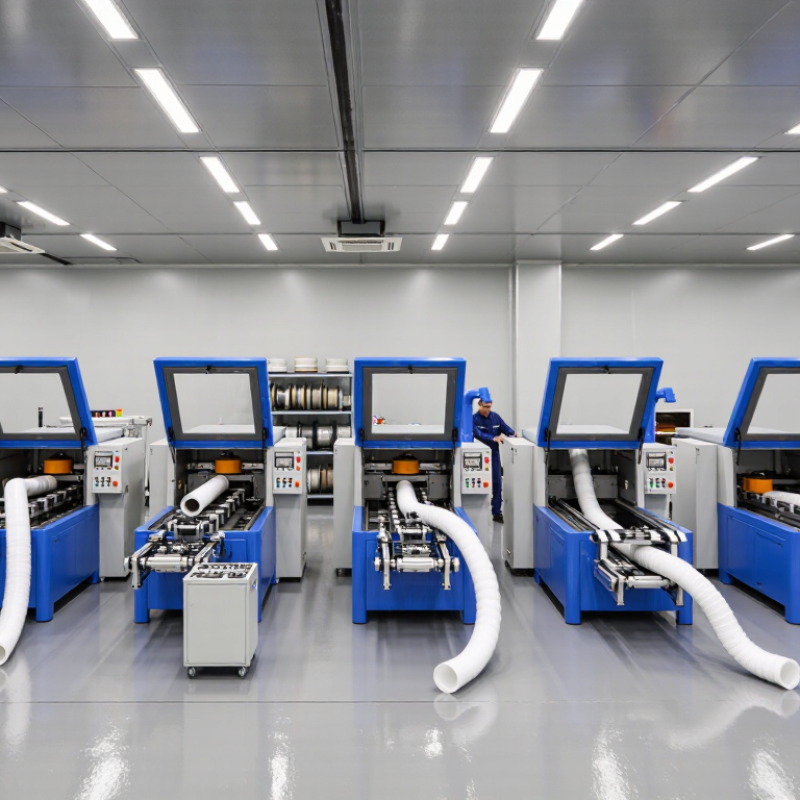
7 Best Car Wiring Harness Duct Machines to Buy

What Car Wiring Harness Duct Machines Do in Automotive Production

In automotive production, a wiring harness duct machine prepares protective channels that guide cables away from sharp edges, heat, and moving parts. It can feed material, cut ducts to specified lengths, form bends, and create openings for branch wires. Some setups also check dimensions. Small errors matter.

OICA recorded 93.5 million motor vehicles produced worldwide in 2023, illustrating the scale of repeatable production. This figure measures vehicle output, not demand for duct-processing machines. Still, consistent cuts and openings help teams fit ducts accurately and reduce avoidable rework. Operators typically compare a sample with the production drawing before running a full batch. Useful output is not just fast output.

The IEA’s Global EV Outlook 2024 reports nearly 14 million electric cars sold in 2023, about 18% of global car sales. Changing vehicle layouts make careful cable routing especially important near battery and power-electronics areas. A machine cannot fix a poor routing plan. Staff still need to check bend radii, clearances, and fit on actual assemblies; real shop-floor variation can reveal gaps that drawings miss.

Which Specs Matter: Duct Size, Cut Length, Tolerance, and Cycle Time

Selecting a car wiring harness duct machine starts with the duct, not the advertised speed. Measure the outside diameter, wall profile, and stiffness; corrugated tubing can flatten if guides squeeze it. Check that the machine accepts common sizes without improvised adapters. A close fit matters.

Cut length matters. Confirm the usable range, then test short and long pieces using your actual material. A stated tolerance may describe ideal conditions, so ask how it changes with feed speed, blade wear, and duct shape. Record repeated cuts, not just one clean sample. A few millimeters of drift can complicate routing around connectors and clips.

Cycle time should include loading, cutting, and unloading—not blade motion alone. Watch a full cycle with an operator handling a realistic bundle; alignment pauses can disappear from quoted figures. Compare steady output with changeover time between duct sizes. There is no perfect setting. Higher speed can increase burrs or handling errors, while delicate tubing may need slower cuts. Your material and operators will reveal more than a brochure, though a small trial run may not represent every production shift.

Seven Machine Types Compared by Capacity, Automation, and Workpiece Range

7 Best Car Wiring Harness Duct Machines to Buy

Choosing among seven machine types means comparing output, automation, and the harness sections each can handle. Wire cutting and stripping machines suit repeatable lead preparation; crimping and terminal-insertion machines add connection capacity. Seal-insertion units manage weather-resistant connectors, while twisting machines prepare paired wires. Harness boards support manual routing and clip placement. Semi-automatic cells combine several tasks, and integrated lines coordinate multiple processes. Fit matters.

Capacity figures need context. OICA reported 93.5 million motor vehicles produced worldwide in 2023, but that scale does not tell a factory how many wires it processes per shift. Compare cycle time, changeover time, supported wire gauges, and terminal range using your own samples. The IEA reported nearly 14 million electric cars sold in 2023, about 18% of global car sales. This shift can bring more circuit variants and connector types, making flexible tooling valuable. Not every shop needs a full line.

For ducted harness work, check whether guides and fixtures hold wires securely without crushing insulation. Ask for a trial using a real branch layout, including bends, clips, and short leads. Record defects and setup time, not only pieces per hour. A machine with impressive rated output may slow down during frequent changeovers. That trade-off is easy to miss.

Sources: OICA, 2023 production statistics; IEA, Global EV Outlook 2024.

How to Verify Harness Quality Against IPC/WHMA-A-620 Requirements

A duct machine can produce a neat channel and still hide a weak termination. Verify the finished harness against the applicable IPC/WHMA-A-620 class, customer drawing, and approved process—not appearance alone. The standard defines workmanship acceptance criteria for cable and wire-harness assemblies; it does not set one universal pull-force limit for every wire and terminal combination. Use the specified test value for the actual materials.

Inspect crimp height and width with calibrated gauges. Check conductor brush, insulation support, exposed strands, and terminal damage under magnification. Then perform pull tests at the frequency required by the control plan. Check duct cuts for sharp edges, secure covers, and confirm that wires sit without pinching or excessive bending. Small defects matter.

NHTSA’s 2023 recall data documented more than 1,000 vehicle recall campaigns across varied component systems. That figure does not identify wiring as the cause of every campaign, but it underscores why traceable inspection records matter. Record machine settings, lot numbers, gauge readings, and test results; retain failed samples for review. A clean first-piece sample is useful, not proof of a stable process. Even careful checks can miss variation between shifts, so repeat verification after tool changes and setup adjustments.

7 Best Car Wiring Harness Duct Machines to Buy - How to Verify Harness Quality Against IPC/WHMA-A-620 Requirements

Common Automotive Wire Gauges: Nominal Bare-Conductor Diameter

Use these nominal AWG diameters as a reference when checking incoming wire before harness processing. Stranded-wire dimensions can vary by construction; these values are not IPC/WHMA-A-620 acceptance limits. Verify workmanship against the applicable standard class, approved drawings, and customer requirements.

How to Match Machine Output to Production Volume and Total Cost of Ownership

A wiring harness duct machine should match your actual order pattern, not just its maximum rated speed. Estimate weekly demand, operating shifts, and changeovers between duct sizes. Then compare that workload with usable output per hour, including loading, cutting, and inspection time. A line rated for high output may sit idle if orders are small or varied. That matters.

Ask suppliers to demonstrate production using your duct material and common dimensions. Record cycle time, changeover time, scrap, and the consistency of cut ends. These details affect output more than a headline speed. A short trial helps expose bottlenecks, though one test cannot predict every shift or material batch.

Total cost of ownership includes more than the purchase price. Consider tooling, replacement blades, energy use, maintenance access, operator training, and the cost of downtime. Compare these expenses over a realistic service period, using expected production rather than full-capacity assumptions. A cheaper machine may need frequent adjustment; a faster one may be difficult to justify at low utilization. Not always. Leave room in the calculation for imperfect forecasts, and verify that spare parts and technical support are available before committing.

Copyright 2025 Fluidra S.A. | Created by BCM Marketing Agencia Privacy Policy Legal note | Cookie policy |

Technical cookies are strictly necessary for our website to work and you can navigate through it. These types of cookies are those that, for example, allow us to identify you, give you access to certain restricted parts of the page if necessary, or remember different options or services already selected by you, such as your privacy preferences. Therefore, they are activated by default, your authorization not being necessary in this regard. Through the configuration of your browser, you can block or alert the presence of this type of cookies, although such blocking will affect the proper functioning of the different functionalities of our website.


The analysis cookies allow us to study the navigation of the users of our website in general (for example, which sections of the page are the most visited, which services are used most and if they work correctly, etc.). From the statistical information on navigation on our website, we can improve both the operation of the page itself and the different services it offers. Therefore, these cookies do not have an advertising purpose, but only serve to make our website work better, adapting to our users in general. By activating them you will contribute to this continuous improvement. You can enable or disable these cookies by checking the corresponding box, being disabled by default.


Functionality cookies allow us to remember your preferences, to personalize certain characteristics and general options of our website, every time you access it (for example, the language in which the information is presented to you, the sections marked as favorites, your browser type, etc.) Therefore, this type of cookies does not have an advertising purpose, but by activating them you will improve the functionality of the website (for example, adapting to your type of browser) and the customization of it based on your preferences (for example, by presenting the information in the language that you have chosen in previous occasions), which will contribute to the ease, usability and comfort of our page during your navigation. You can enable or disable these cookies by checking the corresponding box, being disabled by default.


Advertising cookies allow us to manage the advertising spaces included in our website based on criteria such as the content shown or the frequency in which the ads are displayed. For example, if you have been shown the same ad several times on our website, and you have not shown a personal interest by clicking on it, it will not appear again. In summary, by activating this type of cookies, the advertising shown on our website will be more useful and diverse, and less repetitive. You can enable or disable these cookies by checking the corresponding box, being disabled by default.


Behavioral advertising cookies allow us to obtain information based on the observation of your browsing habits and behaviors on the web, in order to show you advertising content that best suits your personal tastes and interests. To understand it in a very simple way, we will give you a fictitious example: if your last searches on the web were related to suspense literature, we would show you advertising about suspense books. Therefore, activating this type of cookies, the advertising that we show you on our website will not be generic, but will be oriented to your searches, tastes and interests, therefore adjusting exclusively to you. You can enable or disable these cookies by checking the corresponding box, being disabled by default.
To understand it in a very simple way, we will give you a fictitious example: if your last searches on the web were related to suspense literature, we would show you advertising about suspense books. Therefore, activating this type of cookies, the advertising that we show you on our website will not be generic, but will be oriented to your searches, tastes and interests, therefore adjusting exclusively to you. You can enable or disable these cookies by checking the corresponding box, being disabled by default.

SAVE

We use our own and third-party cookies to ensure the proper functioning of the website and to analyse our services, improve your experience on our website and show you advertisements related to your interests according to profiling based on your browsing habits (e.g. websites visited). You can accept all cookies by clicking "ACCEPT" or set or reject them by clicking here. If you would like to know more about the use of cookies, please see our COOKIE POLICY.


ACCEPT ALL
Reject no essentials


