
2026 Top Sealed Wheel Bearing Suppliers Worldwide?
FLUID HANDLING EXPERTS

Blog, all our news

2026 Top Sealed Wheel Bearing Suppliers Worldwide?

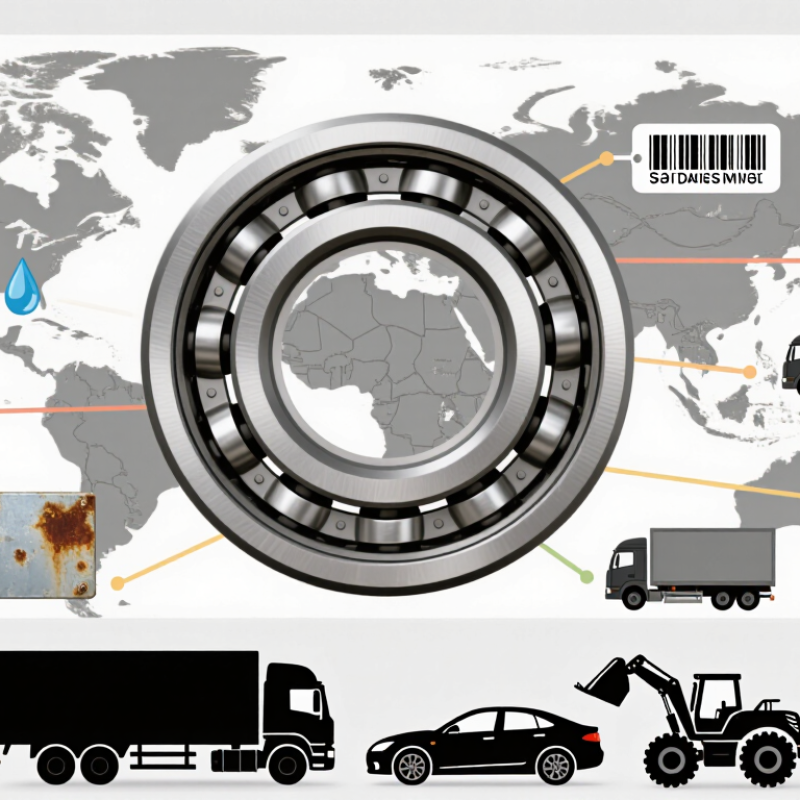
In 2026, selecting leading Sealed Wheel Bearing suppliers requires more than comparing prices or catalog size. Vehicle manufacturers, distributors, and repair networks increasingly examine load capacity, sealing performance, corrosion resistance, traceability, and delivery stability. A bearing may look identical on paper, yet perform differently after exposure to water, road salt, dust, and repeated temperature changes.

Dr. Tedric A. Harris, a respected bearing analyst and author of Rolling Bearing Analysis, emphasized a practical engineering truth: “Bearing life is not a single number; it depends on the conditions under which the bearing operates.” This principle remains highly relevant when evaluating global suppliers. Product testing should include rotational noise, grease retention, seal friction, fatigue life, and dimensional consistency. Factory audits also matter. So do field records.

Small details decide outcomes.

This guide examines the 2026 supplier landscape through technical capability, manufacturing experience, quality systems, regional coverage, and customer support. It considers established manufacturers and specialized producers across Asia, Europe, and North America. The assessment does not treat brand reputation as proof by itself. Verified certifications, inspection data, warranty practices, and application-specific experience provide stronger evidence.

There is no perfect ranking.

Some suppliers publish impressive laboratory results but offer limited customization. Others provide responsive engineering support but lack broad inventory coverage. Buyers should therefore match supplier strengths with actual operating conditions. A compact passenger vehicle bearing faces different demands from a heavy truck, electric vehicle, agricultural machine, or high-speed hub assembly. Careful comparison can reduce premature failure, warranty claims, and costly service interruptions.
2026 Top Sealed Wheel Bearing Suppliers Worldwide?

What Are Sealed Wheel Bearings and Why Do They Matter?

What Are Sealed Wheel Bearings and Why Do They Matter?

Sealed wheel bearings support wheel rotation while carrying vehicle weight, cornering forces, and road shock. They combine rolling elements, raceways, lubricant, and protective seals in one compact unit. The seal blocks water, grit, and salt from reaching the lubricant. That protection matters most on wet roads, gravel routes, and winter-treated highways.

According to the 2024 Global Automotive Bearing Market report by Grand View Research, automotive bearing demand is expected to grow steadily through 2030, driven by vehicle production and electrification. However, market growth does not guarantee equal quality. Sealed designs reduce maintenance needs, but they cannot remove installation risks. Incorrect press-fit force can damage the raceway before the vehicle leaves the workshop. A small mistake can become a loud hum later.

The ISO 281 bearing-life method evaluates fatigue life under load, speed, and operating conditions. It does not fully predict contamination, poor sealing, or impact damage. Therefore, qualified suppliers should provide traceability, dimensional inspection, grease specifications, and seal-performance data. The 2023 Future Market Insights report also identifies durability and lower maintenance as important purchasing factors in automotive bearings. In practice, those benefits depend on matching bearing clearance, preload, sealing, and vehicle application. No seal is perfect. Supplier testing should reflect real road contamination, not only clean laboratory conditions.

2026 Top Sealed Wheel Bearing Suppliers Worldwide

What Are Sealed Wheel Bearings and Why Do They Matter?

Sealed wheel bearings are pre-lubricated rolling bearings protected by integrated seals or shields. The chart compares typical continuous temperature capabilities of commonly used sealing materials in sealed bearing applications. Higher temperature capability can help maintain lubricant retention and contamination protection, but actual performance also depends on load, speed, grease formulation, sealing design, water exposure, and installation quality.

Reference basis: typical engineering ranges used for NBR, HNBR, FKM, and PTFE sealing materials; exact limits vary by bearing construction and operating conditions.

Key Factors for Evaluating Global Sealed Wheel Bearing Suppliers

Choosing top sealed wheel bearing suppliers for 2026 requires more than comparing unit prices. Grand View Research valued the global bearing market at over USD 130 billion in 2023, with vehicle demand supporting continued growth. That scale attracts capable factories, but also creates uneven quality. Evaluate documented experience with wheel hubs, ABS-compatible seals, temperature cycling, and contamination testing. Ask for ISO 281 load-life calculations and ISO 15243 failure analysis records. A polished certificate is not enough.

Supplier reliability depends on traceability. Review batch numbers, steel certificates, grease specifications, dimensional inspection results, and change-control procedures. ISO 9001 registration helps, while IATF 16949 is more relevant for automotive production. Independent laboratory reports should confirm noise, vibration, rotational torque, and water-ingress performance. TÜV Rheinland’s automotive quality studies repeatedly emphasize process control and supplier audits, not paperwork alone. That point is easy to overlook.

Tips: Request samples from three production batches. Test them after heat, salt spray, and dust exposure. Compare seal damage under a microscope. Check whether the supplier explains failures clearly. Vague answers deserve caution. Cost remains important, but a cheaper bearing can create installation delays, warranty claims, and unsafe wheel play. I would also review delivery data for at least twelve months. Forecasts are useful, yet real dispatch records reveal more. Even experienced buyers sometimes trust laboratory numbers too quickly; field evidence should challenge them.

Leading Sealed Wheel Bearing Suppliers Worldwide in 2026

Leading Sealed Wheel Bearing Suppliers Worldwide in 2026

The 2026 supplier landscape is shaped by electric vehicles, tighter tolerances, and longer service intervals. Fortune Business Insights valued the global bearing market at about USD 44.7 billion in 2024. Its forecast points toward roughly USD 65.7 billion by 2032. Sealed wheel bearings remain important because they protect raceways from water, dust, and road salt. Leading suppliers now compete on seal design, grease stability, noise control, and traceable production. These details matter on a wet winter road.

Supplier quality is not judged by catalog size alone. Buyers should examine ISO 9001 systems, automotive quality procedures, laboratory testing, and lot-level traceability. Reports from MarketsandMarkets also identify vehicle electrification and predictive maintenance as major bearing-market drivers. However, market forecasts vary widely. That difference deserves attention. Some reports combine industrial and automotive bearings, making direct supplier comparisons imperfect. A reliable source should disclose test loads, temperature ranges, fatigue results, and sealing test methods. In practical audits, inconsistent labeling can be as troubling as poor performance.

Tips: Request samples from at least three qualified suppliers. Check radial clearance after transport and storage. Inspect grease distribution under magnification. Ask for salt-spray and water-ingress data, not only marketing claims. Confirm whether the quoted service life reflects real wheel loads. A lower price may hide weaker seals, shorter testing, or limited technical support. Human review still matters, because laboratory results cannot reproduce every pothole, mud splash, or hurried installation.

How to Compare Supplier Quality, Technology, and Production Capacity

Choosing a sealed wheel bearing supplier requires more than comparing unit prices. In my supplier audits, I examine seal design, raceway finish, grease compatibility, and dimensional consistency. A bearing may look perfect, yet fail early when contamination enters through a weak seal. Ask for material certificates, inspection records, and batch traceability. Reliable suppliers should explain their test methods clearly. Vague answers deserve attention.

Technology also separates capable manufacturers from ordinary traders. Check whether production uses automated grinding, controlled assembly, and online measurement systems. Ask for evidence from endurance, vibration, temperature, and water-ingress testing. Digital monitoring can reduce variation, but it cannot replace skilled process engineers. That part is often overlooked. Production capacity needs equal scrutiny. Review monthly output, equipment utilization, maintenance planning, and backup lines. Confirm whether capacity figures reflect real shipments or optimistic estimates. Lead-time records reveal more than brochures.

Tips: Request samples from different production batches, not only one selected lot. Compare noise, rotation torque, sealing resistance, and grease distribution with your own test criteria. Visit the facility if possible, and observe storage conditions, calibration labels, and final inspection flow. A strong supplier should discuss failure risks without becoming defensive. I would also test communication during a small pilot order. Delayed replies may predict delayed corrective action. No supplier is flawless. The better choice is usually the one that measures weaknesses, documents changes, and improves after uncomfortable findings.

2026 Top Sealed Wheel Bearing Suppliers Worldwide? - How to Compare Supplier Quality, Technology, and Production Capacity
Supplier Profile Typical Annual Capacity Common Sealed Wheel Bearing Scope Sealing and Lubrication Capability Manufacturing Technology Quality and Traceability Evidence Typical Lead-Time Range Best Fit for Buyers
Large integrated bearing manufacturer Several million to tens of millions of wheel-bearing units per year, depending on plant footprint and product mix Single-row hub bearings Double-row bearings Generation 1–3 hub units Automated grease filling, controlled seal assembly, defined grease quantity, contamination-control procedures, and application-specific seal-lip validation Automated grinding, superfinishing, assembly lines, controlled heat treatment, in-process dimensional inspection, and statistical process control ISO 9001 is commonly expected; automotive programs generally require IATF 16949, APQP, PPAP, capability studies, batch traceability, and formal change control Approximately 8–20 weeks for established programs; longer for new tooling, validation, or vehicle-platform approval High-volume automotive production, global platforms, and programs requiring stable multi-site supply
Automotive wheel-end specialist Typically hundreds of thousands to several million units per year, concentrated in wheel-end applications Hub bearing units ABS-compatible assemblies Flanged wheel bearings Application-specific sealing systems, integrated encoder compatibility where required, grease selection by temperature and speed range, and end-of-line leak checks Dedicated wheel-end assembly, flange machining, sensor or encoder integration, automated torque control, and functional testing Automotive quality-system certification, incoming-material controls, 100% critical-dimension checks, serial or lot traceability, and warranty analysis processes Approximately 6–16 weeks for standard products; custom variants may require additional validation time Aftermarket distributors, regional vehicle programs, and buyers needing wheel-end application expertise
Medium-scale precision bearing producer Approximately 100,000 to several million units per year across automotive, industrial, and replacement-market products Sealed deep-groove bearings Double-row ball bearings Standardized wheel applications Standard contact or non-contact seals, controlled grease filling, documented seal-material specifications, and basic temperature or torque testing CNC turning, precision grinding, automated or semi-automated assembly, heat-treatment outsourcing or internal batch processing, and sampling-based inspection ISO 9001 is common; buyers should verify automotive-specific process controls, gauge calibration, material certificates, and lot-level inspection records Approximately 4–12 weeks for catalog products; custom orders depend on tooling and minimum order quantity Regional distributors, industrial buyers, and moderate-volume replacement-market requirements
Specialized high-temperature or heavy-duty supplier Usually lower volume than mass-market producers, with capacity allocated to engineered or demanding applications High-temperature wheel bearings Heavy-load bearings Corrosion-resistant variants Specialized seal compounds, high-temperature or water-resistant grease options, enhanced exclusion seals, and application-specific endurance testing Advanced heat treatment, controlled surface finishing, special steel or coating options, torque testing, and endurance-test capability Material certificates, hardness and microstructure reports, application validation, failure-analysis capability, and documented engineering change procedures Approximately 8–24 weeks, depending on materials, coatings, testing requirements, and production volume Off-road vehicles, severe contamination, high-temperature service, trailers, and demanding industrial environments
Export-oriented aftermarket supplier Often hundreds of thousands to several million units per year, with capacity spread across multiple standard references Replacement hub bearings Sealed ball bearings Vehicle-specific kits Standardized seal designs, prefilled grease, packaging controls, and fitment-focused inspection; technical depth varies by product line Flexible production cells, catalog-based tooling, automated packaging, dimensional inspection, and batch sampling Verify certification scope, product test reports, barcode or batch traceability, packaging controls, complaint response time, and independent audit results Approximately 3–10 weeks for stocked references; 8–16 weeks for new or low-volume references Global aftermarket programs where broad catalog coverage, packaging, and delivery flexibility are priorities
Low-volume engineered supplier Generally below 100,000 units per year for a specific engineered reference, with capacity focused on customized production Prototype bearings Low-volume assemblies Special flange or bore designs Seal and grease selection based on application calculations, engineering samples, prototype validation, and customer-approved specifications Flexible CNC production, dedicated fixtures, manual or semi-automated assembly, rapid design iteration, and application testing Design records, first-article inspection, dimensional reports, material traceability, control plans, and documented prototype approval Approximately 6–20 weeks, depending on design release, tooling, sample approval, and testing requirements New vehicle development, specialty vehicles, pilot production, and applications with unusual dimensional or load requirements
Regional production and distribution network May combine local assembly or sourcing with regional stock; available volume depends on approved manufacturing partners and inventory levels Catalog wheel bearings Service replacement units Fast-moving references Capability depends on the approved source; buyers should distinguish in-house manufacturing from distribution and verify seal, grease, and inspection specifications Usually emphasizes inventory management, packaging, order processing, and supplier qualification rather than full bearing manufacturing Request factory-of-origin disclosure, certificate validity, batch records, product test evidence, incoming inspection plans, and counterfeit-prevention controls Approximately 1–8 weeks for stocked items; source-dependent for new production Buyers prioritizing regional delivery, smaller order quantities, mixed references, and responsive customer service
Benchmark note: Capacity, lead time, certification scope, and testing capability vary by plant, bearing reference, order quantity, and customer approval status. Treat the ranges above as industry comparison benchmarks and request current, reference-specific evidence before supplier qualification.

Selecting the Right Sealed Wheel Bearing Supplier for Your Application

Selecting a sealed wheel bearing supplier starts with the application, not a glossy catalog. Record radial and axial loads, shaft size, speed, temperature, moisture, and expected service hours. A supplier should ask for these details. If nobody asks, pause. In my sourcing experience, premature quotations often hide costly assumptions. The right partner can explain seal materials, internal clearance, grease selection, and dimensional tolerances in practical terms.

Request test data that matches your operating conditions, including rotational testing, contamination resistance, and temperature performance. Look for documented quality controls, batch traceability, inspection records, and a clear process for handling nonconforming parts. Certifications can support confidence, but they do not replace an audit or sample inspection. Ask how the supplier controls steel cleanliness, heat treatment, grinding accuracy, and sealing consistency. A capable technical team will discuss failure analysis without blaming installation immediately. That matters.

Evaluate delivery reliability as carefully as bearing performance. Review lead times, minimum order quantities, packaging, storage guidance, and communication during changes. A pilot order can expose weaknesses before production is affected. Still, one successful batch proves little. Compare measured noise, torque, fit, and grease leakage against agreed limits. I would also involve maintenance staff, because they notice installation difficulties engineers may miss. The selection process is not perfectly tidy; supplier claims and field results can disagree. Keep records, challenge vague promises, and choose evidence over impressive language.

Copyright 2025 Fluidra S.A. | Created by BCM Marketing Agencia Privacy Policy Legal note | Cookie policy |

Technical cookies are strictly necessary for our website to work and you can navigate through it. These types of cookies are those that, for example, allow us to identify you, give you access to certain restricted parts of the page if necessary, or remember different options or services already selected by you, such as your privacy preferences. Therefore, they are activated by default, your authorization not being necessary in this regard. Through the configuration of your browser, you can block or alert the presence of this type of cookies, although such blocking will affect the proper functioning of the different functionalities of our website.


The analysis cookies allow us to study the navigation of the users of our website in general (for example, which sections of the page are the most visited, which services are used most and if they work correctly, etc.). From the statistical information on navigation on our website, we can improve both the operation of the page itself and the different services it offers. Therefore, these cookies do not have an advertising purpose, but only serve to make our website work better, adapting to our users in general. By activating them you will contribute to this continuous improvement. You can enable or disable these cookies by checking the corresponding box, being disabled by default.


Functionality cookies allow us to remember your preferences, to personalize certain characteristics and general options of our website, every time you access it (for example, the language in which the information is presented to you, the sections marked as favorites, your browser type, etc.) Therefore, this type of cookies does not have an advertising purpose, but by activating them you will improve the functionality of the website (for example, adapting to your type of browser) and the customization of it based on your preferences (for example, by presenting the information in the language that you have chosen in previous occasions), which will contribute to the ease, usability and comfort of our page during your navigation. You can enable or disable these cookies by checking the corresponding box, being disabled by default.


Advertising cookies allow us to manage the advertising spaces included in our website based on criteria such as the content shown or the frequency in which the ads are displayed. For example, if you have been shown the same ad several times on our website, and you have not shown a personal interest by clicking on it, it will not appear again. In summary, by activating this type of cookies, the advertising shown on our website will be more useful and diverse, and less repetitive. You can enable or disable these cookies by checking the corresponding box, being disabled by default.


Behavioral advertising cookies allow us to obtain information based on the observation of your browsing habits and behaviors on the web, in order to show you advertising content that best suits your personal tastes and interests. To understand it in a very simple way, we will give you a fictitious example: if your last searches on the web were related to suspense literature, we would show you advertising about suspense books. Therefore, activating this type of cookies, the advertising that we show you on our website will not be generic, but will be oriented to your searches, tastes and interests, therefore adjusting exclusively to you. You can enable or disable these cookies by checking the corresponding box, being disabled by default.
To understand it in a very simple way, we will give you a fictitious example: if your last searches on the web were related to suspense literature, we would show you advertising about suspense books. Therefore, activating this type of cookies, the advertising that we show you on our website will not be generic, but will be oriented to your searches, tastes and interests, therefore adjusting exclusively to you. You can enable or disable these cookies by checking the corresponding box, being disabled by default.

SAVE

We use our own and third-party cookies to ensure the proper functioning of the website and to analyse our services, improve your experience on our website and show you advertisements related to your interests according to profiling based on your browsing habits (e.g. websites visited). You can accept all cookies by clicking "ACCEPT" or set or reject them by clicking here. If you would like to know more about the use of cookies, please see our COOKIE POLICY.


ACCEPT ALL
Reject no essentials


