
Choosing a Mipi Tft Display for a 2026 product means looking beyond resolution and price. Buyers must check the interface, panel dimensions, brightness, viewing angles, touch requirements, and operating temperature. MIPI DSI compatibility matters, too: a display can look right on a specification sheet yet need extra hardware or software work to run reliably. Confirm the controller, connector pinout, voltage levels, and initialization sequence before approving samples.
MIPI Alliance’s technical standards provide an authoritative reference for interface requirements, but they do not certify every display module or guarantee plug-and-play compatibility. A useful engineering rule is: “Match the interface to the host, then verify the panel in the real product.” Treat that as a practical summary, not a quotation from a named individual. Ask suppliers for current datasheets, sample availability, lifecycle details, and test results under your intended conditions.
Look closely at the image, not just the numbers. A bright workshop lamp can expose weak contrast; a moving prototype can reveal a connector that loosens too easily. Request samples and test them with your own board, enclosure, and firmware. Small suppliers may offer custom sizes or flexible minimum orders. Larger manufacturers may provide stronger documentation and production capacity. Neither advantage is automatic.
This guide compares manufacturers through buyer-focused factors, including technical fit, customization, quality controls, support, and supply continuity. Some details may still require direct confirmation. Specifications change, and public listings can lag behind production. Use the comparison as a starting point, then verify the exact part number and revision before placing an order.
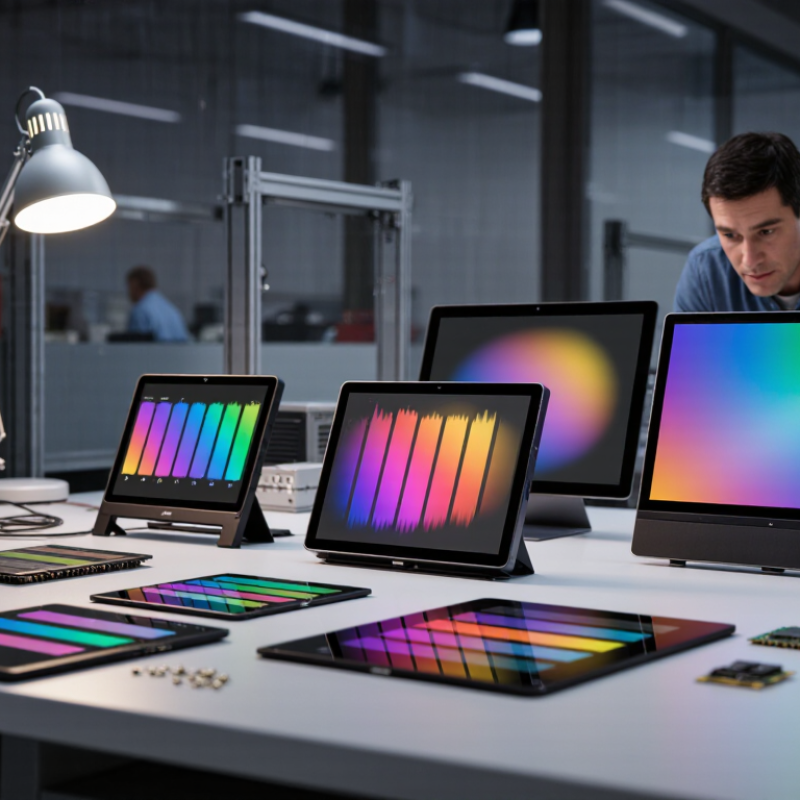
A MIPI TFT display pairs a thin-film-transistor panel with a high-speed link, commonly MIPI DSI. The processor sends pixel data and control commands through D-PHY or C-PHY lanes to the display driver. The driver updates pixels row by row, while a backlight supplies illumination for LCD panels. MIPI Alliance specifications describe the interface; the panel, driver, and host still need compatible timing and configuration. Small details matter. A connector can fit while its pinout or lane mapping does not.
IDC reported 1.24 billion smartphone shipments worldwide in 2024, up 6.4% year over year, in its Worldwide Quarterly Mobile Phone Tracker. That scale helps explain why compact, low-wiring display interfaces matter in handheld equipment, though the figure is not a measure of MIPI panel adoption. Buyers also use MIPI TFT modules in control panels, portable instruments, and vehicle dashboards, where readable graphics and limited space are important. Check brightness in the actual enclosure; a bright workshop can wash out a screen. Verify touch integration, cable length, operating temperature, and startup behavior on the intended host. Not always. A module that works on a bench may flicker or start slowly after installation, so test the complete assembly.

A supplier’s quoted resolution and brightness are only the starting point. Ask for measured luminance uniformity, viewing-angle data, operating-temperature limits, and touch performance. Request test results from the actual panel and controller combination, not a reference design. MIPI Alliance’s D-PHY v2.5 specification supports data rates up to 4.5 Gbit/s per lane; buyers should confirm the supplier’s module works reliably at the required lane count and cable length. A datasheet alone proves little.
Production stability deserves equal scrutiny. Counterpoint Research’s Q1 2024 Global Smartphone Display Panel Market Tracker reported AMOLED panel shipments rose 31% year over year. While that figure is not specific to TFT modules, it signals shifting display demand and makes roadmap transparency useful. Ask how long the TFT panel will remain available, what notice precedes component changes, and whether replacement panels preserve connector pinout and timing. Get the answer in writing.
Then test the details that often get skipped. Check the flex cable against your enclosure, inspect backlight uniformity in a dark room, and run the display at peak refresh rate during thermal testing. Compare sample results with production-lot controls and reject unexplained variation. Some teams learn this late. A polished demo can still hide weak documentation, slow engineering support, or inconsistent batches. Ask for corrective-action records and a realistic lead-time history before approving volume orders.
Leading MIPI TFT display manufacturers generally fit three profiles: high-volume panel producers, specialist industrial suppliers, and module integrators. Their strengths differ. Panel producers can support large production runs, while specialist suppliers may offer better control over long-life components and customization. Integrators can deliver a screen, touch layer, and driver board as one tested assembly. Buyers should compare active-area dimensions, resolution, brightness, viewing angle, and connector details—not just diagonal size.
Demand provides useful context, but it is not a direct measure of MIPI TFT sales. IDC’s Worldwide Quarterly Mobile Phone Tracker reported
1.24 billion smartphone shipments in 2024, a 6.4% increase from 2023.
These figures indicate the scale of the mobile-device supply chain, not the number of MIPI-connected TFT panels. Small screens matter. A supplier profile should therefore be checked against the actual application, whether it is a handheld instrument used under sunlight or a compact control panel with limited installation depth.
For each candidate, request a current datasheet, interface timing details, operating-temperature range, and documented sample test results. Confirm whether the quoted brightness is typical or guaranteed, and ask how revisions are communicated. MIPI compatibility alone does not ensure plug-and-play operation; host-controller settings and initialization sequences can still cause delays. Not every claim holds. Published data helps, but buyers should validate critical specifications on production-intent samples before committing.
A strong MIPI TFT display supplier does more than list screen sizes and resolutions. Buyers should check interface details, including lane count, supported data rates, connector pinout, and initialization sequence. These must match the host board, not just the product brief. Ask for a working sample and test it with your processor under real operating conditions. Check brightness and viewing angles in the intended enclosure; a bright panel on paper may look dim behind a cover lens. Small details matter.
Customization can include touch technology, cover glass, cable length, mounting holes, and display timing. Compare how clearly manufacturers document these options and their effect on cost and lead time. A useful support team can review schematics, explain timing requirements, and help troubleshoot startup issues. Request interface documents, test records, and a named technical contact before committing to volume. Also ask how component changes are communicated during the product’s expected service life. A polished specification sheet is not proof of a smooth integration. I might initially favor the highest resolution, but power draw, temperature, and firmware effort can make a simpler panel the better fit. Support quality is difficult to score, so verify it during sample evaluation.
Selecting a MIPI TFT supplier starts with the display’s actual operating conditions, not a catalog image. Confirm resolution, refresh rate, brightness, viewing angle, and the intended temperature range. Check the host processor’s lane count, clock limits, connector pinout, and initialization sequence. Ask for a written interface specification and a sample matching the proposed production configuration. Small details matter.
Request electrical test data, optical measurements, and documentation for the display’s controller and backlight. Test samples with your own board, cables, and power supply. Watch for flicker, delayed startup, uneven brightness, and image noise during rapid screen updates. A quiet bench can hide problems that appear beside a switching motor or under a long cable. Not on paper.
Qualification should include clear acceptance criteria, not just a successful demonstration. Agree on sample quantities, test duration, defect handling, and how design changes will be communicated. Ask how production lots are inspected and traced, and whether the supplier can support a pilot build. Review response times during technical questions, too. This step is easy to rush. A supplier may pass a sample test but still need stronger process controls; record that gap and decide whether it can be closed before volume orders.

Cepex is the brand for the fluid handling market belonging to the Fluidra group. One of the leading european manufacturer of valves and fittings in thermoplastic materials.
Dedicated to the swimming pool, irrigation and industrial markets, we distribute our products worldwide with the Fluidra commercial network and presence in 46 countries with 136 sales branches.


