What Are the 2026 Top Actuated Valves for Global Buyers?
FLUID HANDLING EXPERTS

Blog, all our news

What Are the 2026 Top Actuated Valves for Global Buyers?

In 2026, global buyers will judge actuated valves by more than purchase price. They will examine response time, torque accuracy, safety behavior, energy use, and service access. A valve operating beside a hot steam line faces different demands from one handling clean water. Context matters.

Béla G. Lipták, a respected process-control engineer and author of the Instrument Engineers’ Handbook, wrote, “The control valve is the most common final control element used in industry.” His observation remains practical. An actuator may receive the command, but the valve must still move reliably, seal correctly, and protect the process. This guide examines the leading electric, pneumatic, hydraulic, and smart actuated valves expected to attract international attention in 2026.

Real buying decisions often happen on factory floors. Engineers compare enclosure ratings, air quality, mounting space, diagnostic screens, and replacement time. They also check documentation, local support, and compatibility with existing control systems. A low-cost actuator can become expensive after repeated calibration failures. That lesson is easy to overlook.

No ranking is perfect. Applications vary widely. A smart electric actuator may suit a remote water station, while a pneumatic package may perform better in a fast-cycle process. Buyers should question impressive specifications and request test evidence. The strongest choices balance safety, maintainability, efficiency, and verified field experience. In the following sections, we identify the 2026 options most worthy of serious global consideration.
What Are the 2026 Top Actuated Valves for Global Buyers?

Actuated Valve Fundamentals and Selection Criteria for 2026

Actuated valves combine a valve body with an electric, pneumatic, or hydraulic actuator. The actuator converts control signals into repeatable opening and closing movement. For 2026 projects, buyers should evaluate the complete assembly, not the actuator alone. Check pressure class, temperature range, flow coefficient, media compatibility, and required shutoff performance. A valve moving smoothly in a workshop may behave differently beside a hot pump or vibrating pipeline.

Selection should begin with the process duty. Estimate torque throughout the full travel, including breakaway torque and safety margins. Then compare actuator speed, duty cycle, enclosure protection, manual override, and position feedback. Pneumatic systems often suit fast, frequent cycling, while electric units can simplify sites without instrument air. Hydraulic actuation may fit demanding, high-force applications, but installation complexity deserves attention. Specify fail-open or fail-closed action only after reviewing process hazards and the available energy source. Local standards, documentation, testing records, and spare-part access also affect long-term reliability.

Tips: Measure actual operating conditions, not idealized values. Ask for torque curves and test evidence. Confirm the control signal before ordering. Keep wiring and maintenance access visible. A perfect datasheet is not a perfect installation. I have seen small clearance errors delay commissioning, so inspect the layout early. Selection software can help, but it cannot replace a site review. Leave room for uncertainty, especially when temperature, solids, or cycling patterns may change.

Key Actuated Valve Types and Their Operating Principles

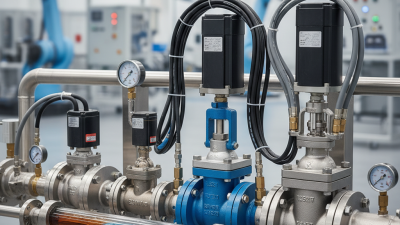
For global buyers in 2026, actuated valve selection depends on process demands, not popularity. Each valve type follows a different operating principle.

Ball, butterfly, and plug valves use quarter-turn motion. An actuator rotates the stem 90 degrees to open or close the flow path. Ball valves provide tight shutoff for clean liquids and gases. Butterfly valves use a rotating disc and suit large pipelines with limited installation space. Plug valves handle abrasive or contaminated media, but their torque can rise during operation.

Globe valves use linear stem movement and regulate flow through a shaped passage. They offer accurate throttling, although pressure loss can be significant. Gate valves lift a wedge from the flow path and work best for full-open or full-closed service. Diaphragm valves isolate the fluid from the actuator mechanism, making them useful for corrosive or hygienic processes. The trade-off is limited pressure and temperature range.

Pneumatic actuators deliver fast movement through compressed air. Electric actuators provide precise positioning and easier integration with digital controls. Hydraulic actuators produce high torque for large valves, but they require careful fluid management. Field experience shows that incorrect torque sizing causes many early failures. No selection is perfect. Buyers should verify cycle frequency, fail-safe action, media compatibility, enclosure protection, and available maintenance skills before approval. A cheaper actuator may become expensive when air leakage, wiring faults, or slow spare-parts access interrupts production.

Top 2026 Actuated Valve Technologies for Global Buyers

For global buyers, the top 2026 actuated valve technologies will be smart electric, pneumatic, and electro-hydraulic systems. MarketsandMarkets’ Valve Actuators Market report projects steady growth through 2028, supported by water, energy, chemical, and process industries. Electric actuators suit remote pipelines and clean indoor plants. They offer precise positioning, lower air consumption, and easier digital integration. Pneumatic actuators remain practical where rapid quarter-turn operation and simple maintenance matter. They need reliable compressed air.

Smart diagnostics are becoming a purchasing requirement, not a luxury. Position feedback, torque monitoring, and partial-stroke testing can reveal friction before a valve sticks. The International Energy Agency continues to identify industrial efficiency and digital control as important paths for reducing energy waste. Yet, one sensor does not guarantee useful data. Poor calibration can create confident mistakes. Buyers should request accuracy limits, communication protocols, enclosure ratings, and documented failure modes.

Electro-hydraulic actuators deserve attention for large valves, offshore equipment, and high-load applications. Their stored hydraulic energy supports emergency operation when electrical power fails. The Global Water Intelligence market outlook also shows continuing infrastructure investment, increasing demand for dependable flow control. However, lifecycle cost can exceed the purchase price because seals, fluid cleanliness, and service training affect reliability. A practical 2026 specification should compare response time, fail position, operating temperature, maintenance access, and cybersecurity controls—not only the initial quotation.

Industry Applications, Performance Standards, and Compliance

What Are the 2026 Top Actuated Valves for Global Buyers?

In 2026, leading actuated valves are defined by application fit, not appearance or marketing claims. Water treatment plants often need quarter-turn valves with corrosion-resistant bodies and reliable electric actuators. Chemical facilities demand precise control, compatible seals, and emergency shutoff performance. In food processing, hygienic surfaces and cleanable designs matter more than maximum pressure. Offshore and energy projects require strong enclosures, stable torque output, and protection against vibration, salt, and temperature changes.

Performance standards should guide every specification. ISO 5211 helps match actuators with valve mounting interfaces. ASME B16.34 supports pressure-boundary evaluation, while API 6D may apply to pipeline service. For safety-related functions, IEC 61508 principles can influence actuator selection and testing. Enclosure ratings under IEC 60529 also deserve close attention. An IP rating alone does not prove long-term field reliability. It only describes tested protection conditions.

Compliance is never a single certificate. Buyers should verify pressure ratings, materials, emissions requirements, electrical approvals, and documentation for the destination market. Ask for torque curves, cycle-test records, calibration data, and traceable material certificates. During commissioning, observe response time and fail position in real conditions. Small gaps appear here. A valve may meet the datasheet but struggle with cold starts, sediment, or unstable power. That possibility should remain part of the risk review.

Global Sourcing, Installation, Maintenance, and Lifecycle Costs

For 2026, the strongest actuated valves will be selected by lifecycle value, not purchase price. Electric actuators suit remote water, utility, and process sites with available power. Pneumatic actuators remain practical where fast, fail-safe movement matters. Hydraulic systems serve high-torque applications, but installation complexity can increase.

The Grand View Research Actuated Valves Market report estimates continued market growth through 2030, driven by industrial automation and infrastructure investment. However, forecasts differ between research firms. Buyers should treat projections as direction, not proof. During sourcing, verify ISO 5211 mounting, enclosure ratings, operating temperature, spare-part availability, and local service capability. A cheaper valve can become expensive after customs delays, incompatible flanges, or missing actuator documentation.

Installation quality directly affects maintenance. Poor alignment can increase stem loads, leakage, and actuator current. Commissioning teams should record torque, cycle time, fail position, and calibration results. The International Energy Agency reports that industry consumed about 37% of global final energy in 2022. Efficient control therefore matters, even when valve energy use appears small. Smart feedback can expose stalled movement before production stops. Yet sensors add software, training, and cybersecurity obligations. According to ISO 55000 asset-management principles, lifecycle decisions should consider performance, risk, and total cost. Buyers should compare five-year costs, including electricity, inspection labor, seals, actuator replacement, and disposal. The best choice is not always the most advanced one. Sometimes, simpler is safer.

What Are the 2026 Top Actuated Valves for Global Buyers?

Indicative benchmark for a DN100, Class 150 industrial valve package under moderate-duty service. Lifecycle cost includes valve and actuator procurement, installation, 10-year maintenance, and energy or instrument-air consumption. Freight, taxes, downtime, and process-specific engineering are excluded.

Key takeaway: Actuated butterfly valves generally provide the lowest entry and lifecycle cost, while globe valves typically require higher procurement, installation, and maintenance budgets. Standard sourcing lead times commonly increase with valve complexity and actuator requirements.

Copyright 2025 Fluidra S.A. | Created by BCM Marketing Agencia Privacy Policy Legal note | Cookie policy |

Technical cookies are strictly necessary for our website to work and you can navigate through it. These types of cookies are those that, for example, allow us to identify you, give you access to certain restricted parts of the page if necessary, or remember different options or services already selected by you, such as your privacy preferences. Therefore, they are activated by default, your authorization not being necessary in this regard. Through the configuration of your browser, you can block or alert the presence of this type of cookies, although such blocking will affect the proper functioning of the different functionalities of our website.


The analysis cookies allow us to study the navigation of the users of our website in general (for example, which sections of the page are the most visited, which services are used most and if they work correctly, etc.). From the statistical information on navigation on our website, we can improve both the operation of the page itself and the different services it offers. Therefore, these cookies do not have an advertising purpose, but only serve to make our website work better, adapting to our users in general. By activating them you will contribute to this continuous improvement. You can enable or disable these cookies by checking the corresponding box, being disabled by default.


Functionality cookies allow us to remember your preferences, to personalize certain characteristics and general options of our website, every time you access it (for example, the language in which the information is presented to you, the sections marked as favorites, your browser type, etc.) Therefore, this type of cookies does not have an advertising purpose, but by activating them you will improve the functionality of the website (for example, adapting to your type of browser) and the customization of it based on your preferences (for example, by presenting the information in the language that you have chosen in previous occasions), which will contribute to the ease, usability and comfort of our page during your navigation. You can enable or disable these cookies by checking the corresponding box, being disabled by default.


Advertising cookies allow us to manage the advertising spaces included in our website based on criteria such as the content shown or the frequency in which the ads are displayed. For example, if you have been shown the same ad several times on our website, and you have not shown a personal interest by clicking on it, it will not appear again. In summary, by activating this type of cookies, the advertising shown on our website will be more useful and diverse, and less repetitive. You can enable or disable these cookies by checking the corresponding box, being disabled by default.


Behavioral advertising cookies allow us to obtain information based on the observation of your browsing habits and behaviors on the web, in order to show you advertising content that best suits your personal tastes and interests. To understand it in a very simple way, we will give you a fictitious example: if your last searches on the web were related to suspense literature, we would show you advertising about suspense books. Therefore, activating this type of cookies, the advertising that we show you on our website will not be generic, but will be oriented to your searches, tastes and interests, therefore adjusting exclusively to you. You can enable or disable these cookies by checking the corresponding box, being disabled by default.
To understand it in a very simple way, we will give you a fictitious example: if your last searches on the web were related to suspense literature, we would show you advertising about suspense books. Therefore, activating this type of cookies, the advertising that we show you on our website will not be generic, but will be oriented to your searches, tastes and interests, therefore adjusting exclusively to you. You can enable or disable these cookies by checking the corresponding box, being disabled by default.

SAVE

We use our own and third-party cookies to ensure the proper functioning of the website and to analyse our services, improve your experience on our website and show you advertisements related to your interests according to profiling based on your browsing habits (e.g. websites visited). You can accept all cookies by clicking "ACCEPT" or set or reject them by clicking here. If you would like to know more about the use of cookies, please see our COOKIE POLICY.


ACCEPT ALL
Reject no essentials