2026 Best Iron Square Pipe Types for Global Buyers?
FLUID HANDLING EXPERTS

Blog, all our news

2026 Best Iron Square Pipe Types for Global Buyers?

In 2026, global buyers need more than a low quoted price when selecting Iron Square Pipe. The right choice depends on load requirements, climate, fabrication methods, and delivery conditions. Common options include hot-rolled carbon steel pipe, galvanized square pipe, painted pipe, and precision welded sections. Each type performs differently in construction frames, machinery supports, agricultural structures, and industrial platforms.

Application decides the specification.

A coastal project may require zinc protection against persistent salt exposure. An indoor support frame may need accurate dimensions and a clean weld seam instead. Buyers should compare outside dimensions, wall thickness, steel grade, length tolerance, corner radius, surface finish, and coating weight. Mill test certificates offer useful evidence, but documents should match sampled materials and batch numbers. Third-party inspection can verify measurements, welding quality, chemical composition, and loading procedures before shipment. Packaging also matters. Bundled pipes need separators, secure strapping, and moisture protection during long ocean transport.

Small details become expensive later.

Experienced purchasing teams usually request drawings, test reports, production photographs, and sample pieces before approving a supplier. However, no catalog can predict every site condition. A pipe that looks suitable may deform under unexpected loads or corrode faster than expected. This is where professional engineering review remains valuable. Buyers should also confirm applicable standards and import requirements in the destination market. Supplier reputation helps, but it should not replace independent checks. The best 2026 buying decision balances technical performance, traceable quality, realistic lead times, and total delivered cost. Some assumptions may need revision after testing. That is not failure; it is sound procurement practice.
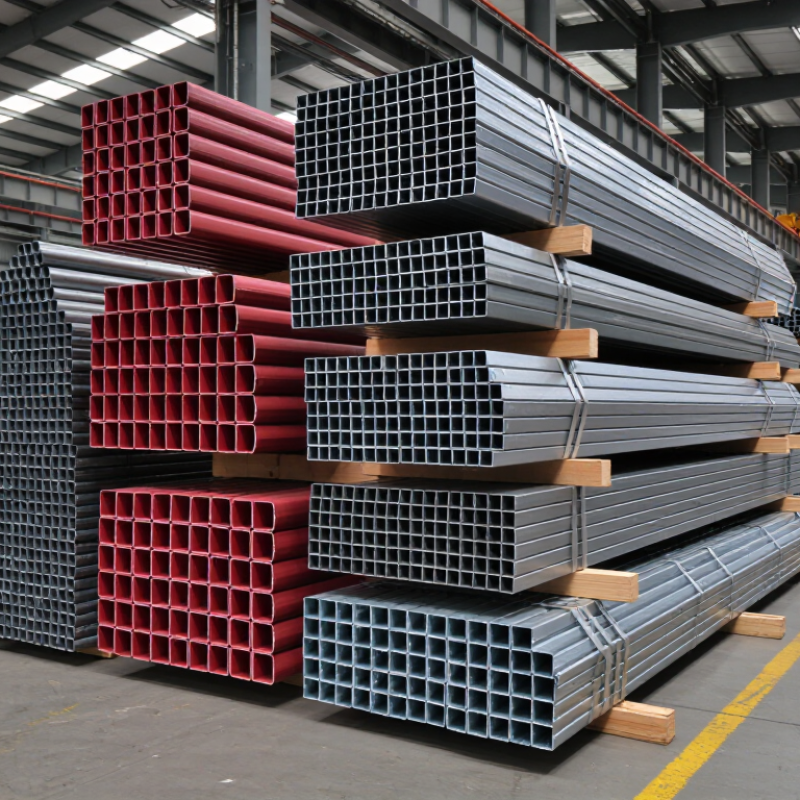
2026 Best Iron Square Pipe Types for Global Buyers?

What Are Iron Square Pipes and How Are They Classified?

Iron square pipes are hollow, four-sided metal sections with equal-width faces and a continuous internal cavity. Buyers often call them iron pipes, although most modern products use carbon steel or other steel alloys. Their hollow design reduces weight while providing useful strength for frames, supports, gates, shelving, and light structural work.

Classification usually begins with material. Carbon steel square pipes suit general fabrication and structural frames. Galvanized square pipes receive a zinc coating for improved resistance against rain and humidity. Stainless steel versions perform better in corrosive or hygienic environments. Material grade matters. A low-carbon pipe may weld easily, while a higher-strength grade can require stricter welding control.

Manufacturing creates another useful category. Electric-resistance-welded pipes use formed steel strip and a longitudinal seam. Seamless versions have no welded seam, but they usually cost more and are less common for ordinary square sections. Buyers also compare hot-rolled and cold-formed products, wall thickness, outside dimensions, length, surface finish, and corner radius. Small differences affect cutting, welding, and load performance. A pipe measuring 50 millimeters outside may have several wall options.

In practical purchasing, I check thickness with a caliper and inspect corners for dents or uneven forming. Mill certificates, coating measurements, and tolerance data add confidence. Yet classification is not always clean. Trade terms vary between countries, and “iron pipe” may describe steel rather than pure iron. A catalog label can still mislead. Load calculations should match the actual grade, span, connection method, and service environment.

2026 Best Iron Square Pipe Types for Global Buyers

Iron square pipes are commonly supplied as carbon-steel square hollow sections (SHS). They are classified by manufacturing process, outside dimensions, wall thickness, steel grade, and applicable standard. The chart shows theoretical mass for representative SHS sizes.

Theoretical mass is calculated from the hollow-section area using: Mass = 4 × wall thickness × (outside size − wall thickness) × 0.00785. The density used is 7,850 kg/m³, a standard engineering value for carbon steel. Actual supplied mass may vary slightly because of manufacturing tolerances.

Manufacturing Types

Welded SHS is the most common commercial type. Seamless square sections are used where higher uniformity or specialized mechanical performance is required.

Dimensional Classification

Buyers specify outside size and wall thickness, such as 50 × 50 × 3 mm. Larger sizes and thicker walls provide greater structural capacity but increase weight and cost.

Buyer Selection

For global purchasing, confirm the steel grade, dimensional tolerances, surface condition, corrosion protection, test documents, and the required standard such as ASTM A500 or EN 10219.

Which Iron Square Pipe Types Suit Different Construction Applications?

Choosing the right iron square pipe depends on the construction task, not only the purchase price. In practice, these pipes usually contain carbon steel rather than pure iron. Their strength comes from wall thickness, steel grade, and manufacturing accuracy. Thin-wall sections suit indoor partitions, light frames, and furniture structures. They reduce weight and simplify cutting on site.

Medium-wall square pipes work well for gates, handrails, warehouse frames, and equipment supports. For load-bearing posts, canopies, and larger structural frames, buyers often need thicker walls and verified yield strength. A 100 × 100 mm section may look strong, yet a thin wall can buckle under concentrated loads. Engineers should check span, connection design, compression, and local construction codes before approval.

Coating selection changes the service life. Galvanized square pipe performs better in humid yards, agricultural buildings, and semi-exposed walkways. Painted carbon steel can fit dry interiors, but damaged coating quickly exposes the surface to rust. During site inspections, I check straightness, corner shape, weld quality, and visible corrosion. Small defects matter. They may complicate fitting and create weak connection points.

Reliable global purchasing also requires traceable test certificates, clear dimensional tolerances, and an agreed inspection method. Pipes for welding should have suitable chemical composition and clean surfaces. Pipes for decorative work may prioritize smooth corners and consistent appearance. No selection is perfect. A heavier section can waste material, while an economical section may fail the real loading conditions.

How Do Materials, Coatings, and Manufacturing Methods Affect Performance?

2026 Best Iron Square Pipe Types for Global Buyers?

Material choice strongly affects square pipe performance. Carbon steel offers dependable strength and easy welding for frames, supports, and general fabrication. Low-alloy steel can improve strength without adding excessive weight. However, stronger steel may require tighter welding control. “Stronger” is not always better.

Manufacturing also changes reliability. Hot-formed pipe usually tolerates heavier structural loads and uneven site conditions. Cold-formed pipe often provides cleaner corners and closer dimensions. Welded pipe is common and economical, but the seam needs careful inspection. Check wall thickness, corner radius, straightness, and weld quality before shipment. A small dimensional error can complicate assembly later.

Coatings determine how long the pipe survives outdoors. Hot-dip galvanizing protects exposed steel through a durable zinc layer, especially in humid environments. Paint systems cost less initially, but damaged areas may rust quickly. Powder coating gives an attractive finish, yet surface preparation remains critical. Coating thickness should be measured, not guessed. I have seen attractive pipes fail early because water collected inside unsealed ends.

Tips: Match the grade to the load and climate. Request mill certificates, coating reports, dimensional records, and independent inspection when risk is high. Confirm the required standard with a qualified engineer. Also, leave drainage holes where design rules permit. Protection is useless if moisture stays trapped inside.

What Global Buyers Should Check in Size, Standards, and Quality?

For global buyers, an iron square pipe should be specified as a square hollow section, with material grade clearly defined. Measure outside width, height, and wall thickness separately. A 50 × 50 mm section may not perform like another with a thinner wall. Request actual millimetre measurements, not only nominal size. Check length tolerance, corner radius, straightness, and weight per metre. Small dimensional differences can affect welding, fitting, and structural loading.

Standards need careful attention. Ask which standard controls chemical composition, mechanical strength, dimensions, and testing. The supplier should identify the production standard and provide a traceable test certificate. Confirm whether the certificate covers the exact heat, size, and batch. A copied document is not enough. Country-specific requirements may also affect documentation, marking, inspection, and coating. Clarify these points before payment.

Quality is visible in details. Inspect sample pipes for open seams, deep scratches, uneven corners, rust scale, and irregular weld areas. Check coating thickness at several points, especially near cut ends. For larger orders, use an independent inspection before shipment. It can verify dimensions, quantity, packaging, and surface condition. A clean surface does not prove strong steel. I have seen attractive bundles fail basic thickness checks. Buyers should also review packaging, because bent corners can begin during loading. No process is perfect; even a trusted supplier needs measurable controls.

How Can Buyers Compare Suppliers, Costs, Delivery, and Compliance?

2026 Best Iron Square Pipe Types for Global Buyers?

For global projects, “iron square pipe” usually means a steel hollow section. Buyers should confirm this detail before comparing offers. Common choices include black welded pipe, galvanized pipe, and heavier structural sections. Size alone is not enough. A 40 x 40 mm pipe with a 2 mm wall behaves differently from one with a 1.2 mm wall. Ask suppliers for actual dimensions, weight tolerance, surface condition, and cutting options. In purchasing reviews, clear mill test certificates often reveal more than polished product photos.

Compare the landed cost, not only the factory price. Include packing, inland transport, ocean freight, insurance, duties, and port charges. Delivery promises should show production time, loading date, transit route, and the agreed trade term. A supplier offering the lowest price may use thinner walls or flexible tolerances. My own first comparison was too narrow; freight and inspection costs changed the decision.

Compliance also needs evidence. Request chemical composition, mechanical test results, dimensional inspection records, and coating thickness reports when applicable. Confirm the destination market’s required standard before production begins.

Tips: Build one comparison sheet for every supplier. Use identical sizes, wall thicknesses, quantities, and delivery terms. Check whether certificates match the shipment, not just a previous batch. Ask for sample measurements. Keep a small allowance for cutting loss and price movement. A perfect forecast is unlikely. Plain documentation is usually safer than confident promises.

Copyright 2025 Fluidra S.A. | Created by BCM Marketing Agencia Privacy Policy Legal note | Cookie policy |

Technical cookies are strictly necessary for our website to work and you can navigate through it. These types of cookies are those that, for example, allow us to identify you, give you access to certain restricted parts of the page if necessary, or remember different options or services already selected by you, such as your privacy preferences. Therefore, they are activated by default, your authorization not being necessary in this regard. Through the configuration of your browser, you can block or alert the presence of this type of cookies, although such blocking will affect the proper functioning of the different functionalities of our website.


The analysis cookies allow us to study the navigation of the users of our website in general (for example, which sections of the page are the most visited, which services are used most and if they work correctly, etc.). From the statistical information on navigation on our website, we can improve both the operation of the page itself and the different services it offers. Therefore, these cookies do not have an advertising purpose, but only serve to make our website work better, adapting to our users in general. By activating them you will contribute to this continuous improvement. You can enable or disable these cookies by checking the corresponding box, being disabled by default.


Functionality cookies allow us to remember your preferences, to personalize certain characteristics and general options of our website, every time you access it (for example, the language in which the information is presented to you, the sections marked as favorites, your browser type, etc.) Therefore, this type of cookies does not have an advertising purpose, but by activating them you will improve the functionality of the website (for example, adapting to your type of browser) and the customization of it based on your preferences (for example, by presenting the information in the language that you have chosen in previous occasions), which will contribute to the ease, usability and comfort of our page during your navigation. You can enable or disable these cookies by checking the corresponding box, being disabled by default.


Advertising cookies allow us to manage the advertising spaces included in our website based on criteria such as the content shown or the frequency in which the ads are displayed. For example, if you have been shown the same ad several times on our website, and you have not shown a personal interest by clicking on it, it will not appear again. In summary, by activating this type of cookies, the advertising shown on our website will be more useful and diverse, and less repetitive. You can enable or disable these cookies by checking the corresponding box, being disabled by default.


Behavioral advertising cookies allow us to obtain information based on the observation of your browsing habits and behaviors on the web, in order to show you advertising content that best suits your personal tastes and interests. To understand it in a very simple way, we will give you a fictitious example: if your last searches on the web were related to suspense literature, we would show you advertising about suspense books. Therefore, activating this type of cookies, the advertising that we show you on our website will not be generic, but will be oriented to your searches, tastes and interests, therefore adjusting exclusively to you. You can enable or disable these cookies by checking the corresponding box, being disabled by default.
To understand it in a very simple way, we will give you a fictitious example: if your last searches on the web were related to suspense literature, we would show you advertising about suspense books. Therefore, activating this type of cookies, the advertising that we show you on our website will not be generic, but will be oriented to your searches, tastes and interests, therefore adjusting exclusively to you. You can enable or disable these cookies by checking the corresponding box, being disabled by default.

SAVE

We use our own and third-party cookies to ensure the proper functioning of the website and to analyse our services, improve your experience on our website and show you advertisements related to your interests according to profiling based on your browsing habits (e.g. websites visited). You can accept all cookies by clicking "ACCEPT" or set or reject them by clicking here. If you would like to know more about the use of cookies, please see our COOKIE POLICY.


ACCEPT ALL
Reject no essentials