
2026 Best Mechanical Fixture Types for Global Buyers
FLUID HANDLING EXPERTS

Blog, all our news

2026 Best Mechanical Fixture Types for Global Buyers

Global buyers need more than a fixture that holds a part. They need repeatable accuracy, practical maintenance, and stable performance across different production environments. This guide examines the 2026 best Mechanical Fixture types for machining, welding, inspection, and flexible assembly applications.

A Mechanical Fixture should resist movement without damaging the workpiece. A modular fixture may suit changing product lines, while a dedicated fixture can deliver faster cycle times for high-volume production. Hydraulic and pneumatic systems can improve clamping consistency, but they also require suitable maintenance and clean air supply. Welding fixtures need rigid locating points, controlled distortion, and enough access for operators. Inspection Fixtures demand careful datum control and measurable repeatability.

Small details matter. A poorly positioned clamp can leave marks on a finished aluminum housing. A weak locator can create alignment errors after hundreds of cycles. These problems may appear minor, yet they can increase scrap, rework, and delivery pressure.

Shigeo Shingo, a respected manufacturing-engineering authority, stated, “The most dangerous kind of waste is the waste we do not recognize.” His warning applies directly to fixture selection. Hidden setup delays and unnoticed variation often cost more than the fixture itself.

No choice is perfect. Budget, material, tolerance, automation level, and local service support can change the correct answer. Global buyers should also question catalogue specifications. Real performance depends on installation, operator skill, inspection methods, and maintenance discipline. The following guide compares key fixture types through those practical conditions, helping purchasing teams make decisions that are technically sound, commercially realistic, and easier to verify.
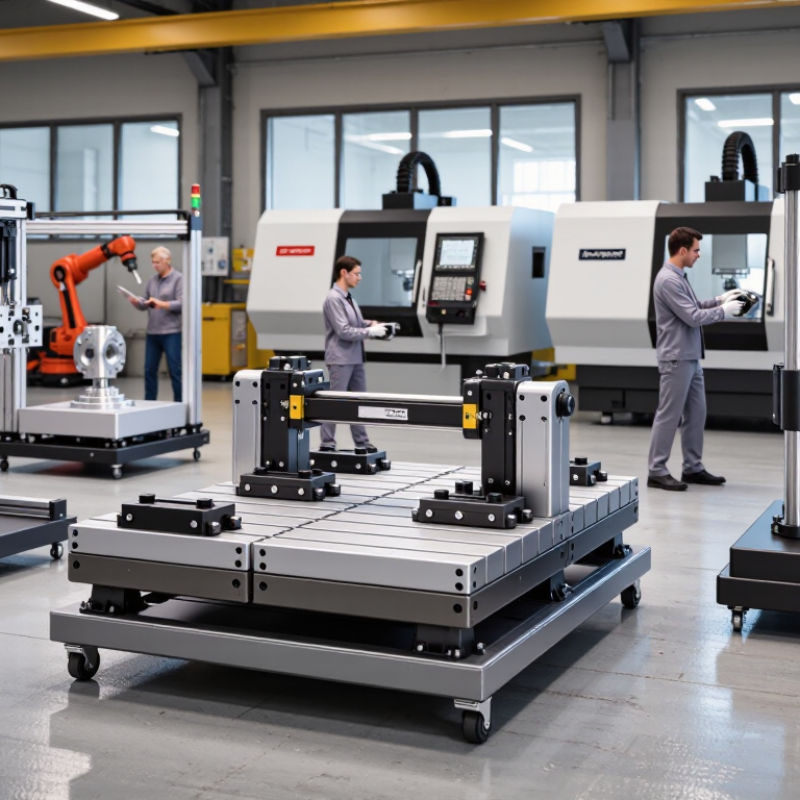
2026 Best Mechanical Fixture Types for Global Buyers

Mechanical Fixtures: Definition, Purpose, and Core Components

A mechanical fixture is a device that holds and positions a workpiece during manufacturing, inspection, or assembly. Unlike a cutting tool, it does not shape the material; it helps keep the part in a known position. During drilling, for example, a fixture may rest on a machine table while locating pins align holes with the drill path. Small shifts matter. A loose clamp can cause uneven machining, while an awkward setup may slow operators and invite mistakes. Fixtures are designed around the part, the operation, and the required repeatability, not as universal solutions.

Most fixtures combine a rigid base, locating elements, clamps, supports, and fasteners. The base carries the loads; pins, stops, or nests establish the workpiece’s position. Clamps hold it in place, and supports reduce movement under pressure. Simple components, carefully arranged. A practical design also leaves room for loading, tool access, and chip removal. In production, operators should check contact surfaces and clamp condition, since wear can gradually affect accuracy. Still, a fixture cannot correct a poorly defined process or a damaged workpiece. Its limits deserve attention, especially when a setup appears reliable only because experienced operators compensate for it.

2026 Best Mechanical Fixture Types for Global Buyers

Mechanical Fixtures: Definition, Purpose, and Core Components

Mechanical fixtures securely locate and hold workpieces during machining, assembly, inspection, or welding. The chart compares representative clamping-force ranges for widely used fixture types. Actual capacity depends on fixture size, contact area, material, pressure, safety factor, and workpiece geometry.

How Mechanical Fixtures Are Classified by Function and Application

2026 Best Mechanical Fixture Types for Global Buyers

Mechanical fixtures are best classified by function before material or price. Locating fixtures establish the part’s position through pins, stops, and reference surfaces. Clamping fixtures then apply controlled force without distorting thin walls. Modular fixtures use interchangeable plates and supports, while dedicated fixtures repeat one geometry with higher speed.

Application creates another useful classification. Machining fixtures resist cutting forces and manage chip clearance. Welding fixtures control joint alignment under heat. Assembly fixtures guide fasteners, presses, or manual insertion. Inspection fixtures hold components at repeatable datums for gauges or scanning. Quick-change fixtures suit mixed production, although their extra adjustment points can reduce stiffness.

The International Federation of Robotics reported 541,302 industrial robots installed worldwide in 2023. That scale increases demand for repeatable workholding around automated cells. Fixtures must therefore match robot reach, loading direction, sensor access, and cycle time. A compact pallet may outperform a heavier dedicated frame in high-mix production. Not always.

Buyers should compare positional repeatability, clamping force, corrosion resistance, maintenance access, and documented test methods. ISO 9001-based quality systems also favor controlled inspection records and traceable changes. In practice, one overlooked issue is operator ergonomics. A technically accurate fixture can still fail when loading feels awkward or unsafe. Classification helps narrow choices, but real trials should confirm stiffness, access, and repeatability before volume purchasing.

Key 2026 Fixture Types for Machining, Welding, and Assembly

In 2026, global buyers are evaluating mechanical fixtures by accuracy, flexibility, and service life. The right fixture must match the process, material, and expected production volume. For machining, modular plate fixtures support quick changeovers and different workpiece sizes. Hardened locating pins improve repeatability during drilling and milling. A three-point contact layout can reduce movement without excessive clamping force. During repeated runs, operators should check wear, chips, and clamping pressure. I have seen small chips create visible positioning errors. This detail is easy to miss.

Welding fixtures require stronger support and controlled access for the torch. Rigid frames help resist heat-related distortion. Adjustable stops can handle small design changes, but they need clear scales or locking systems. Copper or heat-resistant contact surfaces may protect critical areas. However, more rigidity does not always mean better results. Poor access can slow welding and increase rework. Trial welding remains valuable before full production. Measurements may expose an uncomfortable design assumption.

Assembly fixtures focus on alignment, ergonomics, and repeatable handling. Nest fixtures hold parts in a defined position, while poka-yoke features help prevent incorrect loading. Pneumatic or manual clamps can shorten cycle times when operators use them consistently. Smooth edges and visible contact points support safer daily work. Fixture documentation should include tolerances, inspection intervals, and replacement parts. A reliable supplier should explain these limits clearly. One design may still need adjustment after real operators test it. That practical feedback should influence the final specification.

Comparing Fixture Accuracy, Flexibility, Cost, and Production Speed

2026 Best Mechanical Fixture Types for Global Buyers

Fixture choice now depends on more than holding force. Dedicated fixtures deliver strong repeatability and fast loading for stable, high-volume parts. Modular fixtures suit mixed production because operators can reposition locating pins, clamps, and supports. Zero-point systems reduce setup changes, especially when several machines share the same pallets. They cost more initially. That assumption fails.

Accuracy requires measurement discipline. ISO 230-2 defines methods for evaluating machine-tool positioning accuracy, but the fixture can still introduce distortion. Thin workpieces may bend under clamping pressure. Heat from cutting can also shift critical datums. In practice, a rigid dedicated fixture may outperform a flexible system on one part, yet lose value when engineering changes arrive. Buyers should compare total setup time, rework exposure, and verification effort, not purchase price alone.

Production speed is becoming harder to separate from automation. The International Federation of Robotics reported 541,302 industrial robots installed globally in 2023, showing continued investment in automated production. Fixtures must support reliable robot access, consistent part presentation, and quick chip removal. Modular and zero-point designs often improve changeover speed, while soft jaws protect irregular surfaces and reduce marking. Still, flexible fixtures are not automatically faster. Poor locating logic creates searching, adjustment, and operator fatigue. A practical trial should record loading time, first-off accuracy, clamping marks, and repeatability across several shifts. Real shop-floor evidence matters more than a polished specification sheet.

Global Buyer Checklist for Selecting Reliable Fixture Suppliers

2026 Best Mechanical Fixture Types for Global Buyers

Global Buyer Checklist for Selecting Reliable Fixture Suppliers

Choosing a mechanical fixture starts with the production task, not the catalog image. Modular fixtures suit changing batches and prototypes. Dedicated fixtures provide faster loading for stable, high-volume production. Hydraulic or pneumatic clamping can improve repeatability, but they require clean power connections and careful maintenance. Welding fixtures need strong locating points, heat-resistant materials, and easy access for operators. Inspection fixtures demand controlled datum surfaces and documented measurement methods.

A reliable supplier should explain tolerance limits in practical terms. Ask for material certificates, load calculations, surface-treatment details, and inspection records. Request sample drawings before approving production. Check whether the supplier can control key dimensions across multiple units, not only one trial piece. Packaging also matters. A precision fixture can lose accuracy after poor export handling. Clear manuals, spare locating pins, and responsive technical support reduce downtime for overseas buyers. Communication speed is useful, but technical clarity matters more.

Tips: Compare suppliers with the same checklist. Ask how they test repeatability. Review photos of finished fixtures, not only design renders. Confirm delivery terms, replacement procedures, and documentation formats. Avoid choosing only by price. A lower quote may hide weaker steel, limited inspection, or expensive future adjustments. No fixture is perfect. Even experienced buyers can overlook operator access or cleaning space. Leave room for a design review after the first production trial.

Copyright 2025 Fluidra S.A. | Created by BCM Marketing Agencia Privacy Policy Legal note | Cookie policy |

Technical cookies are strictly necessary for our website to work and you can navigate through it. These types of cookies are those that, for example, allow us to identify you, give you access to certain restricted parts of the page if necessary, or remember different options or services already selected by you, such as your privacy preferences. Therefore, they are activated by default, your authorization not being necessary in this regard. Through the configuration of your browser, you can block or alert the presence of this type of cookies, although such blocking will affect the proper functioning of the different functionalities of our website.


The analysis cookies allow us to study the navigation of the users of our website in general (for example, which sections of the page are the most visited, which services are used most and if they work correctly, etc.). From the statistical information on navigation on our website, we can improve both the operation of the page itself and the different services it offers. Therefore, these cookies do not have an advertising purpose, but only serve to make our website work better, adapting to our users in general. By activating them you will contribute to this continuous improvement. You can enable or disable these cookies by checking the corresponding box, being disabled by default.


Functionality cookies allow us to remember your preferences, to personalize certain characteristics and general options of our website, every time you access it (for example, the language in which the information is presented to you, the sections marked as favorites, your browser type, etc.) Therefore, this type of cookies does not have an advertising purpose, but by activating them you will improve the functionality of the website (for example, adapting to your type of browser) and the customization of it based on your preferences (for example, by presenting the information in the language that you have chosen in previous occasions), which will contribute to the ease, usability and comfort of our page during your navigation. You can enable or disable these cookies by checking the corresponding box, being disabled by default.


Advertising cookies allow us to manage the advertising spaces included in our website based on criteria such as the content shown or the frequency in which the ads are displayed. For example, if you have been shown the same ad several times on our website, and you have not shown a personal interest by clicking on it, it will not appear again. In summary, by activating this type of cookies, the advertising shown on our website will be more useful and diverse, and less repetitive. You can enable or disable these cookies by checking the corresponding box, being disabled by default.


Behavioral advertising cookies allow us to obtain information based on the observation of your browsing habits and behaviors on the web, in order to show you advertising content that best suits your personal tastes and interests. To understand it in a very simple way, we will give you a fictitious example: if your last searches on the web were related to suspense literature, we would show you advertising about suspense books. Therefore, activating this type of cookies, the advertising that we show you on our website will not be generic, but will be oriented to your searches, tastes and interests, therefore adjusting exclusively to you. You can enable or disable these cookies by checking the corresponding box, being disabled by default.
To understand it in a very simple way, we will give you a fictitious example: if your last searches on the web were related to suspense literature, we would show you advertising about suspense books. Therefore, activating this type of cookies, the advertising that we show you on our website will not be generic, but will be oriented to your searches, tastes and interests, therefore adjusting exclusively to you. You can enable or disable these cookies by checking the corresponding box, being disabled by default.

SAVE

We use our own and third-party cookies to ensure the proper functioning of the website and to analyse our services, improve your experience on our website and show you advertisements related to your interests according to profiling based on your browsing habits (e.g. websites visited). You can accept all cookies by clicking "ACCEPT" or set or reject them by clicking here. If you would like to know more about the use of cookies, please see our COOKIE POLICY.


ACCEPT ALL
Reject no essentials


