2026 Best ESS Connector Manufacturers for Global Buyers?
FLUID HANDLING EXPERTS

Blog, all our news

2026 Best ESS Connector Manufacturers for Global Buyers?

The 2026 market for Ess Connector products is becoming more demanding. Global buyers now compare more than price, current rating, or delivery speed. They examine thermal performance, vibration resistance, sealing quality, material traceability, and after-sales support. A connector may look excellent on a specification sheet. Field conditions can tell a different story.

Dr. Elena Marquez, an independent energy-storage interconnection specialist, notes, “A connector is reliable only when its contact, seal, and service life remain predictable together.” This principle guides our review of the 2026 best ESS Connector manufacturers. We consider proven production experience, engineering depth, certification practices, customization capability, and international supply consistency. Real details matter: copper alloy contact plating, locking force, IP protection, cable flexibility, and temperature behavior inside crowded battery cabinets.

No ranking is perfect.

Manufacturers often publish impressive laboratory results, but buyers still need application-specific evidence. A connector designed for a compact residential battery may not suit a high-current containerized system. Price comparisons can also mislead when tooling, testing, replacement parts, and technical support are excluded. Our assessment therefore looks beyond marketing language. It focuses on documented performance, inspection discipline, sample quality, and practical communication with overseas customers. Some information remains difficult to verify across regions. That limitation deserves attention, not concealment. This guide offers a careful starting point for procurement teams seeking safe, durable, and commercially realistic ESS Connector solutions in 2026.
2026 Best ESS Connector Manufacturers for Global Buyers?

What Are ESS Connectors and Why Do They Matter in 2026?

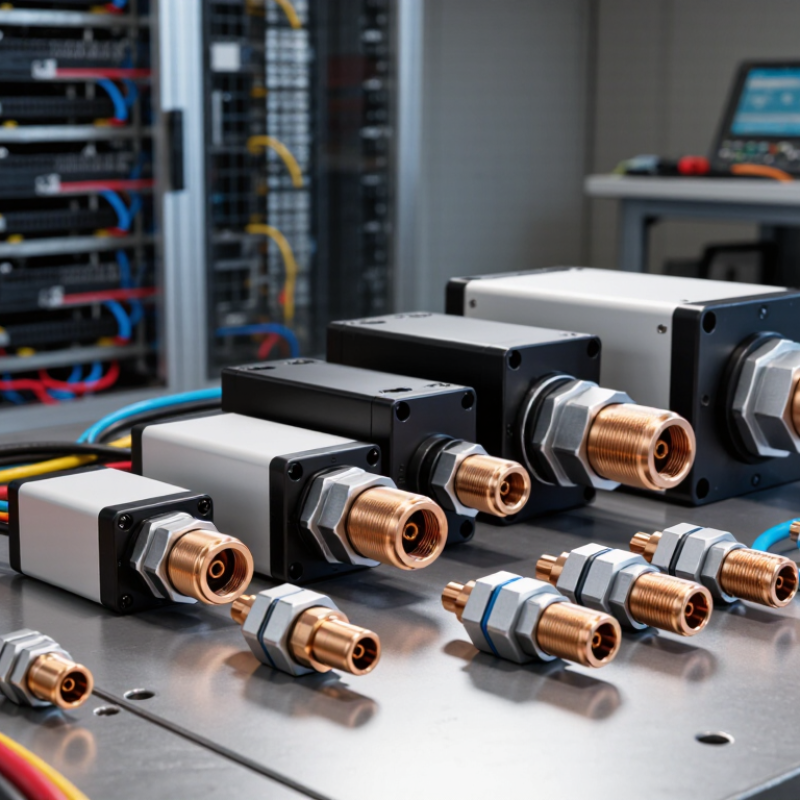
Energy storage system (ESS) connectors link batteries, inverters, busbars, and monitoring equipment.

They carry substantial current while facing heat, vibration, moisture, and repeated maintenance cycles. In 2026, their role is becoming more demanding as storage projects grow larger and operate more frequently.

A reliable connector should provide stable electrical contact, low resistance, secure locking, and suitable protection against dust and water.

Its materials must also resist corrosion and temperature changes. Small design weaknesses can create hot spots, power loss, or difficult inspections. A connector may pass a showroom test yet fail after thousands of charging cycles.

This is where practical testing matters. Engineers should examine mating force, contact pressure, thermal rise, insulation quality, and long-term durability.

Certification helps, but it does not replace installation experience. I have found that overlooked cable routing can stress even a well-designed connector.

Tips:

Match the connector to voltage, current, cable size, and environmental conditions. Check the manufacturer’s test data, inspection procedures, and replacement guidance. Keep records of torque settings and thermal measurements. Do not assume a familiar shape means equal performance. Field conditions are often less perfect.

How to Evaluate ESS Connector Manufacturers for Global Projects

2026 Best ESS Connector Manufacturers for Global Buyers?

How to Evaluate ESS Connector Manufacturers for Global Projects

Global buyers should evaluate ESS connector manufacturers beyond unit price. The IEA’s Batteries and Secure Energy Transitions report states that global battery storage capacity may need to reach 1,200 GW by 2030. This growth increases pressure on connector safety, supply continuity, and field service.

Start with electrical evidence. Request rated current, voltage, temperature rise, and derating curves. Check performance after thermal cycling, vibration, humidity, and salt-spray exposure. For outdoor cabinets, verify the tested IP rating, not only the catalog claim.

Confirm compatibility with IEC 61984, IEC 60529, and relevant regional certification requirements. A connector that passes a laboratory test may still fail after repeated installation.

Traceability matters too. Ask for material certificates, batch codes, inspection records, and change-control procedures. Review crimp tooling, contact resistance, and pull-force data. BNEF’s 2024 battery price survey reported average lithium-ion pack prices of 115 dollars per kWh, down 20 percent year on year. That cost pressure can encourage thinner materials or rushed substitutions. It deserves careful questioning.

Assess production capacity with evidence. Request audit reports, monthly output, lead-time history, and backup tooling plans. A sample shipment proves little.

Pilot testing under real cable sizes and torque conditions is more useful. No scorecard is perfect.

Some buyers still overvalue certification and undervalue installation training, which can create avoidable failures on site.

Leading ESS Connector Manufacturers and Their Product Strengths

Leading ESS Connector Manufacturers and Their Product Strengths

The global energy storage market is expanding quickly. The International Energy Agency reports that battery demand may grow from about 0.7 TWh in 2023 to 7.2 TWh by 2035 under stated policies. This growth increases demand for reliable ESS connectors, especially in utility-scale systems and commercial cabinets.

Leading manufacturers now focus on high-current performance, touch-safe designs, and fast field installation. Strong products often support continuous thermal cycling, vibration resistance, and stable contact pressure. Many connector platforms also offer IP-rated sealing under IEC 60529 and safety testing aligned with IEC 61984. Some designs include HV interlock loops, keyed housings, and color-coded interfaces. These details reduce wiring errors. Small improvements matter.

Data from Wood Mackenzie shows continued growth in global energy storage deployments, but project conditions differ sharply by region. Connectors must therefore handle humidity, dust, salt exposure, and temperature changes. A technically impressive connector can still fail when sealing tolerances are ignored. This is where supplier experience becomes important. Yet, product sheets rarely show long-term field performance. Buyers should request test duration, mating-cycle results, derating curves, and failure data.

Tips: Compare the connector’s rated current with real operating current, not only peak output. Check cable flexibility at low temperatures. Confirm creepage, clearance, locking force, and service tooling before approving samples. Ask for third-party test reports. Also, inspect samples after vibration testing; visual damage is easy to miss.

Which Certifications and Safety Standards Should Buyers Check?

For global buyers, ESS connector selection should begin with certification scope, not a supplier’s logo or sales claim. Check whether the connector has been evaluated for its actual voltage, current, temperature, and installation environment. IEC 61984 can support connector safety assessment, while IEC 60529 ratings help verify protection against dust and water. An IP rating is useful, but only when the test conditions match the finished ESS cabinet.

Battery and system standards also matter. IEC 62619 addresses industrial lithium battery safety, while UL 1973 covers stationary battery systems in relevant markets. UL 9540 applies to energy storage systems, and UL 9540A evaluates thermal runaway fire propagation. These standards do not automatically certify every connector. Buyers should request certificates, test reports, revision dates, and clear product model references. Small differences in plating, seals, or cable size can change the approval scope.

Ask for UN 38.3 evidence when batteries are shipped, plus EMC, insulation, flame-resistance, and temperature-rise test data where applicable. Review ISO 9001 records, incoming inspection procedures, lot traceability, and change-control rules. A factory audit should include crimp pull tests, mating-cycle checks, and sample verification after environmental aging. Certification alone is not enough. No checklist is perfect. A connector may pass laboratory testing yet perform poorly after rushed assembly or repeated vibration. Buyers should validate the complete cable assembly under real operating conditions and local grid requirements.

How Global Buyers Can Select and Procure the Right ESS Connectors

Selecting the right ESS connector starts with the battery system, not the catalog. Define voltage, continuous current, peak current, cable size, and installation space. ESS connectors must tolerate vibration, dust, moisture, and repeated temperature changes. Check the required protection rating and touch-safe design. Small details matter.

Review creepage distance, locking strength, contact resistance, and mating cycles against the system’s operating conditions. Ask for test reports, material data, dimensional drawings, and production traceability. Applicable regional standards should be verified by qualified engineers. A connector may pass a laboratory test yet fail after poor cable assembly. That risk is often underestimated.

Procurement should include samples before volume orders. Build a test plan using actual cables, tools, torque values, and enclosure conditions. Inspect temperature rise under realistic current loads. Confirm lead times, minimum order quantities, packaging, replacement availability, and change-control procedures. A reliable manufacturer should explain factory inspection, incoming quality checks, and corrective actions clearly.

I have seen purchasing teams compare unit prices while overlooking tooling and field-replacement costs. The cheaper option was not cheaper later. This is worth questioning. Request a pilot batch and record every defect, even minor connector misalignment. Supplier audits, batch labels, and retained samples strengthen traceability across international shipments. Leave room for engineering judgment, because a neat specification sheet cannot reveal every installation problem.

2026 Best ESS Connector Manufacturers for Global Buyers? — How Global Buyers Can Select and Procure the Right ESS Connectors

Chart: Estimated DC current required to deliver a constant 100 kW at common ESS voltage architectures.

The calculation uses the electrical relationship I = P ÷ V. Higher-voltage ESS architectures require lower current for the same power, which can reduce conductor size and connector current demand. Global buyers should still verify continuous and peak current ratings, DC voltage rating, temperature derating, touch protection, ingress protection, mating-cycle requirements, and applicable regional certifications before procurement. Values are engineering calculations, not company or brand performance data.

Copyright 2025 Fluidra S.A. | Created by BCM Marketing Agencia Privacy Policy Legal note | Cookie policy |

Technical cookies are strictly necessary for our website to work and you can navigate through it. These types of cookies are those that, for example, allow us to identify you, give you access to certain restricted parts of the page if necessary, or remember different options or services already selected by you, such as your privacy preferences. Therefore, they are activated by default, your authorization not being necessary in this regard. Through the configuration of your browser, you can block or alert the presence of this type of cookies, although such blocking will affect the proper functioning of the different functionalities of our website.


The analysis cookies allow us to study the navigation of the users of our website in general (for example, which sections of the page are the most visited, which services are used most and if they work correctly, etc.). From the statistical information on navigation on our website, we can improve both the operation of the page itself and the different services it offers. Therefore, these cookies do not have an advertising purpose, but only serve to make our website work better, adapting to our users in general. By activating them you will contribute to this continuous improvement. You can enable or disable these cookies by checking the corresponding box, being disabled by default.


Functionality cookies allow us to remember your preferences, to personalize certain characteristics and general options of our website, every time you access it (for example, the language in which the information is presented to you, the sections marked as favorites, your browser type, etc.) Therefore, this type of cookies does not have an advertising purpose, but by activating them you will improve the functionality of the website (for example, adapting to your type of browser) and the customization of it based on your preferences (for example, by presenting the information in the language that you have chosen in previous occasions), which will contribute to the ease, usability and comfort of our page during your navigation. You can enable or disable these cookies by checking the corresponding box, being disabled by default.


Advertising cookies allow us to manage the advertising spaces included in our website based on criteria such as the content shown or the frequency in which the ads are displayed. For example, if you have been shown the same ad several times on our website, and you have not shown a personal interest by clicking on it, it will not appear again. In summary, by activating this type of cookies, the advertising shown on our website will be more useful and diverse, and less repetitive. You can enable or disable these cookies by checking the corresponding box, being disabled by default.


Behavioral advertising cookies allow us to obtain information based on the observation of your browsing habits and behaviors on the web, in order to show you advertising content that best suits your personal tastes and interests. To understand it in a very simple way, we will give you a fictitious example: if your last searches on the web were related to suspense literature, we would show you advertising about suspense books. Therefore, activating this type of cookies, the advertising that we show you on our website will not be generic, but will be oriented to your searches, tastes and interests, therefore adjusting exclusively to you. You can enable or disable these cookies by checking the corresponding box, being disabled by default.
To understand it in a very simple way, we will give you a fictitious example: if your last searches on the web were related to suspense literature, we would show you advertising about suspense books. Therefore, activating this type of cookies, the advertising that we show you on our website will not be generic, but will be oriented to your searches, tastes and interests, therefore adjusting exclusively to you. You can enable or disable these cookies by checking the corresponding box, being disabled by default.

SAVE

We use our own and third-party cookies to ensure the proper functioning of the website and to analyse our services, improve your experience on our website and show you advertisements related to your interests according to profiling based on your browsing habits (e.g. websites visited). You can accept all cookies by clicking "ACCEPT" or set or reject them by clicking here. If you would like to know more about the use of cookies, please see our COOKIE POLICY.


ACCEPT ALL
Reject no essentials