
2026 Best Breaker Lockout Devices for Global Buyers
FLUID HANDLING EXPERTS

Blog, all our news

2026 Best Breaker Lockout Devices for Global Buyers

Choosing the right Breaker Lockout device in 2026 requires more than comparing prices and product photographs. Global buyers need equipment that fits specific breaker designs, withstands daily handling, and supports reliable energy-control procedures. A small mismatch can leave a handle partially movable. That is not acceptable.

This guide examines practical device features, including jaw clearance, insulating materials, label visibility, and resistance to heat, dust, and industrial wear. It also considers installation time. A maintenance technician should secure a device quickly, even while wearing protective gloves. Clear product dimensions, application charts, test records, and traceable manufacturer information provide stronger evidence than broad marketing claims. Buyers should confirm compatibility with miniature, molded-case, and larger circuit breakers before placing volume orders.

No single model suits every facility. Some compact lockouts perform well in crowded panels but offer limited adjustment. Others provide stronger grip yet require more installation space. That trade-off deserves honest attention. Field conditions can expose weaknesses that laboratory images hide. Buyers should request samples, inspect hinge movement, and test the device on actual breakers whenever possible. Local workplace requirements and procurement policies may also differ across regions, so compliance information should be verified with qualified professionals. This review aims to help distributors, contractors, and industrial users compare dependable options with greater confidence. Safety depends on more than the lockout itself. It also depends on correct selection, documented procedures, worker training, and consistent inspection.
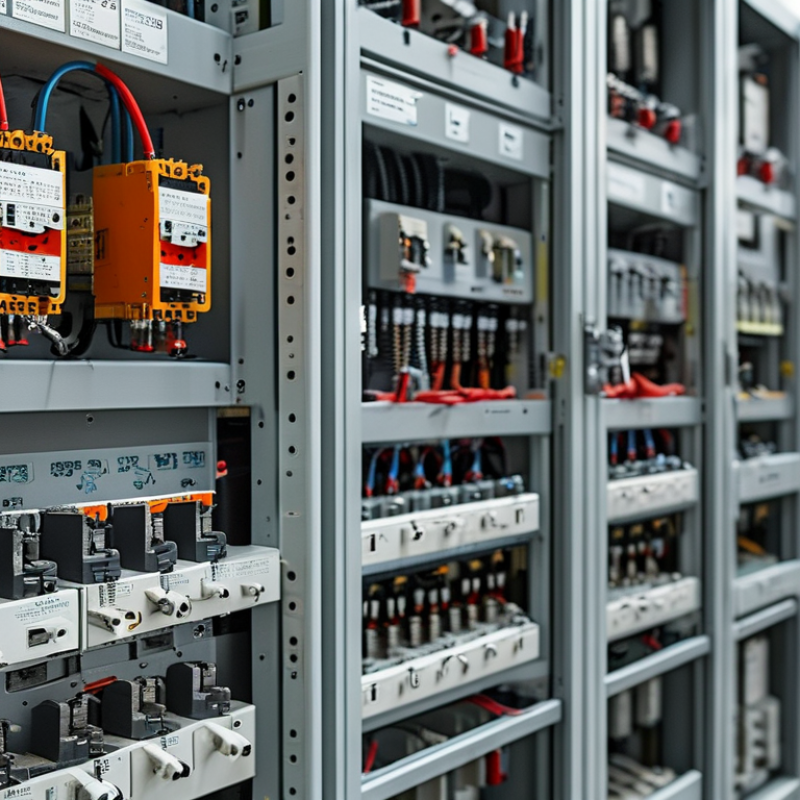
2026 Best Breaker Lockout Devices for Global Buyers

What Are Breaker Lockout Devices and Why Are They Used?

Breaker lockout devices are compact safety tools used to keep circuit breakers in an off position during maintenance. They prevent accidental re-energization while technicians work inside electrical panels. A fitted device blocks the breaker handle, while a personal padlock identifies who controls the energy source. The warning label adds a visible signal near the switch.

These devices are used in factories, offices, construction areas, and service rooms. Common designs fit miniature, molded-case, or larger handle-operated breakers. The correct choice depends on handle shape, spacing, panel layout, and available clearance. In field practice, a lockout that looks universal may not grip securely. That mistake deserves attention. Buyers should check measurements, insulating materials, temperature limits, and resistance to impact before ordering.

Safe use starts with identifying the correct circuit and shutting it down through an approved procedure. A qualified worker should verify the absence of voltage with a suitable tester. The lockout is then attached, locked, and labeled before work begins. A second check is wise, especially where several panels are nearby. Instructions must match local workplace rules and electrical requirements. Product photographs can mislead, so technical drawings and sample fitting tests are more reliable for global purchasing decisions. Even a durable device fails if the breaker remains energized or the wrong handle is selected.

How to Identify the Right Breaker Lockout Device

2026 Best Breaker Lockout Devices for Global Buyers

How to Identify the Right Breaker Lockout Device

Choosing a breaker lockout device starts with the breaker, not the catalog photo. Check the handle shape, width, travel, and mounting clearance. Some devices fit single-pole breakers but fail on tied handles. Others need a small screwdriver. That detail matters during urgent maintenance. OSHA’s Control of Hazardous Energy guidance estimates that lockout/tagout prevents about 120 deaths and 50,000 injuries annually in the United States. A suitable device should also withstand the site environment. Review temperature, dust, moisture, chemical exposure, and repeated handling. Confirm the device does not touch energized conductors.

Global buyers should request compatibility samples before placing large orders. Compare the device with actual breakers from each target market. Standards can differ between regions and equipment families. Look for clear material specifications, tested insulating properties, and traceable inspection records. An independent test report is more useful than a broad marketing claim. I would not trust “universal” wording without a physical fit test. It sounds efficient. It can be misleading.

Tips: Measure the breaker first. Photograph the handle. Test with a worker wearing gloves. Record the result. OSHA recommends authorized employees verify isolation before work begins. NFPA 70E also emphasizes an electrically safe work condition and documented procedures. One uncomfortable question remains: will the device stay attached when the cabinet door closes? Test that before approval, not after installation.

Key Features Global Buyers Should Compare

2026 Best Breaker Lockout Devices for Global Buyers

Global buyers should compare more than price and product photos. Start with breaker compatibility, including miniature, molded-case, and multi-pole designs.

A device must fit firmly without touching nearby terminals. Fit matters. Ask for clear dimensions, supported handle shapes, and installation photographs.

Check the electrical rating, insulation quality, and material performance under heat, moisture, and dust.

Reinforced polymer can reduce cracking during repeated use, while visible warning colors improve recognition in crowded panels. For outdoor or industrial settings, review corrosion resistance and temperature limits.

Do not guess. Request test reports, inspection records, and traceable production information.

The locking method also deserves close attention. Compare screw-tightened, clamp-style, and tool-assisted designs for speed and stability.

A lock should resist casual removal but remain easy for authorized workers to install. Consider shackle clearance, label space, and compatibility with standard safety padlocks.

Measure twice. Packaging should protect small parts during international transport, and instructions should use clear technical language.

Local certification requirements may differ, so buyers should verify them before ordering. A cheaper device may fail when gloves, vibration, or an awkward panel angle complicate installation.

This detail is easy to miss. Suppliers should explain replacement procedures, batch consistency, and support response times.

No device is perfect; field feedback may reveal weaknesses that a catalog never shows.

Installation, Compatibility, and Workplace Safety Requirements

2026 Best Breaker Lockout Devices for Global Buyers

Installation, Compatibility, and Workplace Safety Requirements

Selecting a breaker lockout device starts with the panel, not the catalog image. Measure the breaker handle width, shape, spacing, and operating direction. Some handles sit tightly together. Others require a wider clamp or a compact design. A device that appears suitable may block an adjacent circuit.

Compatibility also depends on the breaker’s construction. Check whether the handle accepts a screw, clamp, or push-fit mechanism. Confirm the device remains secure during vibration and routine cabinet access. Test it on an isolated sample before ordering in bulk. This small step can prevent expensive replacement work.

Installation should follow the site’s documented lockout procedure. A qualified worker should identify every energy source, open the disconnect, and verify zero energy with a properly rated tester. The lockout point must accept a durable tag and remain visible. Use only devices made from materials suited to heat, moisture, dust, and industrial chemicals.

Workplace safety requirements vary by country and industry. Global buyers should review local regulations, internal risk assessments, and worker training records. A lockout device is not a substitute for verification. It only controls access to the disconnect.

In practice, rushed labeling causes more confusion than difficult hardware. Color coding helps, but clear names and circuit numbers matter more. One detail is easy to overlook: the device should be removable only through the intended action, not by casual pulling.

How to Evaluate Suppliers, Standards, and Total Purchase Cost

2026 Best Breaker Lockout Devices for Global Buyers

For global buyers, evaluating a breaker lockout supplier starts with fit, not price.

Ask for drawings showing handle width, hole spacing, material, and operating clearance. A device that works on one miniature circuit breaker may fail on a wider molded-case breaker. Request samples from several production lots. Small differences matter. Check clamping force, screw quality, edge finish, and visibility after installation. Supplier experience should include export packaging, traceable batch records, and clear responses to technical questions.

Standards need careful reading. Ask which requirements the device is designed to meet, including relevant lockout procedures, electrical safety practices, and product standards in the destination market. Request current test reports, material declarations, inspection plans, and certificates matching the actual factory and model. A logo on a document is not enough. Verify scope, date, laboratory identity, and testing coverage for the complete assembly. I would not treat one certificate as universal approval. That assumption can create delays.

Calculate total purchase cost before comparing quotations. Include unit price, tooling, samples, packaging, freight, insurance, import duties, inspection, storage, and replacement rates. A cheaper unit can become expensive when screws strip during installation or delivery arrives late. Ask about minimum order quantities, lead times, spare-part policies, and payment terms. Use a landed-cost worksheet for each shipment. It is not perfect. Currency changes, port congestion, and rework remain uncertain. Still, documenting these risks supports a more defensible decision and reveals whether the supplier can deliver consistent quality at scale.

Copyright 2025 Fluidra S.A. | Created by BCM Marketing Agencia Privacy Policy Legal note | Cookie policy |

Technical cookies are strictly necessary for our website to work and you can navigate through it. These types of cookies are those that, for example, allow us to identify you, give you access to certain restricted parts of the page if necessary, or remember different options or services already selected by you, such as your privacy preferences. Therefore, they are activated by default, your authorization not being necessary in this regard. Through the configuration of your browser, you can block or alert the presence of this type of cookies, although such blocking will affect the proper functioning of the different functionalities of our website.


The analysis cookies allow us to study the navigation of the users of our website in general (for example, which sections of the page are the most visited, which services are used most and if they work correctly, etc.). From the statistical information on navigation on our website, we can improve both the operation of the page itself and the different services it offers. Therefore, these cookies do not have an advertising purpose, but only serve to make our website work better, adapting to our users in general. By activating them you will contribute to this continuous improvement. You can enable or disable these cookies by checking the corresponding box, being disabled by default.


Functionality cookies allow us to remember your preferences, to personalize certain characteristics and general options of our website, every time you access it (for example, the language in which the information is presented to you, the sections marked as favorites, your browser type, etc.) Therefore, this type of cookies does not have an advertising purpose, but by activating them you will improve the functionality of the website (for example, adapting to your type of browser) and the customization of it based on your preferences (for example, by presenting the information in the language that you have chosen in previous occasions), which will contribute to the ease, usability and comfort of our page during your navigation. You can enable or disable these cookies by checking the corresponding box, being disabled by default.


Advertising cookies allow us to manage the advertising spaces included in our website based on criteria such as the content shown or the frequency in which the ads are displayed. For example, if you have been shown the same ad several times on our website, and you have not shown a personal interest by clicking on it, it will not appear again. In summary, by activating this type of cookies, the advertising shown on our website will be more useful and diverse, and less repetitive. You can enable or disable these cookies by checking the corresponding box, being disabled by default.


Behavioral advertising cookies allow us to obtain information based on the observation of your browsing habits and behaviors on the web, in order to show you advertising content that best suits your personal tastes and interests. To understand it in a very simple way, we will give you a fictitious example: if your last searches on the web were related to suspense literature, we would show you advertising about suspense books. Therefore, activating this type of cookies, the advertising that we show you on our website will not be generic, but will be oriented to your searches, tastes and interests, therefore adjusting exclusively to you. You can enable or disable these cookies by checking the corresponding box, being disabled by default.
To understand it in a very simple way, we will give you a fictitious example: if your last searches on the web were related to suspense literature, we would show you advertising about suspense books. Therefore, activating this type of cookies, the advertising that we show you on our website will not be generic, but will be oriented to your searches, tastes and interests, therefore adjusting exclusively to you. You can enable or disable these cookies by checking the corresponding box, being disabled by default.

SAVE

We use our own and third-party cookies to ensure the proper functioning of the website and to analyse our services, improve your experience on our website and show you advertisements related to your interests according to profiling based on your browsing habits (e.g. websites visited). You can accept all cookies by clicking "ACCEPT" or set or reject them by clicking here. If you would like to know more about the use of cookies, please see our COOKIE POLICY.


ACCEPT ALL
Reject no essentials


