
10 Best Steel Security Doors for Global Buyers?
FLUID HANDLING EXPERTS

Blog, all our news

10 Best Steel Security Doors for Global Buyers?

For global buyers, choosing a steel door involves more than comparing thickness, finishes, and prices. A reliable Steel Security Door must balance forced-entry resistance, daily usability, weather protection, and installation accuracy. It should close smoothly, hold its alignment, and maintain performance after repeated opening. Small details matter. A weak frame can undermine strong steel.

This guide reviews ten steel security doors for different climates, building types, and purchasing requirements. The comparison considers core construction, locking systems, hinges, fire-rated options, corrosion protection, acoustic performance, and customization. We also examine practical concerns, including delivery conditions, replacement parts, installation support, and available product documentation. These factors often influence long-term value more than a polished product photograph.

Buyer experience can reveal problems that specifications hide. A thick panel may still feel unbalanced. A sophisticated lock may become inconvenient during everyday use. Some finishes appear durable but require better maintenance near coastal air. Standards and certification requirements also differ between countries, so buyers should verify local approval before ordering. Product information is not always complete. That deserves careful questioning.

The selected doors represent useful options, not universal winners. Each model has strengths, limitations, and suitable applications. Commercial entrances may need stronger traffic performance, while residential buyers may value insulation and appearance. Accurate wall measurements remain essential. So does professional installation.

Use this overview as a practical starting point. Compare evidence, request technical drawings, and confirm warranty terms before making a final decision. The best choice is secure, serviceable, and appropriate for its actual environment.
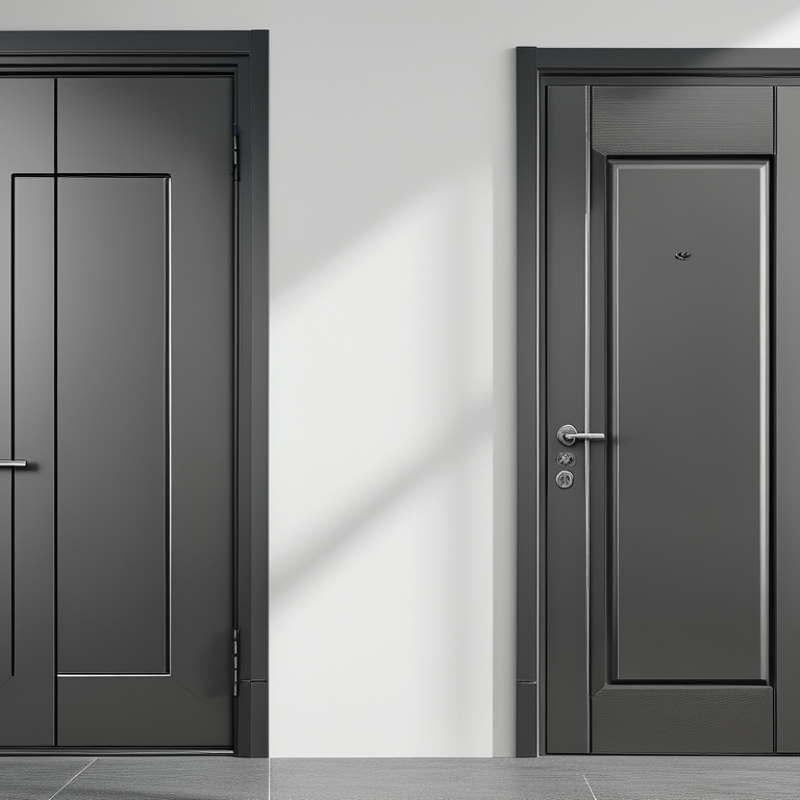
10 Best Steel Security Doors for Global Buyers?

What Makes a Steel Security Door Suitable for Global Buyers

What makes a steel security door suitable for global buyers? It must perform beyond a showroom test. Buyers need verified resistance, reliable sealing, manageable weight, and parts that local technicians can replace. EN 1627:2021 resistance classes help compare forced-entry performance, while fire-rated projects may require testing under standards such as EN 1634-1 or UL 10C. These certifications are not interchangeable. Local approval still matters.

Climate is equally important. The International Energy Agency reports that buildings consume about 30% of global final energy and produce roughly 26% of energy-related emissions. A well-fitted door should therefore limit air leakage, withstand rain, and resist corrosion near coastal areas. Galvanized steel, powder-coated finishes, stainless hinges, and adjustable compression seals are practical details. The World Bank’s 2023 Logistics Performance Index covered 139 economies, reminding buyers that international delivery, customs handling, and replacement access vary widely. A strong door with unavailable spare parts becomes a weak investment.

Tips: Check the test standard, certificate scope, steel thickness, hinge load, lock compatibility, and installation method. Ask for salt-spray results in coastal regions. Confirm whether the frame fits masonry, concrete, or lightweight walls. Avoid judging security by weight alone. I have seen heavy doors fail because their frames were poorly anchored. That mistake is easy to repeat. Also, global suitability is never absolute; climate, building codes, installer skill, and after-sales support can change the right choice.

10 Best Steel Security Doors for Global Buyers: What Makes a Steel Security Door Suitable?

This chart compares the minimum manual attack-resistance time associated with EN 1627 burglary-resistance classes RC2 to RC6. Higher classes provide longer standardized resistance during testing. Global buyers should also verify corrosion protection, fire performance, door dimensions, compatible hardware, local building regulations, and certification acceptance in the destination market.

Key Materials, Standards, and Security Features to Compare

10 Best Steel Security Doors for Global Buyers?

When comparing steel security doors, start with the material, not the appearance. Galvanized steel resists moisture better than untreated sheet steel. Stainless steel suits coastal projects, but it usually costs more. Check the steel thickness, reinforcement layout, and weld quality.

A heavy door can still fail if its frame is weak.

Security ratings need careful reading. EN 1627 resistance classes can help compare tested door assemblies. Other markets may use different testing systems. Request laboratory reports, scope details, and the exact door configuration tested. A certificate for the leaf alone may not cover the frame, lock, hinges, or installation.

Standards are useful, but paperwork can hide gaps.

Look for multi-point locking, protected hinge pins, reinforced strike areas, and adjustable frames. Laminated glazing can improve visibility without creating an easy break-in point.

For outdoor use, inspect drainage, powder coating, seals, and corrosion protection. Fire resistance and forced-entry resistance are separate performances. Do not assume one rating proves both.

A useful site check is simple: measure the opening, wall condition, threshold, and fixing points before ordering. I have seen promising doors underperform because installers used unsuitable anchors.

That detail is easy to miss.

Door security is a system, not just a thick steel panel.

How to Assess the 10 Best Steel Security Door Options

Assessing the 10 best steel security door options requires more than comparing photographs and prices. Check the steel thickness, frame construction, internal reinforcement, and hinge design. A heavy door is not automatically safer. Ask for independent test reports, material specifications, and installation instructions. Reliable suppliers should explain their testing methods clearly, without vague claims.

Look closely at the locking area. It should resist forced spreading and support compatible, quality hardware. Examine welds, hinge protection, threshold strength, and weather seals. For exterior use, inspect the coating for even coverage and corrosion resistance. In coastal areas, salt exposure can damage weak finishes quickly. I have seen attractive doors fail because their frames were poorly anchored.

Compare all ten options using the same checklist. Request drawings, maintenance guidance, replacement-part information, and warranty conditions. Confirm that the opening size, wall type, and local installation requirements match the proposed design. No checklist is perfect. A supplier’s response time also reveals practical reliability. If technical questions receive rushed answers, pause before ordering. Small details matter, such as a three-millimeter frame gap or exposed hinge pins. An experienced installer should inspect the wall before delivery, because even a strong door performs poorly on a weak opening.

Climate, Installation, and Compliance Factors by Region

10 Best Steel Security Doors for Global Buyers?

Climate, Installation, and Compliance Factors by Region

Choosing a steel security door globally requires more than comparing locks and steel thickness. Climate changes performance. In humid tropical regions, select galvanized steel, sealed welds, and durable powder coating. Coastal projects need stronger corrosion protection because salt air attacks hinges and frames. Drainage details matter. A blocked threshold can trap water after heavy rain.

Cold Regions and Dry, Dusty Areas

Cold regions create different problems. Insulated cores and thermal breaks reduce indoor heat loss and condensation around the frame. In dry, dusty areas, protected hinges and tight seals can prevent fine particles from entering the lock mechanism. I have found that small gaps often become expensive maintenance issues. Still, no coating lasts forever. That limitation deserves honest planning.

Installation and Compliance

Installation quality can decide whether a good door performs well. The wall opening must be measured after finishes are complete. Anchors should match the wall material, not merely the door weight. Local installers should verify alignment, swing clearance, emergency access, and safe threshold height. Regional building codes may also require fire resistance, accessibility features, wind-load testing, or documented material performance. Requirements differ between countries and sometimes between cities. Ask for current certificates and installation records. A product described as “security grade” may not satisfy local approval rules. Careful inspection is less impressive than a dramatic specification, but it prevents practical failures.

Pricing, Warranty, and Supplier Reliability for International Buyers

10 Best Steel Security Doors for Global Buyers?

Price should be compared by specification, not by the door leaf alone. A basic galvanized steel door may cost 180–350 USD, while insulated, fire-rated, or customized models can exceed 900 USD. Freight, crating, taxes, hardware, and installation may add substantially. Ask for a line-by-line quotation. A vague “complete set” often hides expensive exclusions.

Warranty terms reveal supplier discipline. Look for coverage of frames, hinges, locks, surface finish, and manufacturing defects. Two to five years is common, but the wording matters more than the number. Confirm whether replacement parts, labor, and shipping are included. Request a written response time for claims. A door can be strong, yet useless if a damaged hinge takes months to replace.

Supplier reliability needs evidence. Review factory photographs, production records, material certificates, and recent export references. Request a pre-shipment inspection, especially for large orders. Check weld consistency, frame dimensions, coating thickness, gasket placement, and packaging corners. I would also order one sample before approving a container. This costs more initially. It can expose poor alignment early. A low price once influenced my assessment of quality; that was not a sound method. Currency changes, port delays, and local code requirements still create uncertainty. Buyers should keep written specifications and approve every revision.

10 Best Steel Security Doors for Global Buyers? — Pricing, Warranty, and Supplier Reliability for International Buyers
Rank Steel Security Door Configuration Typical Application Security / Performance Level Indicative Product Price (USD) Typical Warranty Common Compliance Evidence Typical Production Lead Time International Buyer Reliability Checks
1 Insulated Single Steel Security Door Residential entrances, apartments, utility rooms High security / thermal insulation
Steel leaf with reinforced frame, multi-point lock preparation, weather seals
$350–$1,200 2–5 years for door assembly; hardware may have separate coverage Declared steel thickness, hardware specification, corrosion-finish details, test reports where applicable 3–8 weeks Confirm dimensional drawings, sample approval, export packaging, replacement-parts policy, and pre-shipment inspection
2 Commercial Hollow-Metal Single Door Offices, schools, warehouses, service corridors Commercial heavy duty
Galvanized or cold-rolled steel construction with reinforced hinge and lock areas
$450–$1,500 1–5 years, depending on finish and hardware package Steel gauge or thickness declaration, frame profile, hinge-cycle data, finish specification 4–10 weeks Verify production capacity, quality-control checklist, packing method, and documented tolerance limits
3 Fire-Rated Steel Door Assembly Commercial buildings, plant rooms, stairwells, service shafts Fire protection
Usually supplied as a tested door-and-frame assembly rather than a door leaf alone
$600–$2,000 1–5 years; fire-performance validity depends on approved assembly and installation Valid fire-test classification such as UL 10C or an applicable EN classification; approved hardware and frame details 5–12 weeks Check that certificates cover the exact size, glazing, hardware, frame, and installation configuration being purchased
4 EN 1627 RC2 Steel Security Door Homes, apartments, small commercial premises Moderate forced-entry resistance
Designed for resistance against common hand tools under the tested configuration
$800–$2,500 2–5 years Independent EN 1627 classification for the complete door set, including frame, lock, hinges, and glazing if used 6–12 weeks Request certificate number, laboratory identity, tested dimensions, and confirmation that supplied components match the test sample
5 EN 1627 RC3 Steel Security Door High-value residences, financial rooms, restricted-access facilities Enhanced forced-entry resistance
Higher resistance level than RC2 when the complete tested assembly is correctly installed
$1,200–$4,000 2–5 years Independent EN 1627 / EN 1630 evidence for the complete assembly and installation requirements 8–16 weeks Validate the certificate scope, steel construction, locking points, frame anchoring method, and installer requirements
6 Double Steel Security Door with Panic Hardware Industrial buildings, public facilities, emergency exits Wide opening / controlled egress
Two-leaf steel assembly with panic or emergency-exit hardware options
$1,000–$3,500 1–5 years Hardware conformity documentation, door-cycle information, fire-rating evidence where required, and clear handing details 6–14 weeks Confirm active and inactive leaf operation, shipping protection for hardware, spare-part availability, and site-installation guidance
7 Louvered Steel Security Door Generator rooms, plant rooms, electrical rooms, ventilation areas Security with airflow
Reinforced steel frame and louver design; not normally suitable where fire or acoustic isolation is required without additional testing
$500–$1,800 1–3 years Airflow data, louver construction details, corrosion coating specification, and any fire or acoustic test evidence requested 4–10 weeks Check louver geometry, drainage, insect-screen options, outdoor coating system, and packaging against deformation
8 Stainless-Steel Security Door Coastal properties, food facilities, laboratories, humid environments Corrosion-resistant construction
Common grades include 304; 316 is generally selected for more aggressive chloride environments
$1,000–$4,500 2–5 years; corrosion coverage must be stated separately Material grade certificate, weld-finish specification, salt-spray or corrosion data where relevant, and hardware material details 6–14 weeks Request mill certificates, confirm dissimilar-metal compatibility, inspect weld quality, and define cleaning requirements
9 Ballistic-Resistant Steel Door Security rooms, critical infrastructure, protected control areas Ballistic protection
Performance depends on tested steel layers, glazing, frame, locks, and the exact ammunition classification
$2,500–$10,000+ 1–5 years; ballistic performance is tied to the tested configuration Independent ballistic test report, stated standard and threat level, complete assembly scope, and installation instructions 10–20 weeks Never accept a steel-thickness claim as a ballistic rating; verify laboratory documentation and exact tested components
10 Custom Oversized or Blast-Resistant Steel Door Industrial plants, infrastructure, transport facilities, specialized enclosures Engineered project solution
Requires project-specific structural, pressure, fire, acoustic, or security engineering
$5,000–$30,000+ 1–5 years for workmanship and materials; project specifications may override standard terms Project calculations, independent test reports where required, structural drawings, weld procedures, and approved installation method 12–30 weeks Evaluate engineering credentials, reference projects, inspection-and-test plan, milestone approvals, and export documentation
Price ranges are indicative international market benchmarks for the door assembly only and generally exclude installation, freight, duties, taxes, glazing upgrades, and site-specific engineering. Certification, warranty duration, lead time, and performance must be confirmed in the supplier’s written quotation and contract.
Copyright 2025 Fluidra S.A. | Created by BCM Marketing Agencia Privacy Policy Legal note | Cookie policy |

Technical cookies are strictly necessary for our website to work and you can navigate through it. These types of cookies are those that, for example, allow us to identify you, give you access to certain restricted parts of the page if necessary, or remember different options or services already selected by you, such as your privacy preferences. Therefore, they are activated by default, your authorization not being necessary in this regard. Through the configuration of your browser, you can block or alert the presence of this type of cookies, although such blocking will affect the proper functioning of the different functionalities of our website.


The analysis cookies allow us to study the navigation of the users of our website in general (for example, which sections of the page are the most visited, which services are used most and if they work correctly, etc.). From the statistical information on navigation on our website, we can improve both the operation of the page itself and the different services it offers. Therefore, these cookies do not have an advertising purpose, but only serve to make our website work better, adapting to our users in general. By activating them you will contribute to this continuous improvement. You can enable or disable these cookies by checking the corresponding box, being disabled by default.


Functionality cookies allow us to remember your preferences, to personalize certain characteristics and general options of our website, every time you access it (for example, the language in which the information is presented to you, the sections marked as favorites, your browser type, etc.) Therefore, this type of cookies does not have an advertising purpose, but by activating them you will improve the functionality of the website (for example, adapting to your type of browser) and the customization of it based on your preferences (for example, by presenting the information in the language that you have chosen in previous occasions), which will contribute to the ease, usability and comfort of our page during your navigation. You can enable or disable these cookies by checking the corresponding box, being disabled by default.


Advertising cookies allow us to manage the advertising spaces included in our website based on criteria such as the content shown or the frequency in which the ads are displayed. For example, if you have been shown the same ad several times on our website, and you have not shown a personal interest by clicking on it, it will not appear again. In summary, by activating this type of cookies, the advertising shown on our website will be more useful and diverse, and less repetitive. You can enable or disable these cookies by checking the corresponding box, being disabled by default.


Behavioral advertising cookies allow us to obtain information based on the observation of your browsing habits and behaviors on the web, in order to show you advertising content that best suits your personal tastes and interests. To understand it in a very simple way, we will give you a fictitious example: if your last searches on the web were related to suspense literature, we would show you advertising about suspense books. Therefore, activating this type of cookies, the advertising that we show you on our website will not be generic, but will be oriented to your searches, tastes and interests, therefore adjusting exclusively to you. You can enable or disable these cookies by checking the corresponding box, being disabled by default.
To understand it in a very simple way, we will give you a fictitious example: if your last searches on the web were related to suspense literature, we would show you advertising about suspense books. Therefore, activating this type of cookies, the advertising that we show you on our website will not be generic, but will be oriented to your searches, tastes and interests, therefore adjusting exclusively to you. You can enable or disable these cookies by checking the corresponding box, being disabled by default.

SAVE

We use our own and third-party cookies to ensure the proper functioning of the website and to analyse our services, improve your experience on our website and show you advertisements related to your interests according to profiling based on your browsing habits (e.g. websites visited). You can accept all cookies by clicking "ACCEPT" or set or reject them by clicking here. If you would like to know more about the use of cookies, please see our COOKIE POLICY.


ACCEPT ALL
Reject no essentials


